China has lifted the Kimono for us. But rather than compose ourselves and behold the glory beyond, we are stuck atop SUVs exchanging insults.
We suffer from a national pettiness so extreme that when Ahmednassir Abdullahi, the national bully, was trolling me on X the other day with his usual invented stories about an office I left four years ago, he was copying the President in on his Tweets!
In my opinion, to which I am entitled as a freeborn Kenyan tribesman and a farmer of the Mama Safi bean variety, the signature achievement of the Kenya Kwanza government is not the tenements in the bush they are building more for the kickbacks and bragging rights than impact, or the other brick and mortar monuments that are capturing value and giving nothing back.
It is the Early Harvest Arrangement signed with China in March, a true game changer because it is the first genuine trade agreement Kenya has signed. It is not charity, the Chinese are not charitable people. Think of this brilliant trade deal as act of freeing the slave to spite the master. In any case, they stand to benefit in ways I don’t have the space to go into.
The arrangement — which is temporary as we negotiate a permanent trade agreement — eliminates duties on 98.2 per cent of Kenya's exports into a market of 1.4 billion people. Horticulture and fresh produce were being charged 10 to 25 per cent, tea and coffee six to 15 per cent, cut flowers four per cent. We can now sell all of it duty-free and quota-free. Avocados, already worth tens of millions a year, suddenly have incredible room to grow.
And here is the part that if the Kimono goes all the way, reveals the real deal, not the fake plastics we have been getting: That 98.2 per cent explicitly includes value-added products. Kenya’s first consignments flagged off under the deal in mid-2026 was not just raw fruit. It included refined avocado oil and processed hides and skins. The tariff schedule is written to accommodate processed goods, the door other trade arrangements leave effectively shut.
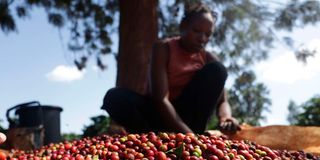
Let me tell you the painful story of coffee. Kenya grows some of the most coveted Arabica on earth. Switzerland, which can’t grow a single stem on its frozen slopes, is one of the world's largest coffee exporters by value. A kilo of my green beans will sell for between five and nine dollars.
Nestlé puts those identical beans into an aluminium capsule and sells the same kilo for more than 100 dollars. That 1,000 per cent margin goes to Geneva, not Meru. Why should we slave for other people?
This is not an accident, it is the colonialistic, to quote Jomo, architecture of the world economy, a division of labour, engineered and maintained: We supply the raw material but Europe and others own the roasting technology, the logistics, the brand equity and the consumer's imagination.
We get brass pennies for our coffee, the Swiss get massive GDP. I’m told if an African country tries to upset this arrangement, its government could be overthrown. Well, let them overthrow the Chinese if they can.
The European Union's Economic Partnership Agreement on paper is quite generous: 100 per cent duty-free, quota-free access for Kenyan exports (excluding arms). Raw agricultural inputs come in free but finished, packaged, retail-ready goods meet supermarket slotting fees, retail regulations and a thorn bush of non-tariff barriers. Kenya traditionally exports about 98 per cent of its coffee as unroasted green beans, which works just fine for the Europeans. EPA secures the raw materials and locks in the colonial status quo.
Then there are the compliance costs: strict sanitary and phytosanitary standards, tracking, testing and labelling requirements that smallholder farmers and exporters must foot, else their goods will be rejected at European ports. The EU Deforestation Regulation now requires Kenyan producers to divert money they should be using to acquire value adding machinery to geo-mapping, traceability software and data collection just to keep the market they already had, which is nothing but regulatory protection dressed up as consumer protection.
And then there is the reciprocity nail in the coffin: Kenya must progressively open 82.6 per cent of its market to a flood of cheap, subsidised European imports over 15 to 25 years. First, that’s a lot of tax revenue lost, secondly the Europeans will flatten local industry. Also, EPA risks turning us into a trade route for pumping their goods into the wider East African Community market and undermining the EAC tariff regime.
Worst of it is Article 14(4), the Most Favoured Nation clause: If Kenya grants better terms to another major trading economy, it must automatically extend the same terms to the EU. So the moment we negotiate something clever with China, India or anyone else, Brussels gets it too. We have mortgaged our future negotiating leverage.
Rather than wasting time annoying voters on the internet, UDA sharp boys should be figuring out how Kenya can operationalise a truly transformational deal, and how they can market it to voters as a big success.