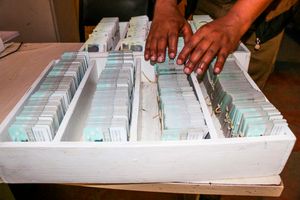
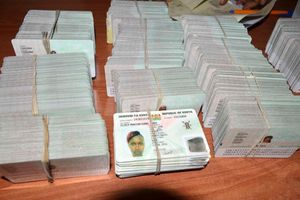
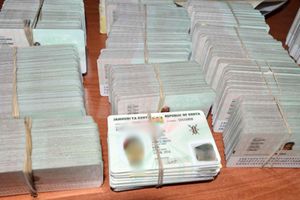
The government is turning to chiefs and launching e-Citizen SMS alerts to track down the owners of at least 557,000 national Identity Cards (IDs) that remain uncollected, ahead of the 2027 general elections.
The tracking of the owners of the uncollected IDs comes amid concerns that thousands of Kenyans could be locked out of the electoral process if they do not obtain the identification documents, critical in the registration for voting.
Principal Secretary for Immigration and Citizen Services Dr Belio Kipsang told a committee of parliament that the government had intensified efforts to ensure eligible Kenyans acquire identity cards before the voter registration exercise begins in January 2027.
“We are making sure that before the voter registration exercise in January 2027, every Kenyan who should have an ID has one and can participate in next year's elections,” Dr Kipsang said yesterday when he appeared before the National Assembly Committee on Administration and Internal Security.
Dr Kipsang told the MPs that the backlog, which includes nearly 400,000 cards that have remained uncollected for more than 10 years, was being addressed through a combination of local administration support, improved processing systems and technology.
PS Kipsang: More than 400,000 new IDs remain uncollected
The PS told the committee chaired by Narok West MP Gabriel Tongoyo that “the government is determined to remove barriers that could prevent eligible citizens from participating in next year's elections, including the cost of acquiring the identification documents.”
This even as he noted that the government has abolished fees previously charged for obtaining and replacing national identity cards so as to make them more accessible.
“We have removed all payments so that it becomes easy for every Kenyan to acquire these documents and prepare to play their civic duty when the time comes next year for the elections,” said the PS.
Previously, Sh300 was charged for new IDs and Sh1,000 for replacement.
The PS added that the department had invested in live-capture equipment to improve the efficiency of registration and processing, while reducing the risk of identity documents being issued to the wrong people.
Under the arrangement, the National Government Administration Officers (NGAOs) will receive information on uncollected cards in their respective areas and help trace the owners.
The PS noted that his State Department is also considering allowing registration officers to release identity cards to parents, guardians and other authorized persons, provided proper verification is conducted.
Uncollected IDs lying at Huduma Center in Kibera.
Photo credit: File | Nation Media Group
The State Department has already developed an electronic notification system through the e-Citizen platform to alert applicants through text messages once their identity cards were ready for collection.
“We are finalizing the system to ensure that applicants are notified through SMS when their IDs are ready. This will help us fast-track the collection of these documents,” said the PS.
This, as committee members questioned the inordinate delays in processing the documents particularly in remote areas, despite the government's investment in modern technology.
Teso South MP Uku Kaunya said residents in Amagoro were experiencing long delays, with more than 5,000 identity cards reportedly taking between two and three months to reach registration stations after applications had been processed.
“In some stations, the IDs take too long to be processed at the headquarters and delivered to the ground. The PS needs to explain what is happening and what is being done to fast-track the process,” said Mr Kaunya.
He suggested that the government works with village elders to ensure uncollected identity cards reach their rightful owners.
Saku MP Dido Raso, the committee's vice-chairperson, said the government had made significant improvements in the registration process, particularly for residents of pastoralist communities who previously faced difficulties obtaining identity cards.
He noted that applicants from such communities had often been required to produce several supporting documents, including their parents’ birth certificates, death certificates and identity cards, making the process lengthy and difficult.
“One of the reasons many people do not collect their identity cards is because they are not informed when the documents arrive,” said the Saku MP as challenged the PS to borrow from the passport collection system, “where applicants receive text messages once their documents are ready.”
Sotik MP Francis Sigei raised concerns over delays in issuing identity cards to people married to Kenyan citizens across the country's borders, particularly those from neighbouring Uganda and South Sudan.
The PS acknowledged that the large number of uncollected cards presented a legal and administrative challenge, particularly those that had remained at registration offices for more than a decade.
He cited section 17 of the Registration of Persons Act, which provides for the Cabinet Secretary to invalidate identity cards, but said the government had to exercise caution before taking such a decision.
“An identity card is very personal to an individual, and we have to be very careful about how we dispose of cards that have remained uncollected for a long time," he said.
Currently, the government has the capacity to print 20,000 IDs daily and is working to ensure applications are processed and delivered within shorter timelines.