We have watched this movie before. A Kenyan president emerges from a glossy signing ceremony, chest out, promising transformation. Billions are mentioned. Foreign partners are praised. The deal is sold as progress. Then years later, the real bill lands on our backs: ballooning debt, arbitration losses, and corruption scandals we’re told to “move on” from.
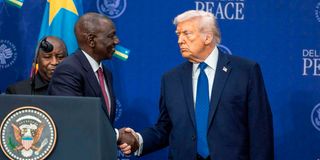
This time, the stage is Washington, the handshake is with the United States, and the headline figure is $1.6 billion to “support Kenya’s health sector” over the next five years. On the surface, it sounds noble. Strengthening systems to fight HIV, malaria, and Tuberculosis is something any serious government should prioritize.
But scratch the surface and you find a Trojan horse packed with sovereignty violations, intrusive data access, and contractual traps that benefit everyone except the Kenyan people. What the government is calling a health partnership looks, on closer inspection, like a backdoor for foreign control, long-term data extraction, and another opportunity for the ruling elite to cash out before walking away from the mess they created.
Behind the PR, the agreement reportedly gives the US real-time access to Kenya’s national health databases, without the safeguards one would expect in a country with a constitutional right to privacy. Experts familiar with the details say the level of access contemplated here goes beyond anonymized epidemiological trends. It edges into territory where American agencies and pharmaceutical companies could mine sensitive Kenyan health data at scale, with hardly any consent or domestic oversight.
Then comes the kicker: the deal is said to require Kenya to supply biological samples — including pathogens — to American pharmaceutical entities for up to 25 years, according to details released earlier on the deal. If Kenya hesitates or demands better terms later, the funding can be cut. And if disputes arise, they are to be resolved under American law, in American jurisdictions, where Kenya walks in with no leverage, no home-court advantage, and no realistic chance of a fair fight.
Why would any sovereign nation tie itself to a legal arrangement that weakens its negotiating power, strips its citizens of privacy protections, and hands over long-term biological assets without guarantees of benefit-sharing? The only explanation that makes sense is the same one that has haunted Kenya since independence: the rush to sign first and think later. Because the faster the ink dries, the faster money moves, and the faster politically connected hands can reach into the pot.
And it follows a pattern so familiar it’s almost boring — if it weren’t so destructive. Look at the scandals of the past decade. Ruto himself recently canceled massive infrastructure deals with a foreign conglomerate after allegations of bribery and opaque procurement procedures. Those contracts, worth billions, were pushed forward quietly, outside competitive processes, and only collapsed once international pressure made them untenable. Kenya walked away with nothing but legal risks and public outrage.
Go further back and the trail of wreckage widens: Anglo Leasing’s phantom security contracts; the Standard Gauge Railway loans signed under Chinese law; the Eurobond billions that vanished into a black hole of shifting explanations; dam projects that consumed tens of billions before collapsing into disputes abroad. Each case followed the same script: leaders circumvent transparency, sign contracts under foreign jurisdictions, pocket their cut, and leave citizens to pay for decades.
None of this is accidental. Foreign jurisdictions aren’t chosen for neutrality — they’re chosen because they insulate the powerful from accountability. Hidden clauses aren’t mistakes but escape routes. The absence of public participation is, itself, a strategy.
And Kenya’s Auditor General has been warning for years about the rot in procurement. Inflated tenders. Sole-sourced suppliers. Mysterious intermediaries. Foreign firms awarded billion-shilling contracts without scrutiny. The result is predictable: we lose trillions to illicit outflows while the elite quietly build property portfolios in Dubai and London.
The new health deal fits perfectly into this lineage of elite enrichment masquerading as national development. The risks are enormous. Unrestricted foreign access to national health data could expose millions to future privacy violations — especially in a world where data is a weapon. Long-term pathogen-sharing obligations could fuel profit for foreign pharma without guaranteeing any value returns for Kenyan researchers or patients. And disputes governed abroad all but guarantee that once Kenya is locked into disadvantageous terms, there’s no way out.
Meanwhile, the people pushing these agreements will not be the ones battling arbitration suits years from now. They will not be the ones paying higher taxes to cover penalties, nor will they be the ones explaining why citizens’ medical data sits in foreign servers forever. They will have moved on — cushioned by the kickbacks and political capital they harvested when they first rushed the deal through.
This is why Kenya cannot keep sleepwalking into contracts that mortgage our sovereignty. We need a radical shift in how government signs deals — starting with mandatory transparency, domestic jurisdiction for disputes, and genuinely punitive consequences for public officers who sabotage the country through corruption. Other nations impose severe penalties for graft in major public contracts. Kenya talks about it. Kenya tweets about it. Kenya commissions reports about it. But when the moment comes for accountability, everyone retreats into political convenience.
The generation entering adulthood today — the young people who have confronted state power in the streets, who have demanded accountability— cannot afford to let these habits continue. If they tune out, the political class will go back to business as usual: sign expensive foreign contracts, skim from them, hide behind foreign courts, and leave the public paying for the next thirty years.
Kenya’s future will not be lost through a coup or a dramatic collapse. It will leak away signature by signature, deal by deal, in quiet rooms where a few men decide the fate of fifty million people with no scrutiny.