Let’s stop pretending that these were a series of unfortunate events. The recent by-elections were not marred by ‘isolated incidents’, ‘overzealous policing’ or ‘logistical hiccups’. What we witnessed was the systematic weaponisation of the state against voters. Police deployments were not neutral. They were the strategy. The goons were the logistics. The message to anyone outside of power was clear: enter the arena at your own risk.
This was evident in the positioning of security personnel. Uniformed officers were stationed at opposition strongholds, not to protect voters, but to police them.
Roadblocks appeared on key access routes. Agents and observers were hassled over badges that had been acceptable yesterday but were suddenly ‘non-compliant’ today. Polling stations opened late where the numbers were unfavourable, closed early where panic set in and ‘lost’ materials in just enough places to reduce the margin. This was no accident. It is intentional.
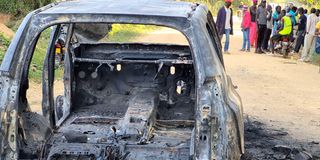
The violence was not random either. In Malava, for example, a convoy was set on fire. In Nyamira, tallying centres turned into combat zones. None of it looked spontaneous. It looked planned, funded and approved. When the same pattern repeats across wards and counties, it suggests a well-oiled machine is at work.
Even the cash politics exposed itself. Folded notes changed hands near station perimeters while uniformed officers looked the other way. When bribery and batons operate in the same place at the same time, the result is predictable: the poor are exploited, the brave are injured, and the rest go home. Apathy becomes a survival instinct.
We must also speak out: the investigative arms did not act in the interests of the people. They acted as the incumbent’s shock absorbers. Harassment became part of the “routine checks”. Agents were detained just long enough to miss a count. Offices that should have been building public trust were instead used as instruments of private insurance.
Condemnations of ‘hooliganism’
Then the pious statements arrive. Condemnations of ‘hooliganism’. Pledges to ‘investigate’. Articles 81 and 86 were invoked like incantations. A commission that announces ideals on Thursday and certifies tainted victories on Friday is no longer an umpire, but a notary. Legitimacy must be earned minute by minute, from who is allowed to stand near the queue to which station opens on time and whose form is uploaded without drama.
In 2017, the Supreme Court taught the country that even a tidy score is invalidated by a flawed process. The lesson was heeded for one cycle, but then it was seemingly forgotten in the name of convenience.
This week’s events are a preview of a far larger storm. If the state can turn twenty-four by-elections into controlled experiments in suppression, what will a general election look like, where the prize touches the presidency, parliamentary arithmetic, county budgets and criminal exposure?
The stakes are higher than a few seats. It is the credibility of the ballot as a device for preventing conflict. Elections are how we transform rage into orderly queues. When citizens conclude that the queue is mere theatre, they will seek other outlets. Investors read this, too. Talented people read it and leave. A country that teaches its brightest that their voice is futile will have to import order at a high price and export hope for free.
So what do we do—now, not in 2027?
First, demilitarise voting. Security at elections must be small, civilian-facing, rules-bound, and independently overseen. Publish deployment plans a week in advance with station-level counts. Commanders must carry personal liability for unlawful disruption. If an officer shuts a gate without lawful cause, they shouldn’t be transferred; they should be taken to court.
We could create an Election Security Command independent of the Interior chain, with a statutory mandate limited to voter protection, not politician protection. Staff it with officers seconded under oath, rotated randomly within counties, and audited publicly after the poll.
Give observers real access to command rooms, not curated walk-throughs. If the state insists it is neutral, let it prove it with glass walls.
Third, criminalise the use of public resources in campaigns with penalties that matter: instant disqualification for beneficiaries, removal from office for officials, seizure of misused equipment. This is not complicated. If a siren shows up at a rally, that candidate’s name should disappear from the ballot immediately. We would only need to do it once or twice to re-educate an entire class of politicians.
Finally, demand courage from institutions that still have any. Courts must move with urgency, the officers in uniform who still have integrity within them must decide to stand for something. Commissions must stop behaving like referees afraid of players. Faith leaders should stop laundering impunity with “peace” statements that ask victims to swallow their tongues. Peace is not the mere absence of noise but the presence of justice.
This is not about delegitimising winners. It is about refusing to legitimise the method. Our politics will remain a street affair as long as the state can tilt the room and then ask us to applaud the result. We can do better.
We’ve shown we can. When citizens insisted on verifiability, a court agreed. When youth insisted on accountability, the nation was shaken. The lesson is consistent: power moves when people decide it’s enough.
So let’s name the problem without stuttering. The by-elections were not marred by mishaps. They were engineered to the edge. If we let that pass, we will walk into 2027 with batons over ballots and then act shocked when the country overheats.
If we confront it now, with law, with design, with transparency, and organised citizen muscle, we give ourselves a fighting chance at something rare in our history: an election that does not need peace prayers.
We are not asking for perfect but we will not accept dishonest. And honest starts with the one thing the incumbency fears more than numbers: a public that has stopped being gaslight.