I grew up in the small but spirited town of Murang'a, and because we were not watoto wa kufungiwa (confined to the house), life was lived outdoors and loudly.
The highlight of our childhood was attending the legendary mobile cinema shows at the local stadium. A white bedsheet would hang bravely against the wind, a projector would cough into life, and we entered Hollywood and Hong Kong.
We watched Eddie Murphy crack jokes, Chuck Norris roundhouse villains into oblivion, Bruce Lee defy physics, and Jackie Chan turn clumsiness into combat art. We adored Chinese classics like Revenge of the Drunken Master and One Armed Boxer. The films came in three parts, punctuated by the announcer’s inevitable command, “twende madukani! ” (time for commercials.
Part One of the film was always calm. The hero grew up in innocence. The village thrived. Even the villain — usually a muscular fellow named Tiger — appeared respectable, running “normal business.” Part Two shattered the peace. Tiger would descend on the hero’s village, unleash havoc, and often murder the hero’s parents. The poor boy would then retreat to the mountains to train under a wizened, drunk kung fu master who looked frail but could snap bamboo with a whisper. Part Three delivered the catharsis. The hero returned, fought entire gangs single-handedly, faced Tiger in a dramatic final duel, and — despite drinking boiling water or being hurled through buildings — never died. Justice prevailed. Credits rolled. We went home dusty but inspired.
The first two years of an administration form the honeymoon. Everything feels possible. Voters glow with hope. They excuse mistakes and explain away missteps. Legislators cooperate. Even critics whisper instead of shouting. Wise leaders understand that this is their Part One — their calm before the storm — and they move decisively to enact signature reforms. Make hay while the sun shines. Political capital is like ice in the sun; it melts quietly but surely.
History confirms this rhythm. When Franklin D. Roosevelt assumed office in 1933, he unleashed the New Deal within his first 100 days, passing the Emergency Banking Act, establishing the Civilian Conservation Corps, advancing the Agricultural Adjustment Act, and launching the Tennessee Valley Authority. He did not wait for applause; he acted. In Britain, Clement Attlee used his early mandate to establish the National Health Service and lay the foundation of the welfare state. In the United States, Ronald Reagan pushed through tax cuts and deregulation early in his term. Closer home, Mwai Kibaki introduced free primary education barely a month after victory and launched an economic recovery plan that restored confidence.
Early action matters because the reform window narrows with time. Economic disappointments creep in. Scandals erupt. Party rivalries intensify. Interest groups stiffen. Successors begin positioning. As Ecclesiastes reminds us, “To everything there is a season.” The first 12 to 24 months are the season of courage.
Contrast that with leaders who attempted bold reforms late in their tenure. Daniel arap Moi introduced multiparty politics in the 1990s after years of detentions had already embittered sections of the public. Later economic reforms, including those driven by technocrats, arrived when trust had thinned. In the United Kingdom, Gordon Brown pursued fiscal consolidation amid crisis, but public patience had waned. In Greece, George Papandreou implemented painful austerity measures after confidence had evaporated. By then, the music had changed; the dance floor was empty.
As the electoral cycle matures, we enter “kipindi cha lala salama” — the closing act.
The season Kenya is in now. Here, mistakes cost more because the time to repair them is scarce. A proverb says, “When the drumbeat changes, the dancer must adjust.” In this phase, political transfers intensify. Alliances shift. Today’s critic becomes tomorrow’s ally; today’s ally becomes tomorrow’s critic. In football terms, it resembles the 2001 transfer of Sol Campbell from Tottenham Hotspur FC to Arsenal FC — a move so dramatic that fans still debate it. Politics, too, produces unlikely migrations. Some leaders cross to government benches; others journey to opposition platforms. These shifts reveal who are true foot soldiers and who are merely fair-weather friends.
As Bob Marley sang, “man to man, is so unjust, children. You don’t know whom to trust. Your worst enemy could be your best friend. And your best friend, your worst enemy. Some will eat and drink with you. But behind, they su su pon you. Night can turn into day, and a lot of people would run away." It is little wonder that Joshua in the Bible asked the sun to stand still; when daylight exposes intentions, many scramble for cover. In politics, clarity is both a blessing and a risk.
During this final act, prudence becomes paramount. Napoleon Bonaparte famously advised: never interrupt your enemy when he is making a mistake. Sometimes, restraint achieves what aggression cannot.
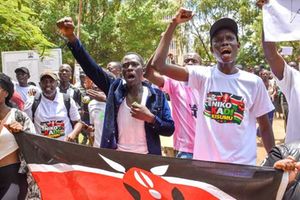
Observing upheavals within parties — such as the current tensions in the Orange Democratic Movement — one sees how internal discord can spill into electoral consequences.
Yet leaders must not become paralysed. “Be wise as serpents and harmless as doves,” Scripture counsels. Wisdom in this season means consolidating achievements, avoiding unnecessary fights, strengthening unity, and communicating clearly. Voters judge the final act with sharper eyes than the opening scene.
Ultimately, every political story, like our beloved kung fu films, builds toward judgment day. The hero who trains early, acts decisively, and avoids arrogance in the closing scenes usually triumphs. The villain who underestimates timing falls. And the audience — the wananchi — never forgets the ending. In politics, as in cinema, the final scene lingers longest in memory. Therefore, in this kipindi cha lala salama, leaders must choose their moves carefully, for history, like that old projector in Murang’a, keeps rolling.