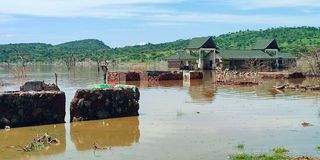
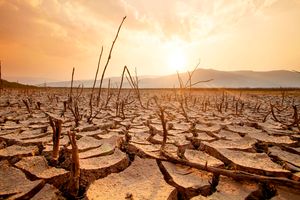
The climate crisis binds us all. Pastoralists in Turkana unable to plant because the rains failed, a child in São Paulo coughing through record-breaking smog, a family in Karachi struggling to breathe in 50°C heat, and fisherfolk in the Pacific finding fewer fish as oceans warm.
These stories may seem far apart, but they are all connected. They are the lived faces of a planetary crisis. And tragically, it is the poorest communities, those that have contributed least to the crisis, who bear its heaviest burdens.
Earlier this year, the World Meteorological Organisation confirmed 2024 was the hottest year on record. Global temperatures were 1.55°C above pre-industrial levels. For the first time, the global average temperature crossed the 1.5°C mark, a level scientists warn of escalating and potentially irreversible damage that could trigger more extreme weather events, accelerating biodiversity loss, and deepening social and economic inequalities.
Yet 2025 offers a critical chance to turn the tide. This month, countries are expected to submit their Nationally Determined Contributions (NDCs) (their official climate action plans), so progress can be assessed before COP30 in Belém this November.
Unlocking climate finance
Let’s be clear, setting NDCs is a non- trivial exercise. It is a declaration of intent that each country makes to confront the climate crisis with integrity and urgency. And beyond that, it is a national commitment to safeguard lives, livelihoods, and ecosystems. It is a promise to do everything possible to reduce emissions where relevant, and equally, to protect communities from the worst impacts of climate change by addressing, averting, and minimising losses and damages.
NDCs are not meant to be bureaucratic check-boxes or diplomatic formalities. They must be living documents rooted in science, shaped by justice, and responsive to local realities. When crafted with ambition and care, and local coherence, NDCs become key instruments of transformation. They can double as national investment and development strategies, aligning climate action with economic growth, job creation, and social equity. They can unlock innovation, mobilise finance, and catalyse community-led solutions.
Most importantly, they must speak to the people. Only then do they become meaningful and real. But ambition on paper is not enough. Our NDC highlights sectors such as forestry, yet our forests remain under constant threat. Recent moves to weaken community participation in forest governance, such as the unilateral takeover of Karura Forest management by the Kenya Forest Service, undermine both our commitments and our credibility as outlined in the Forest Conservation and Management Act 2016. How can we demand accountability from the world’s top polluters if we fail to honour our own pledges?
This disconnect is even more troubling given Africa’s heavy reliance on international financing—81 per cent of Kenya’s adaptation costs are expected to be met through external support.
At the Africa Climate Summit in Addis last week, leaders once again underscored the urgency of unlocking climate finance, both domestic and international. But no amount of funding will matter if local action does not follow.
Which is why every serious citizen, every conscious leader, and every young activist must do their part and rise to defend our forests. They are the sacred green shields that cushion communities from the worst impacts of climate change, regulate our water cycles, and anchor our biodiversity. The excision of forests like Imenti or Karura for non-critical infrastructure is not just poor planning, it is a betrayal of our collective future. These forests are not empty spaces waiting to be re-purposed, they are living systems that protect us, nourish us, and define us.
The uncomfortable truth is that many countries have ignored or watered down their NDCs. Current trajectories put us on a path toward 3.1°C of warming, an existential danger. Yet history reminds us that collaboration can deliver breakthroughs. This week, as we marked the International Day for the Preservation of the Ozone Layer, we recalled the Montreal Protocol of 1987. If the world could unite then, why not now, on an even greater challenge?
But ambition is uneven. Today, 60 per cent of global greenhouse gas emissions come from just ten countries. Three nations alone, China, the US, and India, account for nearly 43 per cent. These major emitters must lead with stronger action. But others, including African countries, must not shy away from ambition. So far, only 35 countries have submitted new NDCs. In the coming weeks, the world will learn if others rise to the moment. These pledges must not be empty promises. They must be backed by action. For Africa, this means turning ambition into tangible results in our communities and landscapes. For major emitters - stepping up with fairness and responsibility.
If we fail, our future will be bleak. But if we act with courage and sincerity, we could finally bend the curve of the climate crisis towards a safer, more just, and sustainable world.
Ms Mathai is the MD for Africa & Global Partnerships at the World Resources Institute and Chair of the Wangari Maathai Foundation