Nearly half of all Kenyans live in extreme poverty, and seven million more have been pushed into destitution since 2015.

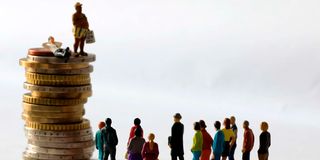
A great obscenity sits at the heart of Kenya’s economy: The richest 125 citizens now own more wealth than 42.6 million people — roughly 77 per cent of the population.
Nearly half of all Kenyans live in extreme poverty, and seven million more have been pushed into destitution since 2015, according to Oxfam’s latest report, Kenya’s Inequality Crisis: The Great Economic Divide.
The report is a blunt description of daily life in a country where growth has been decoupled from justice. The economy has expanded by an average of five per cent a year, yet most citizens are poorer today than they were a decade ago. The divide between those who have and those who are locked out is no longer a side effect of growth. It is the system. Kenya is not merely unequal; it is being reorganised around inequality.
That reality exploded into the open during the protests against the Finance Bill in 2024. Those demonstrations were a revolt against a broken social contract. Citizens can no longer be asked to tighten their belts while the state continues to protect privilege, subsidise inefficiency, and socialise the costs of elite excess.
When a government raises taxes on food, fuel and labour while leaving wealth, land and capital income largely untouched, it is no longer neutral: It is choosing privilege over poverty.
Inequality is not only about income gaps. It is about who absorbs shocks and who is insulated from them. Food prices are roughly 50 per cent higher than they were in 2020. Over the past decade, an additional 17 million Kenyans have fallen into moderate or severe hunger. Low-income households, especially in Nairobi, have experienced far steeper price increases than the wealthy. For the poor, inflation is not a mere inconvenience but a threat to survival.
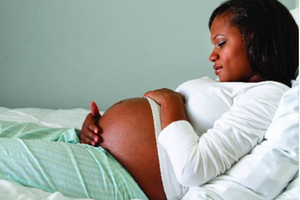
Women bear the hardest edge of this crisis. For every Sh100 earned by a man, a woman gets Sh65. Women are five times more likely to perform unpaid work, effectively subsidising the economy with invisible labour. Only 13 per cent of women legally own agricultural land, despite doing most of the farming; among the poorest households, that figure collapses to four per cent. This is the product of policy neglect layered on top of patriarchal and colonial legacies that were never dismantled after independence.
Inflation
Public services, meant to equalise society, have themselves become sites of inequality. In education, children from the poorest households receive almost five fewer years of schooling than those from the richest. Government capitation, adjusted for inflation, is now a fraction of its early-2000s value. Schools serving poor communities are forced to ration learning, dignity and hope, while private education flourishes for those who can pay.
Healthcare repeats the same story. Chronic underfunding has produced a fragmented system in which the rich access private care and the poor are locked out by fees, distance and shortages. The new Social Health Insurance Fund is being sold as progress, yet in an economy dominated by informality, only about 4 million people can make active contributions.
Public money continues to flow disproportionately to private providers. Universal health coverage remains a slogan, but in reality, it is a bridge too far.
Debt has become the silent enabler of the obtaining inequality. Last year, out of every Sh100 collected in tax, Sh68 were used to repay debt — double the share just seven years earlier. Debt repayment now eats up twice the education budget and nearly 15 times the health budget. This arithmetic is not neutral. It represents a political choice to prioritise creditors over citizens. We are mortgaging the future to satisfy the present demands of lenders.
Kenya relies heavily on value-added and consumption taxes, which punish the poor simply for staying alive. Low-paid formal workers face rising payroll deductions, while wealth ownership, capital gains, inheritance and property remain lightly taxed and weakly enforced. Labour is taxed harder than wealth. Survival is taxed harder than accumulation.
Decolonisation
The roots of this inequality lie in the unfinished business of decolonisation. Colonial Kenya was designed to concentrate land, power and opportunity in a few hands. Independence localised, rather than dismantled, that architecture. Devolution has barely scratched the surface in tackling this issue. These domestic failures are reinforced by a global system that privileges creditors, constrains social spending, and tolerates tax avoidance by multinational corporations.
Austerity is presented as a necessary evil even as it deepens inequality, suppresses wages and starves public services.
The way back is for public services to be reclaimed as rights and not commodities. Universal free education, genuinely universal healthcare funded through progressive taxation, and robust social protection are constitutional obligations.
The tax system must be rebuilt to reflect ability to pay: lowering the burden on low-income workers, taxing wealth and capital income seriously, introducing inheritance and net-wealth taxes, and ending the culture of exemptions and special deals for the politically connected. Jobs and land must return to the centre of the national conversation.
Kenya stands at a crossroads. It can continue to organise the economy around accumulation for the few, or it can choose to tax power to fund dignity. Inequality is a political choice from which Kenya can walk away. Doing so requires a deliberate redistribution of power, opportunity and resources, anchored in constitutional values rather than donor checklists.
Follow our WhatsApp channel for breaking news updates and more stories like this.
The writer is a board member of the Kenya Human Rights Commission and writes in his individual capacity. @kwamchetsi; [email protected]