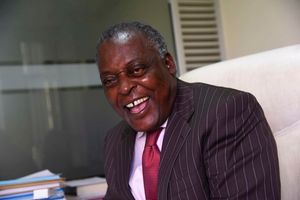
David Munyua of Kenya celebrates after beating Mike de Decker of Belgium in the 2026 Professional Darts Corporation World Darts Championships on December 19, 2025 at Allexandra Palace in the United Kingdom.

A month ago, David Munyua walked into Sporty FM’s Breakpoint studio carrying a quiet urgency. He had qualified for the PDC World Darts Championship, one of the most competitive stages in global darts, yet still lacked sponsorship to travel. There was no fanfare, no government delegation, no federation stepping forward. Just an athlete asking for help so he could represent Kenya on the world stage.
Weeks later, Munyua produced one of the biggest shocks in PDC World Championship history. He defeated world number 18 Mike De Decker, becoming the first Kenyan to win a match at the PDC World Darts Championship. The victory sent waves through the darts world and ignited pride back home. It was a moment that belonged entirely to him, earned through persistence, sacrifice, and belief long before recognition arrived.
As expected, congratulatory messages followed swiftly. Politicians and officials rushed to associate themselves with a triumph they neither funded nor facilitated. Kenya has perfected this ritual: silence during the struggle, celebration at the finish line. Success becomes a photo opportunity rather than a reflection of long-term planning or investment.
Munyua’s story mirrors a much wider reality. Kenya is bursting with talent across sports, education, science, and the creative arts. From track fields to laboratories, from studios to innovation hubs, Kenyans consistently demonstrate global potential. What continues to fail them is a system unable, and often unwilling, to nurture that potential from the ground up. Individual excellence thrives through resilience rather than support, through improvisation rather than infrastructure.
Institutional support
Sports provide the clearest window into this dysfunction. Take fencing. Alexandra Ndolo, among Africa’s most decorated fencers, has repeatedly spoken about the absence of meaningful institutional support during her career in Kenya. Despite international success, funding remained inconsistent and development pathways unclear. Eventually, she moved to Germany, where athlete welfare, structured training, and long-term investment are treated as standard practice. Her career flourished in an environment that understood talent as something to be protected.
Skiing tells a similar story. Sabrina Wanjiku, who once carried Kenya’s flag in a sport few Africans even access, retired early due to lack of support. Equipment, training, travel, and medical support remained personal burdens to her. In archery, Shehzan Kuki has raised concerns about athletes being expected to represent the country while financing their own participation through savings, online fundraising, or family support.
These accounts form a consistent pattern rather than isolated complaints. Beyond funding, Kenyan athletes have faced repeated logistical failures. National teams have arrived late to international competitions due to poorly coordinated travel. Some athletes have spent nights stranded in foreign airports after flights were missed or cancelled without alternatives arranged. Others have competed exhausted after chaotic journeys that compromised performance before competition even began. Meanwhile,, sports officials travel comfortably, booking flights and accommodation for themselves and their partners while athletes struggled to reach tournaments. The contrast is painful and familiar.
Governance failures
This breakdown reflects deeper governance failures. Many sports federations operate as political playgrounds rather than professional institutions. Leadership positions often reward loyalty over competence. Funds meant for development are absorbed by allowances, retreats, and endless administrative meetings. Accountability remains weak, audits rare, and consequences almost non-existent. Athletes become tools for prestige rather than the core purpose of the system.
The irony surrounding darts captures this failure with striking clarity. Kenya is one of the world’s leading producers of high-quality dartboards, made from sisal grown locally and exported across Europe and beyond. Kenyan land, farmers, and labour support the global darts industry. Yet a Kenyan darts player had to appeal on radio for sponsorship to compete at the highest level. The raw materials leave the country polished and profitable, while the talent struggles to find a pathway.
This pattern extends far beyond sports. Kenyan scholars excel once they access structured education systems abroad. Kenyan artists gain recognition after relocating to countries with funding, platforms, and protections. Kenyan innovators thrive where research grants, mentorship, and incubation spaces exist.
This writer is a journalist and a human rights defender
Back home, potential stalls under bureaucracy, limited investment, and short-term thinking. Success often arrives only after individuals leave, forcing the country to celebrate achievements it failed to nurture.
Munyua’s victory carries both pride and discomfort. It proves what Kenyan talent can achieve under pressure while exposing the cost of neglect. Individual breakthroughs should never be confused with institutional success. They highlight endurance, community support, and personal sacrifice rather than deliberate policy or planning.
In recent weeks alone, several Kenyans have earned international awards across different fields without any state backing. Each time, officials rushed to issue statements and claim association. These achievements emerged through personal effort, informal networks, and sheer determination. They were not outcomes of strategy or sustained investment.
Those with access, influence, and resources carry a responsibility that goes beyond applause. Supporting athletes early, amplifying their voices, demanding transparency from federations, and investing directly where possible all matter. Holding the ladder steady allows others to climb without carrying the full weight alone. Community support has filled gaps where institutions failed, and that solidarity continues to keep many dreams alive.
Kenya’s talent pool remains vast and resilient. The question facing the country is whether leadership will finally commit to building systems that allow excellence to thrive locally rather than leak outward. David Munyua’s historic win offers a chance for reflection and reform. It invites a conversation about priorities, accountability, and the true meaning of national pride.
Until that shift happens, Kenya will continue producing extraordinary individuals who succeed despite the system rather than because of it. And each victory, however sweet, will carry the quiet reminder of how much more could have been achieved if talent had been met with support from the start.
This writer is a journalist and a human rights defender.
Follow our WhatsApp channel for breaking news updates and more stories like this.