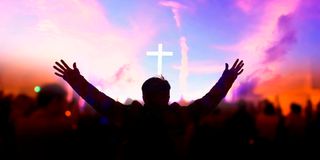
Religion can be a powerful tool in reconciling warring factions and fostering unity.

Today is Sunday, and so it’s only fitting we engage in introspection about religion and society. I want to observe, and not with the intention of controversy, that most people who practice religion, or faith, are not thinkers, or philosophers.
This is not a bad thing per se. But it is to say that most believers do not have a deep philosophical understanding of what they practice or believe. Strictly speaking, belief is the diametric opposite of reason. Reason is scientific. Belief isn’t.
We need look no further than so-called Pastor Paul Mackenzie, the bizarre cult figure who is accused of abusing religion to lead scores to their untimely killings. Even so, religion and belief are fundamental human rights in human civilisation.
Religion is so explosive and malleable that states regulate it, even if with a light hand. It attracts both the benign and the malevolent. If human history were to be colour-coded by religious acts, most religions might find themselves in the red, not the black. Think of the Christian Crusades and the Islamic Jihads, or unholy, or unjust wars, and you get my point.
In his 1843 work, A Contribution to the Critique of Hegel’s Philosophy of Right, Karl Marx, the iconic German philosopher, called religion the “opium of the people,” or “opium des volkes.” He posited that religion was like a drug used to dull, dupe, and numb the oppressed masses to the pain of exploitation to prevent revolution against elites.
I understand these are highfalutin debates, but we are a thinking society, and must not be afraid to think. And think we will. Otherwise, why did society spend so much money on us by sending us to expensive schools?
Christian preacher
My point today isn’t to debate whether god exists or not. But it is to think about the role and purpose of religion in society as opposed to reason. Or even perhaps to meld both. In this quest, I want to reach back to the works of Prof John Samuel Mbiti, arguably Kenya’s – and perhaps Africa’s — most renowned theologian-philosopher and thinker. The man was also a Christian preacher, an Anglican pastor. His works stood at the intersection of African religions and Christianity.
In his seminal work, African Religions and Philosophy, Prof Mbiti opined that “Africans are notoriously religious.” By this, he meant that in the African spiritual and material worlds, there was no separation between the sacred, or religious, and the secular – that all life was one philosophical and existential continuum.
If Prof Mbiti was right – and I think he was – then this explains why Europeans coupled Christianity and colonialism to subjugate the African. To Africans, all religions were “good.”
That’s why it was so easy for messianic Christianity to be embraced by the African, or coerced into his life. Africans did not have well-built defences against religion. Once the European collapsed the African spiritual universe, and conquered his soul, it was easy to implant colonialism and Eurocentrism.
Unlike the European, the African did not naturally go through the Age of Enlightenment, or the Age of Reason. That’s why the African has trouble managing the separation of Church and State, or the secular and the religious. He conflates both and treats them still as one continuum. The Age of Reason takes logic and science as the primary sources of knowledge.
Not tradition or mystical revelations. Human agency, individual rights, separation of powers, and the idea of progress are central to secularism and the Age of Enlightenment, in which rationalism and empiricism ended the absolute rule of kings and the dogmas of religion, especially the Catholic Church, in the 17th and 18th centuries in Europe. These ideas are central to Kenya’s 2010 Constitution.
Half-baked beliefs
The core pillars of Enlightenment Thought are with us in Kenya and superficially animate our society through the colonial experience. But we have not taken the time as a society to critically interrogate them.
As such, we swallow undigested half-baked beliefs. That’s why in Kenya, religion largely remains the opiate of the people. It’s the reason the most popular domiciliary for a politician is the pulpit.
It’s also the reason we don’t really understand our democratic ethos and dispensation, and tend to conflate law with religion. We should instead understand law as an expression of hard economic interests and moral choices. In this secular logic, we would easily understand our primary national interests and use the state to drive them.
I am saying that we should separate Church from State, and give unto Caesar what is his, and let the believers give unto God what is his. In such a state, governance would become easier because we would punish corruption and impunity without pity in the secular realm by strictly applying the law.
Religious excuses about human fallibility, pity, or concepts of forgiveness would go out the window. We would become a society of equity and merit. This is partly why the West unlocked the genius of the Great Society.
Follow our WhatsApp channel for breaking news updates and more stories like this.
Makau Mutua is SUNY Distinguished Professor and Margaret W. Wong Professor at Buffalo Law School, The State University of New York. On X: @makaumutua.