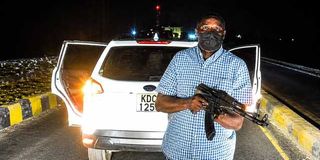
Hours before masked men abducted Mr Alex Kiprotich, an editor at the Standard Group, in Naivasha, their digital equivalent had mounted a campaign on social media against top editors at the Nation Media Group.
In Meru, a journalist at Kameme TV was harassed at the county government offices. These actions, whether or not they’re related, amount to an attack on media freedom and the public’s right to know. They undermine democracy.
In the well-coordinated social media campaign, individuals hiding behind fake names trolled the NMG editors. They did not specific accusations, just a blanket condemnation.
Online harassment is as harmful as physical harassment. It not only causes distress and anxiety for the journalists, but can intimidate them into censoring themselves. It also puts editors at risk of physical attack by individuals who believe in the vitriol of the campaign.
The abduction is traumatic and dangerous. There are cases of Kenyans who ended up dead after being abducted. Some are still missing. Mr Kiprotich was too traumatised to speak to journalists about his ordeal. No doubt, the incident has left his colleagues and fellow journalists shaken too.
The entire media fraternity, including the Media Council of Kenya, the Kenya Editors Guild and the Kenya Union of Journalists, has condemned the harassment and called on police to investigate the abduction. Inspector-General of Police, Douglas Kanja, promised an investigation and stated that his officers were not involved. The public awaits his findings and action.
These incidents, coming months before the General Election, can only be seen as a deliberate attempt to intimidate and muzzle the media, or to force them to report in a way that favours certain individuals. The Constitution protects media freedom, as well as the public’s right to information. There are also avenues to deal with media houses or journalists deemed unprofessional.
The Media Council’s Complaints Commission exists to mediate and adjudicate disputes involving the media and the public. It is also tasked with ensuring that journalists and media houses adhere to the Media Council’s Code of Conduct for Media Practice in Kenya. At NMG, all journalists – including senior editors – are guided by the Editorial Policy, which is displayed on the company’s website. The policy binds journalists to adhere to the tenets of accuracy, balance and fairness. It also provides channels for redress, including publishing corrections and apologies.
In 2015, media house created the role of Public Editor to serve as an ombudsperson, looking into any grievances readers, viewers and listeners might have. The Public Editor operates independently and reports to the Editorial Committee of the Board. It, therefore, beats reason why anyone aggrieved by the media’s coverage would resort to guerrilla tactics like those witnessed in the last few days instead of using the available mechanisms to seek redress. These old tricks from the dictator’s handbook have no place in a democratic country like Kenya.
Tuesday night’s NTV talk show, “The Last Word”, disappointed many viewers who had hoped for an informative conversation about the change of police uniform. By yesterday, the station’s YouTube channel had 60 comments, most of which criticised one of the hosts. A few thought one of the panelists, Government Spokesperson Charles Owino, spent too much time telling stories and evading questions.
I found the interviewer of this show very combative and unprofessional. I couldn’t watch the show beyond the first 30 minutes. Was the handling of the guests, particularly Charles Owino, professional?
The Public Editor agrees with Ms Were and some of the viewers’ comments. Overall, the show failed to meet expectations. The topic was poorly researched and the hosts seemed to have had a predetermined answer to the discussion question. Not only did the hosts fail to steer the conversation with well-informed questions, but they also allowed some of the panelists to digress and dwell on irrelevancies.
One of the hosts displayed a lack of knowledge about some issues and appeared to make up for this by being abrasive, interrupting the panelists and making claims she could not defend.
She was, for instance, not aware that women in the police force are entitled to maternity leave, and had to be informed by a panelist. She also displayed naivety when Mr Owino spoke about police officers at the border operating from caves, asking why they did this.
Contact the Public Editor to raise ethical concerns or request a review of published material. Reach out: Email: [email protected] . Mobile number: 0741978786.