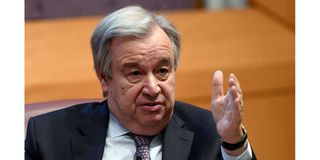
United Nations Secretary-General Antonio Guterres.

The race to replace António Guterres, whose second and final term as United Nations secretary-general ends in December, has attracted eight candidates, including Ugandan diplomat Olara Otunnu. Others are Carolyn Rodrigues Birkett of Guyana, Costa Rican Rebeca Grynspan, Rafael Grossi of Argentina, Macky Sall of Senegal, Maria Fernanda Espinosa of Ecuador, Michelle Bachelet of Chile and Ecuadorian Ivonne A-Baki.
This is an important global development, coming at a time when questions are being raised about the future of the UN and its relevance today.
Specifically, its failure to rein in some of its powerful members and to stop wars has been called out.
There are also those who argue that, even with these obstacles, the UN remains relevant and irreplaceable, especially because of its programmes and legitimacy. The impending change of guard should therefore reignite discussion of these issues.
As part of the selection process, which the UN says follows principles of transparency and inclusivity, the candidates participate in an interactive dialogue where they present their visions and answer questions from member states and civil society.
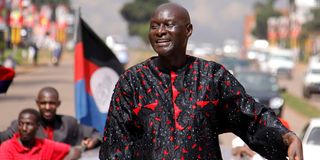
Dr Olara Otunnu.
Based on the dialogues, the UN Security Council conducts polls to gauge support among its 15 members. It will gradually narrow the field before it makes a formal recommendation to the General Assembly.
A media house of NMG’s stature is expected to pay attention to this developing story, and keep its audiences involved and engaged. Viewers, listeners and readers expect not just brief profiles of the candidates (as published), but intelligent analysis of what each of them represents.
Why were they nominated? What have they achieved on both national and global stages? What is their vision for the UN? How will they address the existing apathy and inspire confidence? What reforms are they promising, and how realistic are these?
There is also the question of women. Five of the candidates are women, and there is a strong push to have the UN headed by a woman for the first time. Is this likely to happen? Who are the women in the race? How have they performed in the straw polls? What works to their advantage? What hurdles do they face? Will they be favoured or disadvantaged by regional interests?
Another reason for more intentional coverage is the candidacy of Ugandan diplomat Otunnu. The former UN Under-Secretary and Special Representative for Children and Armed Conflict was nominated by President Yoweri Museveni. Ironically, his first bid at the position in 1991 failed after President Museveni opposed it. He and former President Sall are the only Africans in the race.
Mr Otunnu’s name may not resonate much with youthful Africans as he left the global stage and retreated to work at the grassroots level in northern Uganda. A detailed profile would help to re-introduce him to the world. Additionally, is Mr Otunnu East Africa’s candidate? Does he have the support of the other countries in the region? Will the African Union throw its weight behind him? What about Mr Sall, who was nominated by Burundi, which is a member of the East African Community? These are questions the audience expects the media to answer.
Why is the coverage so muted compared with that of former Cabinet Secretary Amina Ibrahim’s and former Prime Minister Raila Odinga’s bids for the chair of the African Union Commission?
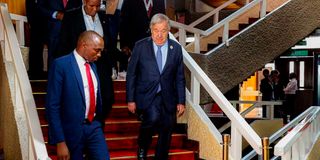
United Nations Secretary-General António Guterres at Kenyatta International Convention Centre (KICC) on May 12, 2026 attending the final day of the Africa Forward summit.
NMG is squandering an opportunity to assert itself as the media house for Africa as stated in its vision, and to flex its muscle as a regional powerhouse. The respected The EastAfrican newspaper should lead the charge on this coverage. The Monitor, which NMG owns, is providing extensive coverage of the contest and Mr Otunnu’s candidacy. Cross-publishing these stories will cost nothing.
NMG should also consider this a business imperative. Nairobi is a UN headquarters hosting thousands of employees. This story matters to them because the next leader of the UN will have a direct bearing on their work and future. These UN workers want to understand both the global process and the local nuances.
The lacklustre and parochial treatment of such important global issues is what gives the local media a bad name.
Follow ourWhatsApp channel for breaking news updates and more stories like this.
Contact the Public Editor to raise ethical concerns or request a review of published material. Reach out: Email: [email protected]. Mobile number: 0741978786.