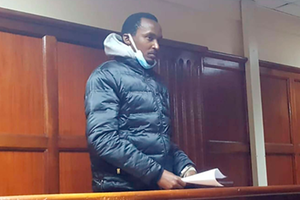
Journalists cover a press conference at KICC in Nairobi on June 27, 2026. Sustained media follow-up is essential to keeping public-interest issues and accountability in focus.

The recent conviction of former Migori Governor Okoth Obado and two other people for the murder of Ms Sharon Otieno concluded a story that first broke in 2018 when the university student was killed. The media stayed on it at every stage, an excellent illustration of follow-up journalism.
It could be argued, perhaps rightly, that the consistent coverage of the Sharon Otieno murder case was because of the prominence of the person at the centre of the crime.
It could also be argued that court cases are easy to track because sessions usually end with a notice of the next hearing or mention date. But it still takes a well-organised journalist or editor to keep a record of the dates and ensure coverage.
Regrettably, effective follow-up on stories is an exception rather than the norm for most media outlets, including the Nation Media Group. Scores of murders, crimes, calamities and other issues have made headlines, but fizzled out as fast as they came to light.
Unfortunately, in the absence of media scrutiny, investigations sometimes get compromised or dropped altogether, denying the victims and their families justice. Promises of help in cases of calamities go unfulfilled, and people in positions of responsibility evade accountability.
When the media publishes or broadcasts a story, it enters an unwritten contract with the audience. It informs the audience that the issue being covered is important enough for attention and creates an expectation of its resolution.
The audience wants to know if a crime was solved, or if, when, and how justice was served. When the journalist fails to follow up a story, it leaves the audience in the dark. The facts are left hanging, and expectations remain unmet. The reader, viewer, or listener feels cheated and could lose trust in the media house.
Take the story of the former energy agency boss, who was accused of torturing employees. In what sounded like a plot of a horror movie, Nation platforms reported that police were investigating a report that a former boss of an energy agency had tortured his employees.
According to the stories, four employees of an Eldoret-based company reported being held incommunicado, beaten, stripped, and threatened with death, and forced to surrender millions of shillings and personal property to Tarita Group Limited in exchange for their freedom. Their mouths were stuffed with socks to muffle their screams. They were saved by the police, who were called by one of their spouses. A police officer is quoted as confirming that he had indeed rescued the four employees. Six suspects, whose names were revealed in the story, were arrested.
A story as dramatic, puzzling, and disturbing as this one deserved a follow-up.
The audience was left wondering: What happened next? Were the suspects ever arraigned, or was the matter settled out of court? Were the properties and cash surrendered under duress returned to the victims? Was the former energy agency boss ever held to account?
In another story, it was reported that a senior police officer, Ms Agnes Muthigani Ndanu, had pushed her partner, Ms Nicole Akinyi, from their sixth-floor apartment’s balcony on July 4, 2026. Ms Akinyi narrated her ordeal to the journalist from her bed at Kenyatta National Hospital where she was admitted with a broken arm, deep cuts on her leg and a spinal fracture.
The journalist spoke to the police, who said they were investigating the matter, and also reported that the Independent Police Oversight Authority had taken up the case.
More than a month later, readers, viewers and listeners are still waiting for a follow-up to this story. Were the investigations concluded? Is Ms Ndanu still serving in the police service? Was she ever charged over the incident? What about Ms Akinyi? Is she still in hospital? How is her health?
While the stories are seemingly about individuals’ private affairs, they involve serious crimes of assault, and possibly attempted murder.
These are criminal offences that the State should prosecute. And, as the Nation journalist stated in one of the reports, the Ndanu incident was about abuse of power.
Then there is the matter of three senior energy officials who resigned over what Kenyans were told was a fuel scandal. Their resignations followed arrests and an official probe. There remain unanswered questions: What became of the investigations? Why haven’t they been charged? Has any public money been recovered? Were they permanently removed from public service?
Other high public-interest matters calling for follow-up stories are the Hillside Endarasha school fire, the mystery case of bodies dumped in Kware quarry in Nairobi, and the shocking escape of suspect Collins Jumaisi from Gigiri Police Station. Was he ever rearrested? Were the officers on duty disciplined? What security changes followed?
There is also the case of the Embakasi gas explosion, where questions are still being asked: Did victims receive compensation? Were illegal gas plants shut down? Were licensing officers prosecuted? Have safety standards improved?
On the fake fertiliser scandal, Kenyans want to know how many farmers were compensated and which suppliers were prosecuted. Following up on these important stories shifts journalism from merely reporting events to assessing accountability, especially of public officers.
Follow ourWhatsApp channel for breaking news updates and more stories like this.
Contact the Public Editor to raise ethical concerns or request a review of published material. Reach out: Email: [email protected]. Mobile number: 0741978786.