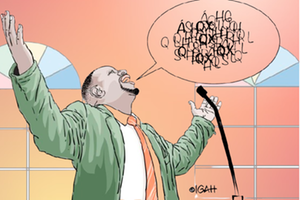
For the past few years, young people in Kenya have carried a weight that is often unseen. Every time we speak, every time we raise a concern, the questions come.
“What is your plan?” “Who should we vote for?” “What are you going to do next?” It can happen anywhere, a coffee shop, a school event, a community meeting and in that instant, ordinary Kenyans become representatives of an entire generation.
The truth is that Kenya did not arrive here because of Gen Z. The corruption, the inequality, the broken roads, and the failing schools and hospitals are not new problems. They were built and reinforced over decades.
They were lived with, tolerated, and challenged by generations before ours. To now turn to young people and ask that we fix everything is unfair. It shifts responsibility away from those who have power and influence and places it on those who have only just begun to find their voice.
What young people bring is not a finished blueprint. It is a refusal. It is protest in the streets, organising in communities, speaking out online, demanding accountability in spaces that were once unsafe or impossible. It is honesty and energy, raw and visible, but it is not a complete plan for governance. It is a spark. The work of turning that spark into lasting change requires all of us.
We have inherited freedoms because of those who came before us. Teachers who stood up in classrooms and refused to let abuse continue. Mothers and fathers who fought quietly in their communities for better health services.
Activists who risked jail to defend the right to vote or the right to speak. These sacrifices are the reason young people can protest today without fear of being erased entirely. No generation is above the other. No generation is less valuable. Each carries its own burden and has contributed in its own way.
Intergenerational cooperation
Change needs solidarity. It needs intergenerational cooperation. Young people need guidance and support, not scrutiny. Imagine a student in Mombasa helping organize a local protest while her mother, a community leader, speaks with local officials to ensure those protests are safe. Or a teacher in Kisumu encouraging students to demand accountability, while older colleagues advise how to engage without risking their futures.
Responsibility must be shared. Not everyone will march in the streets, and that is fine. Some will organise petitions. Some will create awareness in their workplaces. Others will fundraise to help families affected by state violence. Every action matters. Every contribution builds momentum.
The mistake is assuming that visibility equals ownership. Because young people are active, they are asked for all the answers. They are asked to lead, organise, and fix while being judged for every misstep. But the real question should be: what are the rest of us doing? What are the adults, the professionals, the parents, the community leaders, and the policymakers doing in their spaces to ensure this country works for everyone? Change cannot happen in isolation. It requires collective effort, responsibility, and courage from all corners of society.
Look at the small acts of solidarity across Kenya. A lawyer in Nairobi provides free legal aid to families affected by police brutality. A farmer in Kitui supports school feeding programs for children in remote villages. A retired teacher in Eldoret mentors youth leaders navigating local government bureaucracy. These actions, though quiet, create space for young people to act boldly without collapsing under the pressure of carrying the entire country alone.
This is why intergenerational solidarity is not just a slogan. It is essential. It is older generations stepping in to guide without controlling, offering wisdom without silencing energy. It is younger generations pushing forward with creativity and urgency, knowing that they do not start from zero. Both are necessary.
Responsibility shows up differently depending on where someone stands. It shows up in daily choices, in workplaces, in homes, and in public spaces. It shows up in whether people speak out against corruption, challenge injustice, or support those risking their safety to demand accountability. It is not about perfection.
Right now, young people are visible. That visibility draws attention, questions, and expectations. But visibility is not a responsibility alone. Responsibility belongs to all of us. We all have a role. We all have influence. We all must act.
So when the focus remains on what young people will do, we miss the larger point. The question should be: what are we all doing in our own spaces to ensure Kenya works for everyone?
This is not a Gen Z fight. It is not a youth fight. It is a Kenyan fight. And its success depends on every Kenyan carrying their part, whether in the streets, classrooms, offices, homes, or communities. When we act together, the spark of refusal becomes a flame of transformation. Together, we create a Kenya where courage, wisdom, and accountability belong to all of us.