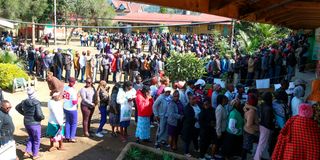
Last week, I wrote about Ol Kalou and what looked, at first glance, like the oldest story in Kenyan politics. Political parties had descended on the constituency with deep pockets, determined to outspend one another in a by-election that quickly became less about representation and more about financial muscle. Residents spoke openly about receiving money every day. Cooking gas cylinders, shoes, cash and promises flowed more freely than policy discussions.
My argument then was simple: Voter bribery survives because poverty makes it possible, and it is often condemned most loudly by people privileged enough never to have to choose between a politician’s handout and putting food on the table.
But Ol Kalou offered a bigger lesson than the election result. After months of politicians showering residents with money, gifts and promises, voters accepted the handouts but reclaimed ownership of the election, proving democracy works when citizens refuse to sell it.
That spirit was visible throughout polling day. Residents stopped police officers heading to polling stations and demanded that they open their bags before entering. The officers complied. Instead of leaving after casting their ballots, many stayed to watch the entire process.
They streamed the counting live on social media so thousands more could witness it, while others followed the tallying from home on television, comparing official announcements with what they had seen online.
When ballot boxes were transported to tallying centres, residents escorted the vehicles, determined that the votes they had cast would arrive exactly as they had left the polling stations. It was a reminder that democracy does not end after marking a ballot; it also requires citizens willing to protect it.
There were darker moments, too. Several men accused of being hired as political goons were identified and subjected to mob justice before police intervened. Videos later showed some of them admitting they had allowed themselves to be used by politicians and urging fellow young people not to make the same mistake.
While violence can never be justified, the incident exposed an uncomfortable reality.
Every election season creates a market for unemployed young people who are recruited to intimidate fellow citizens while the politicians who hire them remain safely removed from the consequences.
Perhaps the biggest surprise came after all the spending. Political parties reportedly poured enormous resources into the constituency. Cash changed hands. Goods were distributed. Every familiar tactic was deployed. Yet many residents accepted what they were given and still voted according to their conscience. One elderly resident captured the mood in a sentence that has stayed with me ever since: “Hakuna pesa tumechukua. Pesa ni zetu .” (We did not take anyone’s money. That money is ours.)
Those words represent a shift in thinking that could change Kenyan politics. For decades, politicians have convinced citizens that campaign handouts are acts of generosity deserving loyalty. But the money they splash around was never really theirs. It comes from taxpayers and public resources that should have improved people’s lives long before campaign season. The moment citizens stop viewing those handouts as favours and start seeing them as a small return of what already belongs to them, voter bribery begins to lose its power.
This is why what happened in Ol Kalou matters far beyond the contest between UDA and DCP. It is not about one party defeating another. It is about ordinary Kenyans discovering that economic survival does not have to dictate political choices.
For decades, Kenya has been trapped in the same cycle. Politicians distribute money during campaigns, recover it through corruption and the misuse of public resources after winning office, then return five years later with another round of handouts. Citizens remain poor enough to need the money, while those in power grow wealthier. It is a system designed to preserve itself.
Ol Kalou offered a glimpse of something different. Citizens questioned authority, guarded polling stations, documented every stage of the process and escorted ballot boxes to protect their votes. Most importantly, they reminded politicians that while money may attract a crowd, it cannot guarantee loyalty.
For the first time in a long while, I find myself genuinely hopeful about next year’s General Election. If the rest of the country adopts the same vigilance, then perhaps we can finally break the oldest bargain in Kenyan politics: keeping citizens poor enough to be bought while pretending those handouts are gifts.