They say beauty is in the eye of the beholder. This is true, and what’s interesting is that the wisecrack predates the Age of Woke. In case you’ve no clue, the Age of Woke is rooted in the African-American political tradition of fighting against social injustice.
It traces its origins to the 1920s. Simply put, its genius lies in the consciousness of being aware of deeply embedded inequities and social injustice. It came into the American mainstream and vogue a decade ago with social justice movements such as Black Lives Matter.
Meaning “stay awake” or “up-to-date,” it’s now part of progressive culture and politics. It frowns upon all forms of domination and subordination, including the curation of stereotypes, bullying, put-downs, and innuendo.
That’s why perception isn’t everything. Let’s take propaganda, for example. The root of the word “propaganda” is the benign “propagate”. Propagate itself is from the Latin “propagare”, meaning to put forward or spread something.
It is to widely spread ideas or disseminate beliefs or information. For this reason, propagate has an evangelistic germ. No wonder the Roman Catholic Church formalised its use in the 1600s to promote the Christian faith.
But somewhere along the way, the word propaganda acquired a bad name. Today, it largely means to spread biased or false information using slogans, the manipulation of the subconscious with images and other tools of the media. You can imagine the multiplier effect on propaganda by social media. If only the Catholic Church of the 1600s knew.
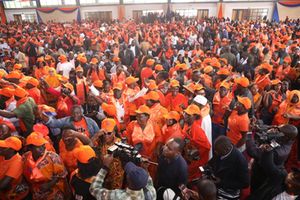
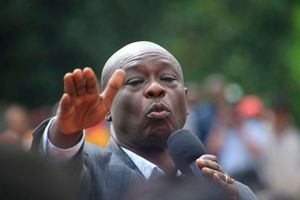
I write about propaganda today because Kenya is headed towards the most perilous election in its history. Let me stipulate a few basic knowns before I delve into the unknowns and everything in between.
The 2010 Constitution, long a dream of progressives and democrats, including unlikely bedfellows, opened a can of worms. Typically, opening such a can isn’t a good thing. But in this case, we uncorked a mostly good mixed bag. I call it mixed because the elite sold to the hoi polloi a liberal’s nirvana. Daniel arap Moi, the dictator who had ruled Kenya for 24 years, made liberalism attractive to the majority of Kenyans. The only problem was that liberalism isn’t native to the African tongue.
Frankly, liberalism – which germinated in Europe and America – wasn’t native to those cultures either. The only difference is that it grew out of their historic struggles with the state. For Kenya and Africa, liberalism was an import. That’s why it’s been harder for Africans to speak the language if liberalism fluently. But one might retort that Africans aren’t the only ones struggling with liberalism. That’s right, also, but it doesn’t make liberalism indigenous to Africa. Its most prominent originator was the English philosopher John Locke, the most influential thinker of the Enlightenment. His 1689 Two Treatises of Government is the philosophical manifesto of the modern democratic state. Since then, modern societies have tried to build societies of equality, freedom, and autonomy by limiting state power.
A few years ago, I wrote a law review piece entitled the “Fraud of John Locke: Subnational Challenges to Democratic Theory”. In it, I argued that identity – in particular race, religion, and ethnicity – made true democracy a mirage. I posited that the individual was largely incapable of making rational, unbiased, and unimpeachable choices to give democracy its full potential. I still think so today. That’s because democracy is highly susceptible to propagandistic manipulation and thoughtless navel-gazing. This isn’t to say I want to live in a dictatorship, a monarchy, or an autocracy. No. But it is to say that we must realise the limits of liberalism – and its offspring of democracy – and mitigate them. One way to mitigate these dangers is to address propaganda.
What am I saying? I believe that democracy practised the right way is the only system that has the potential to give human society the most happiness. But all systems suffer fatigue and can be demagogued. Liberal theory and philosophy isn’t infallible. Nor is human rights one of its outgrowths. I have also critiqued human rights in a seminal piece entitled “Savages, Victims, and Saviours: the Metaphor of Human Rights”. I point to the pitfalls of human rights and call for corrective efforts. For long, the White West has believed – and thought – that Black Africans only consume ideas of others, and cannot produce any themselves. Africans are like a pit latrine that cannot reject anything. This sort of propaganda must be rejected out of hand.
All propaganda isn’t bad. But we mustn’t fall prey to destructive, toxic political propaganda driven by malignant forces who are simply greedy for power and domination, be they domestic or foreign. As we go into the 2027 elections, let us keep this in mind and stop parroting toxic propaganda under the guise of democracy or the right to expression. Let us not be manipulated by social media or by undigested euphoria. Anyone who is looking for a vote must prove their worth.
Makau Mutua is SUNY Distinguished Professor and Margaret W. Wong Professor at Buffalo Law School, The State University of New York. @makaumutua.