There is a fever over the land. The 2027 political season is upon us, and a collective madness has gripped Kenya. Irish poet William Butler Yeats wrote in the “Second Coming”, the evocative poem, that in the “turning and turning in the widening gyre” that the “falcon cannot hear the falconer”.
He surmised that “things fall apart” because the “centre cannot hold” for “mere anarchy is loosed upon the world”. That’s how this political season emotes. As Yeats opined, “the best lack all conviction, while the worst are full of passionate intensity”. In this din, “zoning”, a form of political gerrymandering, is the flavour of the month. But is electoral zoning democratic, or a corruption of the one-person, one-vote principle?
The answer to that question is both yes and no. I am not both-siding the problem. That’s because it depends on how you define, or understand, zoning. What’s or who’s being zoned in, or zoned out? Who is zoning? Wherefore is zoning necessary? Does zoning, no matter how it’s understood, retard democracy? If so, should the IEBC ban it?
In its classic form, gerrymandering is meant to create a non-competitive electoral district by locking in an ideological, racial, ethnic, or religious demographic that predominantly favours one party over all others. In the US, for example, a state Republican legislature might create a largely white, or conservative, district that virtually guarantees only a white conservative Republican can be victorious there.
Used in this American example, zoning or gerrymandering vapourises democracy because it permanently negates the votes of those who aren’t in the favoured demographic. In essence, it disenfranchises certain voters. American courts have seesawed on the constitutionality of gerrymandering depending on the ideological composition of judges, and how blatant the gerrymander was done.
In Kenya today, there’s a hot war on zoning. Parties are presenting only the arguments that favour them, not those with wider implications for Kenya’s nascent democracy. Underneath the hot rhetoric is fear – fear of political obliteration of one side by the other. There’s more than meets the eye. Let me peel your eyes without fear, or favour, so you can be the judge, jury, and the executioner.
First, let’s stipulate Kenya has been divvied up historically into political ethnic strongholds under the grip of an ethnic kingpin. That’s why Wiper leader Kalonzo Musyoka can publicly threaten young politicians with political ruin in Ukambani if they dare play footsy with UDA.
It’s why DCP owner Rigathi Gachagua openly curses politicians, artistes, and anyone in Mount Kenya who dares associate with UDA. The man thinks that he owns the Kikuyu, Meru, Embu, and now even the Akamba. He wishes damnation on anyone in this ethnic cousinage who thinks for themselves. That of course violates the rights to free assembly, speech, association, thought, and belief which are the key tenets of a democratic polity. May be the man never read the 2010 Constitution.
Second, Kenya is a democratic state by norm and evolving practice and tradition. That means all Kenyans are by law individuals of free will. No one is held in bondage and we all have formal agency. This doesn’t make us slaves of our degrees of consanguinity. Such primordialism is anathema to democracy.
As our democracy grows and matures, we are supposed to think more like individuals who are less bound by blood, but more connected by interests larger than the clan, tribe, region, or even faith. Ultimately, this is what will lead us to vote for those who aren’t our kinsmen or come from our region because we share values and interests with them more than those who are part of our ancestry.
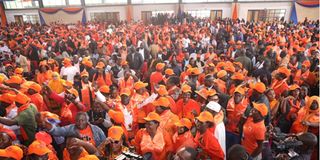
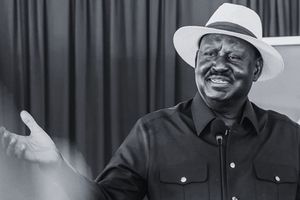
ODM, the political behemoth that was founded by the late Raila Odinga, for many decades Kenya’s political colossus, has protested the loudest and sued most fiercely for zoning against UDA. Important to note is that both ODM and UDA are in a bourgeoning coalitionary arrangement in government with the intention of forming a legal political juggernaut to fight the 2027 election together as one formation. ODM fears that if UDA fields candidates in its strongholds or recruits its luminaries that it will become impotent.
ODM would rather each party fields candidates in its strongholds to avoid splitting the vote and giving those outside the coalition an opportunity beat them. There’s merit to this argument because it will split the vote and allow their opponents to win.
Finally, there’s potential danger to zoning. If zoning guarantees party stalwarts direct tickets to protect unpopular incumbents, ODM strongholds will suppress the vote and be less useful in the coalition with UDA. Zoning understood this way is suicidal.
ODM needs to allow wide open competition within itself to produce the strongest and most popular candidates down-ballot. This will make ODM strong and a formidably viable partner with UDA. On the flip side, UDA must let ODM organise its house internally to be stronger. That type of zoning is democratic.
Makau Mutua is SUNY Distinguished Professor and Margaret W. Wong Professor at Buffalo Law School, The State University of New York. @makaumutua.