When you consider many African countries today: our demographic dividend, our natural wealth, our ingenuity, our cultural wisdom, this must surely be our turn to win. Our long-awaited breakthrough into real economic transformation should be nigh!
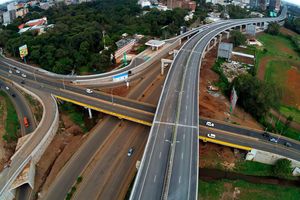
And yet, it is not happening, at least not for the larger majority. Instead, we are confronted with the painful reality that we are regressing. We see it in the rising cost of living, where families spend most of their income on food yet children still go hungry, in youth unemployment, with millions of graduates facing shrinking opportunities. We see it in the growing informal settlements that lack clean water, healthcare, and reliable connected transport. We see it in the loss of critical green spaces, “grabbed” to enrich a few, even as GDP climbs.
Oxfam’s 2025 Inequality Report makes this abundantly clear. It reveals that while Africa is home to some of the world’s fastest-growing young populations and richest mineral reserves, extreme inequality is deepening at a pace that undermines every promise of prosperity.
The report shows that a handful of elites increased their wealth even as tens of millions were pushed further into poverty. It also shows that austerity and debt servicing continue to drain public budgets while essential services such as health, education, and social protection remain chronically underfunded. These realities demand a rejection of the false narrative that Africa is simply “lagging behind.”
The truth is sharper: systems designed elsewhere continue to extract from us, while governance failures at home deny our people the dignity and opportunity they deserve. If this is Africa’s moment to win, then we must seize it not with polite optimism, but with fierce insistence on justice, redistribution, accountability, and a new economic model that puts people, not profit, at the centre.
Consider this: What does it truly mean to build a society rooted in equality? And can we ever hope to confront our greatest existential challenge, climate change, without first dismantling the injustice of inequality? The truth is clear: without equity, there can be no resilience; without fairness, there can be no lasting climate solutions. The inequality of our society is as apparent to us everywhere.
In our cities we see the delineation of wealthy neighbourhoods from informal settlements; how suddenly the lush green of a neighbourhood is juxtaposed with corrugated iron roofing on the other side of the fence. Inequality separates people from those who have access to green spaces such as Karura Forest or Ololua Forests in Nairobi. The data makes it more glaring. Oxfam’s inequality report on highlighting inequity in Kenya noted that the richest 125 Kenyans hold more wealth than 77 per cent of the population.
Even more astonishing is that in 2024, Kenya’s real Gross Domestic Product (GDP) grew by 4.7 per cent, and in 2023 it grew by 5.7 per cent. The question is therefore growth for whom? What does it mean when the economy expands, yet the majority of citizens remain excluded from its benefits? What does it mean when prosperity is measured in numbers, but not felt in households, schools, or hospitals?
In 2022, Sandrine Dixson‑Declève and Johan Rockström, together with a team of visionary thinkers, wrote Earth4All: A Survival Guide for Humanity. Much like The Limits to Growth 50 years earlier, this book sounded an alarm. It revealed the inconvenient truth that rising inequality is not only a moral hazard, but another of the greatest crises of our time, threatening social stability and making it harder to tackle climate change. They made the case that inequality is unjust and destabilising. Earth4All’s analysis showed that societies with large income and wealth gaps are far less able to respond adequately to the environmental crisis.
Rising inequality creates dysfunctional societies, fuels resentment, and makes climate action politically harder to achieve. Earth4All warns that without urgent action to reduce inequality, we risk a vicious cycle of social collapse that makes climate collapse inevitable.
This book challenged us to imagine a different trajectory where five extraordinary turnarounds are central: ending poverty, addressing inequality, empowering women, transforming food systems, and transitioning to clean energy, and that these could stabilise the planet and deliver prosperity for all within a single generation.
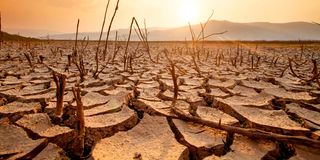
The truth could not be clearer: tackling inequality is existential. Across Africa, where communities contribute the least to the climate crisis yet suffer its harshest blows and sadly inequality becomes a multiplier of devastation. If we fail to confront it, we condemn millions to escalating climate shocks: from farmers losing their crops and livelihoods, to families displaced by floods and droughts, to young people whose futures are cut short before they begin.
But if we dare to redistribute wealth, to unleash the power of women, to transform our food systems, and to invest in economies that put people and planet first then we stand a chance to break this cycle.
Ms Mathai is the MD for Africa & Global Partnerships at the World Resources Institute and Chair of the Wangari Maathai Foundation