On October 25, Serbia’s Student List won the country’s parliamentary election in a political earthquake. The movement grew out of protests after a railway station canopy collapsed in Novi Sad, Serbia’s second-largest city, in November 2024, killing 16 people. It is now the country’s leading political force.
It won about 52 per cent of the vote and is projected to take 140 of 250 seats, enough to govern alone. Aleksandar Vučić, whose party had ruled for 14 years, conceded defeat immediately.
The new parliament must meet within 30 days of the final results and form a government within 90. Acting president Ana Brnabić will nominate a prime minister, who needs 126 votes. Serbia must also elect a new president by December 27.
The students stayed off the ballot and did not name a leader. Two names lead the race for prime minister. Ilija Srdanović, a cardiologist and professor at the University of Novi Sad’s medical faculty, leads the list and backed the protests from day one. Dejan Šoškić is an economics professor and former governor of the central bank. Both owe their place to the campus assemblies that chose all 250 candidates.
On December 17, 2010, street vendor Mohamed Bouazizi set himself on fire in Sidi Bouzid, Tunisia. Protests followed, and on January 14, 2011, Zine El Abidine Ben Ali, Tunisia’s ruler for 23 years, fled to Saudi Arabia. The revolt spread to Egypt, where 18 days of protest ended Hosni Mubarak’s 30-year rule on February 11, 2011. In Libya, it turned into civil war. Rebels caught and killed Muammar Gaddafi near Sirte on October 20, 2011, and the country later split between rival governments.
The Arab Spring frightened autocrats across the Middle East and Africa. Leaders fell, but the young protesters never took power. Students were only one part of a broad coalition. Joblessness, living costs, repression and hunger fed the anger, but the spark came suddenly, and the uprising had no plan. Too many cooks, with too many ingredients, spoilt the broth.
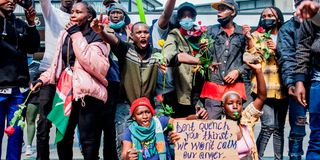
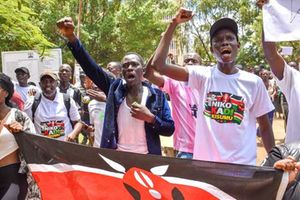
The current wave began in Kenya in June 2024, when Gen Z rose against the Finance Bill, 2024. The protests gripped the world and shook President William Ruto. He dropped the Bill, sacked his Cabinet and cut spending, but his government survived. Students led the movement, but it didn’t start on campus as Serbia’s did.
Kenya’s Gen Z was better prepared than the Arab Spring generation. Using AI, they dissected policy and budgets spanning more than 1,000 pages. They were far more skilled than those before them, and that may have held them back. Data and evidence appeal to the head. Uprisings run on the heart, on emotion and a felt sense of injustice, the fuel of revolt.
Later protests went further. Students in Bangladesh ousted Sheikh Hasina in August 2024, but their National Citizen Party won only six seats in February 2026. In Nepal, Gen Z brought down KP Sharma Oli in September 2025. Voters then chose Balendra Shah, a 35-year-old former rapper who did not lead the protests.
In Madagascar, Gen Z forced out Andry Rajoelina in October 2025, and an army colonel took over. Some young people won government jobs, but the movements stayed outside power.
These movements have still changed African politics. Above all, they drained old parties’ youth wings. In South Africa, Julius Malema formed the Economic Freedom Fighters after breaking away from the ANC’s powerful Youth League, which has never recovered. In Uganda, frustrated young members of the ruling National Resistance Movement joined the Forum for Democratic Change and the Democratic Party, led by Robert Kyagulanyi (Bobi Wine), first in People Power and now in his National Unity Platform.
African student movements have not taken power because student politics happens one campus at a time, which makes them easy for politicians to capture. Captured student unions protest about campus facilities, fuel prices and corruption while students carry heavy loans. These are demands for better policy, not for a new government.
That is starting to change. Kenya had four public universities in 1987 and about 20,000 students in 1990. By 2025, it had 67 universities and satellite campuses and more than 600,000 students. Students are now a mass voting bloc, not a small elite. Africa is also urbanising fast, and by about 2035 most Africans will live in towns and cities.
Fewer students now go back to the village when campuses close. They stay in town, connected in person and online. City life also makes joblessness and poverty harder to bear, so protests are more likely and more militant.
In Kenya, students are backing Nairobi Senator Edwin Sifuna, 44, very strongly. A July 2026 Infotrak poll named him Gen Z’s favourite politician, and he looks set to win many of their votes in August 2027. But first, young people must vote in large numbers, which they haven’t done before.
If Serbia’s Student List governs well, young people elsewhere could notice and follow. It could soon be a wonderful time to be a student.
The author is a writer, journalist and curator of the Wall of Great Africans. X (Twitter): @cobbo3.