Imagine you spot a beautiful television set in a shop window. It is so attractive that even your neighbours begin advising you where it would fit best in your sitting room. Unfortunately, there is one small problem: the television belongs to the shopkeeper and your bank account belongs to poverty.
You therefore decide to go to the market and sell something.
Now, if you arrive at the market empty-handed, you will discover a harsh economic truth. Markets reward traders, not spectators. You will spend the day loitering around, commenting on prices you cannot influence and admiring goods you cannot afford.
You may even be tempted to join those fellows who sit under a tree gambling on cards labelled "Kenya", "Uganda" and "Tanzania". Curiously, even when your finger is firmly placed on "Kenya", your money somehow migrates to "Uganda". Economists call it loss of capital. Villagers call it bad luck.
Suppose instead you bring a skinny goat to the market. You will earn something, but not much. Feed the goat well and it becomes fatter. The price rises.
Better still, take a sufuria instead of a goat.
Almost every household needs a sufuria. Not every household needs another goat. In fact, in many villages, goats are so common that some seem to hold family meetings at night. A sufuria, however, requires skill to make. It solves a problem. It therefore commands a better price.
The lesson is simple. The more valuable the goods you bring to the market, the more money you earn.
The world is one giant marketplace. Countries that produce valuable goods and services become prosperous. Those that merely wander around hoping for miracles resemble market idlers waiting for evening to arrive without having sold a thing.
Kenya's merchandise exports
Kenya's chief economic problem is not that we lack hardworking people. It is that we export too little, and much of what we export earns relatively low value.
In 2024, Kenya's merchandise exports stood at about $8 billion. Compare that with South Africa's $110 billion, Nigeria's $57 billion, Morocco's $47 billion and Egypt's $39 billion.
Some nations became wealthy through natural resources. Nigeria and Angola export oil. Botswana exports diamonds. Congo exports copper and cobalt.
Others climbed the ladder through industrialisation. South Africa and Morocco export vehicles, machinery and industrial products that fetch premium prices.
Kenya possesses neither vast oil reserves nor mountains of diamonds. Instead, we mainly export tea, coffee, flowers and horticultural products.
There is nothing wrong with these products. The problem is that we often sell them in their least valuable form.
Tea leaves fetch one price. Package them attractively and the value rises. Process them into specialised beverages and extracts and the value rises further. Build a trusted global brand around them and suddenly the same tea commands many times more money.
A live goat fetches one price. Slaughter it and sell quality cuts of meat and the price increases. Package it professionally and the value rises again.
Convince customers that your goat was raised while listening to classical music on the slopes of Aberdare and some people may even pay a premium.
This explains why efforts to brand products such as Murang'a tea are important. The goal is to ensure that more of the value chain remains in Kenya rather than being captured elsewhere.
The Bible teaches a similar lesson through the Parable of the Talents. The servants who multiplied what they had were rewarded. The one who buried his talent in the ground was rebuked.
Many developing countries unfortunately export as if they are burying their talents. They sell raw materials and then buy back finished products at many times the price.
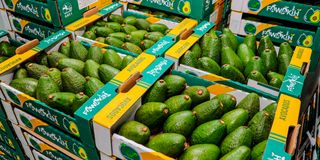
First, we must produce more for export. Farmers should increasingly farm not only for local consumption but also for global markets. Tea, coffee, avocados, macadamia and horticulture remain enormous opportunities.
Second, we must add more value. More branded tea. More instant coffee. More processed foods. More finished products.
Third, we must manufacture more sophisticated goods. Pharmaceuticals, textiles, machinery components, household products and agro-processing industries should become pillars of our economy.
Export-oriented industries
Fourth, we must export more services. The twenty-first century marketplace is not only about containers and ships. It is also about software, digital services, financial technology and knowledge. A young Kenyan with a laptop can now export to the world without leaving his village.
Fifth, we must fully utilise our position on the Indian Ocean. The coast should become a magnet for export-oriented industries serving Africa and beyond.
Finally, we should responsibly develop strategic minerals and other natural resources wherever commercially viable.
There is an old saying that a river that only gives out water eventually runs dry. The same is true of an economy that imports far more than it exports.
At some point, somebody must be the shopkeeper.
Kenya's future prosperity will not come from consuming more. It will come from producing more, processing more, branding more and exporting more.
Like the wise trader who arrives at the market carrying a valuable sufuria instead of a skinny goat, Kenya must bring higher-value goods and services to the global marketplace.