In my article last week, I raised the issue of Kenyans being duped into going to Russia to fight in the ongoing war with Ukraine. One factor that was behind the large number of people trafficked for the purposes of war was poverty.
The vulnerability in Kenyan society is now so stark that any opportunity for a job is latched onto by millions without work. Those who were trafficked abroad are now realising that the grass is not any greener abroad, and in fact, they have just become commodities for sale to the highest bidder.
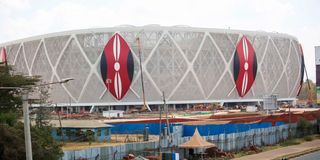
As the Russian debacle unfolds, the government has gone back to singing the stadium song that is as tuneless and bizarre as it gets. Stadiums were promised in every county in Kenya during the Uhuruto campaigns circa March 4, 2013. It turns out this was all a pack of lies to hoodwink voters. To-date, many counties still wait for the stadium promise, and many others are still being promised by the government.
The few stadiums that were built became conduits of corruption. Contractors were paid, but there is no value for money. In its wake, half-built stadiums dot the landscape of a few counties that started the programme. I even remember questioning the relevance of a stadium in my ancestral home of Marsabit in a county in desperate need of water and food.
The only thing with athletic potential in Marsabit is perhaps a camel race, given its population of camels. That just needs a small patch of the desert for the event—which is free and found across the area for miles on end.
The solution for Kenya’s economy does not lie in white elephants but in thriving industries. I remember days when most adults in Kenya were in employment, and graduates were assured of jobs as the country was awash with factories of all kinds. Many major brands have in the recent past, relocated to other countries or downsized.
No attempts have been made to replace the companies and organisations that left. Car assembly plants were synonymous with Kenya’s industry, and that too has scaled back. The demise or reduction of industries in Kenya is telling of our style of politics and insecurity, not to mention corruption within the government that puts investors off.
The bureaucracy of setting up business in Kenya is off-putting even for locals, let alone international investors. The mama mboga concept may be mundane, but just looking at the behaviour of county officials and county askaris towards small-scale traders sums up the mentality of those in power and tasked with the responsibility of helping businesses thrive, however small. The council askari is busy chasing bribes rather than helping small-scale traders operate in a healthy and competitive manner with a view to creating opportunities for Kenyans. The culture of fear inculcated in traders by officials affects not just small-scale traders but also goes all the way to the top. At the heart of it are bribes expected of any business to pay to officials.
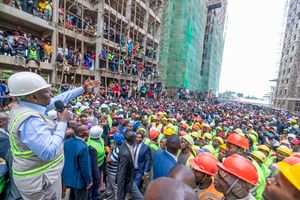
Bricks and mortar is an industry in its own right that can change the fortunes of investors and the exchequer. However, there is no altruism in government efforts when encouraging the construction of affordable housing or stadiums. As I mentioned above, the proof is in many white elephants, such as the Isiolo Airport and many other half-built hospitals and stadiums.
As I write this article, northern Kenya is yet again in the grips of famine—a perennial factor that has never had a permanent solution or means and ways of making the area food-secure. The focus is on building large mosques and stadiums rather than food production mechanisms and permanent water sources to stave off famine in the area for good.
Worsening poverty situation
While it is all well and good for a country such as Kenya to aim to have a stadium in every county and even a sub-county, it is not there yet if poverty is still on the rise and unemployment is getting worse by the day. The economy does not lend itself to prioritise construction of stadiums over industries. Therefore, what Kenya desperately needs are industries that would offer employment with a view to creating wealth for Kenyans and helping the economy thrive while uplifting the standard of living across the country, not just for politicians.
The money being put aside for the construction of stadiums will be better spent on building industries and tackling pressing issues such as water shortage in the north and turning dryland into farmland. It is happening in Israel; why not in Kenya? Parts of Israel are as dry as those of northern Kenya. Despite such challenges, it has evolved its farming industry to a point of being able to export food to other countries.
Stadiums are crucial for a sporting country such as Kenya, but it is too premature to prioritise their construction when what people need are employment and food on their plates.