Two Cabinet secretaries have been sucked into the ongoing investigations into the Sh4.8 billion fuel scandal that has resulted in the arrests and resignations of three energy bosses.
The government has opened an investigation into the possibility that the deal was designed to exploit the Middle East crisis by flooding the Kenyan market with adulterated and substandard fuel.
The scandal took a new twist on Sunday after leaked letters linked to the controversial fuel import approvals emerged, shifting the spotlight to the two Cabinet ministers, Mr Lee Kinyanjui (Trade) and his Energy counterpart, Mr Opiyo Wandayi.
Cabinet Secretary for Energy and Petroleum, Opiyo Wandayi, before the Senate Standing Committee on Energy at Bunge Tower, Nairobi, on March 31, 2026.
Photo credit: Dennis Onsongo | Nation Media Group
The Nation is in possession of the leaked letters, which are linked to the controversial approval of fuel imports and which reveal how the multi-billion-shilling deal was enabled.
“The Cabinet secretaries will be required to shed light on what they know about the issue; it is no longer about the junior officials. The focus must move to decisions made at the highest policy levels, and the documents will be critical,” a senior Directorate of Criminal Investigations (DCI) officer privy to the probe revealed.
The fuel scandal comes just days after the privatisation of the Kenya Pipeline Company (KPC) — a flagship project of President William Ruto’s.
“Now that the documents have been established to be genuine, they will change the course of the probe. The CSs will have to explain what they know about the deal gone bad,” said an analyst from the energy sector.
Inside the interrogation rooms, detectives are working to dismantle what sources describe as a cartel that was planning to flood the national supply chain with substandard and adulterated fuel.
The DCI on Saturday confirmed that it has recorded statements from several government officials and executives of a Mombasa-based petroleum company, associated with a Coast tycoon.
“Executives of the Kenyan arm of Swiss-owned Oryx Energies have also been summoned to record statements. The DCI is actively liaising with government agencies and investigative agencies in other countries under the Mutual Legal Assistance (MLA) programme to establish all relevant facts surrounding this matter,” the DCI stated in its statement.
The DCI probe will extend to other countries from which the petroleum company and the Oryx Energies consignments were sourced from.
Sources told the Nation that other individuals who may be required to record statements include Kebs Managing Director Esther Ngari and Industrialisation Principal Secretary Juma Mukhwana, who are said to have received the letters approving the waivers and giving the deal the green light.
Former Energy Principal Secretary Mohamed Liban
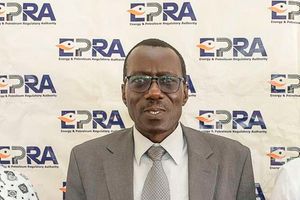
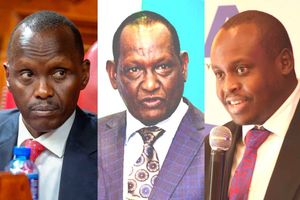
Energy Principal Secretary Mohamed Liban, Kenya Pipeline Company (KPC) Managing Director Joe Sang and Energy and Petroleum Regulatory Authority (Epra) Director -General Daniel Kiprop resigned on Saturday afternoon, as investigators continued to question them over the fuel imports deal gone bad.
The Energy ministry’s Deputy Director of Petroleum, Mr Joseph Wafula, and KPC Supply and Logistics Manager, Mr Joel Mburu, are also being questioned pending their appearance in court tomorrow. Mr Liban was freed from police custody on Friday on account of health concerns.
In a telephone interview on Sunday, Mr Kinyanjui distanced himself from the scandal, saying that a letter he had written was only giving conditions that were to be met as the fuel importation was being effected.
Investment, Trade and Industry Cabinet Secretary Lee Kinyanjui.
Photo credit: Dennis Onsongo | Nation Media Group
“I am not aware of any other happenings beyond the approvals for a waiver. My letter also gave conditions on what the Ministry of Energy, State Department for Petroleum should do, before the importation is effected. The Principal Secretary, Mohamed Liban and the Kenya Pipeline Company Managing Director Joe Sang wrote to me seeking authority for a waiver, and I just did what the law requires me to do, nothing else,” Mr Kinyanjui said.
“I was simply saying that if this is to happen, you must meet the conditions and conduct the required tests. I also asked that the importer must indemnify the Kenya Bureau of Standards in case of any unexpected happening arising from the waiver. Just that,” he added.
Mr Kinyanjui also revealed that he never received any response from the Ministry of Energy after the approvals of the waiver.
Former Kenya Pipeline Company Managing Director Joe Sang.
Photo credit: File | Nation Media Group
The CS sent a text message promising to respond later. But by the time of going to press, he had not responded to specific questions, including the letter sent by Mr Kinyanjui. He also did not respond to questions on whether the conditions outlined in the letter sent to him were fulfilled, and if his juniors at the Energy ministry had briefed him on their actions.
However, Mr Wandayi later issued a public statement stating that the government will deal firmly with cartels seeking to exploit the uncertainty arising from the fuel crisis in the Middle East.
“The Ministry of Energy reaffirms that there will be no tolerance for cartels, profiteers or extortionists seeking to exploit the uncertainty arising from the conflict in the Middle East for personal gain at the expense of the public,” read part of his statement.
On Sunday, President Ruto warned that the government would take firm action against cartels attempting to exploit the fuel crisis caused by the conflict in the Middle East.
Speaking during a church service in Kilgoris, Narok County, Dr Ruto warned that the government will not tolerate cartels in the petroleum industry or in any other sector.Hao cartels wa mambo ya mafuta, watakipata. Hawawezi kuhepa kwa sababu haiwezekani katika taifa letu la Kenya.Watu wanaona tuko na shida pale Middle East, halafu wanajaribu kuja kukoroga mambo walete shida ingine hapa Kenya) . Those cartels invading the petroleum industry will face the full force of the law. They will not escape. They cannot take advantage of the crisis in the Middle East to cause more problems in Kenya. We will deal with them firmly,” stated the president.
From the technocrats at the Ministry of Energy, Epra, and KPC, the spotlight has now shifted to top policymakers, who may have approved the deal.
Stringent quality checks waived
The scandal involves a deal to import two petroleum consignments totalling 128,000 tonnes, outside the Government-to-Government framework, through which Kenya sources the products from Saudi Arabia and the United Arab Emirates (UAE).
Former Epra Director-General Daniel Kiptoo during an event in November last year.
Photo credit: File | Nation Media Group
In one of the leaked letters dated March 28, the Trade CS, Mr Kinyanjui, wrote to the Energy CS, Mr Wandayi , recommending a waiver for the importation of the petroleum products.
"We refer to the subject matter, the letters from the State Department for Petroleum dated March 26 and March 27,2026. Waiver is hereby granted on the petroleum that has high levels of manganese, sulphur and benzene," reads part of the letter.
Mr Kinyanjui, however, listed six conditions that were to be met under the waiver.
"The importer should also give a written confirmation that Methyl Tertiary Butyl Ether(MTBE) oxygenates are absent and should also indemnify the Kenya Bureau of Standards (Kebs), in case of any unexpected happening coming from this waiver," reads part of the letter by Mr Kinyanjui.
Mr Liban, in an earlier letter dated March 26,2026, to the Kebs MD, had requested a temporary waiver on the requirement for a certificate of conformity and some parameters on the certificate of quality of refined petroleum products. He cited the disruptions in the Strait of Hormuz, noting that they had affected marine traffic flow. The letter was copied to Mr Wandayi and Dr Mukhwana.
"As you are aware, the ongoing conflict in the Gulf region has affected marine traffic flow, especially those that have to pass through the Strait of Hormuz.
The international oil companies/suppliers under the Government-to-Government arrangement, through their local counterparts, nominated oil marketing companies must actively source refined products to meet the delivery schedules to ensure security of supply," reads part of the letter.
"Some vessels bringing fuel into the country may require a waiver. I therefore request a waiver of US 3500 dollars on attendant penalties and on quality parameters. We have reviewed the import schedules, and failure or a delay to receive any of the cargoes will lead to a supply shortfall and expose the country to disruptions.
Additionally, the application of the penalty will lead to higher costs of the refined petroleum products at the pump, which will affect Kenyan consumers. This is, therefore, to request Kebs to consider the aforementioned waivers in view of the security of supply and to mitigate escalation of cost of product to a time when the conflict eases, or the global supply normalises," the letter states.
Mr Liban also wanted Kebs to allow products that were not tested at loading points to be scrutinised in Mombasa by Intertek Testing Services, which is already contracted by the standards agency.
"For the record, invoices issued by One Petroleum for PMS (petrol) ex MT Paloma show a price landed in-tank Mombasa of Sh198,855 per tonne. Invoices issued by Gulf Energy for the G-to-G PMS ex MT FOS Mercury show a price landed in-tank Mombasa of Sh140,111 per tonne. This means the difference of Sh58,744 per tonne between the One Petroleum Limited cargo and the G-to-G works out to Sh43.4 per litre, with the G-to-G cargo being cheaper by that amount. Both cargoes are for the month of March," the CS said.
Mr Wandayi said that the Ministry of Energy has stopped the delivery of a second cargo of fuel due to the investigations into the deal.
"When the Ministry of Energy got the full information about the fuel shipment that is subject to investigations, we stopped the delivery of a second cargo under similar circumstances to protect and secure public interest," he said.
"We reiterate the government's commitment to ensuring an uninterrupted supply of quality petroleum products for both Kenya and regional markets. The G-to-G procurement framework, which has cushioned Kenyans against immediate shocks arising from the situation in the Gulf, remains stable and resilient.
The Ministry of Energy continues to work closely with relevant agencies to maintain oversight and operational stability within the sector,” Mr Wandayi said.
“Meanwhile, we have noted with concern a campaign of disinformation orchestrated by a section of political leaders over the unfortunate situation, and we wish to appeal to the public to allow relevant government agencies to undertake independent and professional investigations into the matters in question conclusively,” he added.
The MT Paloma, the ship that brought the first batch of petroleum products, docked at the Port of Mombasa in late March with 68,000 tonnes of petroleum.
The government has blocked the second consignment that was expected to dock at the Port of Mombasa later this month with 60,000 tonnes of petroleum imported by Swiss-owned Oryx Energies.
On March 25, Mr Liban wrote to One Petroleum Limited's director, Mr Ali Balala, and Oryx Energies Chief Executive Officer Angeline Maangi, allowing them to import about 60,000 tonnes of petroleum each.
The letter allowed the importers to exceed the allowed quantities by up to 10 per cent, which meant they could bring in up to 66,000 tonnes.
The two companies had approached the Ministry of Energy and Epra with a proposal to import petroleum products that were intended to fill the Kenyan reserves.