Paying for music licences at political rallies is nothing new, but politicians are about to feel the pinch a lot more.
A new gazetted Consolidated Music and Audio-Visual Works Tariff, running from 2026 to December 2028, has been introduced by Salim Mvurya, the Cabinet Secretary for Youth Affairs, Creative Economy, and Sports, with some upward revisions.
Mr Salim Mvurya
Photo credit: File| Nation Media Group
Every political party will now pay a flat rate of Sh600,000 per year to use music at their events, whether for launches, conferences, campaigns, or rebranding. That's before a single candidate takes the stage.
When candidates do take the stage for their official unveilings, they each need their own licence. Presidential hopefuls will now part with Sh500,000 each, up from Sh400,000 in the last tariff. Gubernatorial contenders will now pay Sh200,000, an increase of Sh50,000, with senators paying Sh150,000 up from Sh100,000, and parliamentary and Women Rep candidates now face a doubled fee of Sh100,000 each. For Members of County Assemblies (MCAs) aspirants, their fees increase to Sh15,000 from Sh12,500.
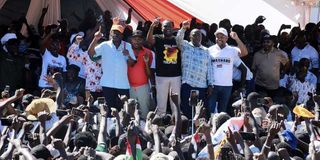
Gospel artiste Ben Githae (centre) entertains guests during Azimio la Umoja campaign rally in Thika.
Photo credit: File | Nation Media Group
With the new tariffs, the music societies, which collect royalties on behalf of musicians, are now staring at a windfall as the country inches toward the 2027 election season.
For context, with 349 National Assembly seats alone, music societies stand to collect at least Sh35 million just from MPs' announcing their bids, and that assumes only one candidate per seat, which rarely happens as there will always be multiple candidates eyeing a given parliamentary seat. And for the 47 gubernatorial and senatorial seats, at least Sh16.5 million would be realised collectively.
In recent years, Kenyan politicians and musicians have always locked horns over the unauthorised usage of their music in their political campaigns.
Globally, politics interact with music intimately since music is an effective mobilization tool. While music can undoubtedly enhance the atmosphere and impact of a political event, there has always been a general narrative that music usage at such events should be free.
A man plays his musical instrument during a Jubilee campaign rally at Embu Stadium in 2017.
Photo credit: File | Nation Media Group
Whereas politicians and political campaigns, like anyone else, may use copyrighted works in a way that qualifies as fair use with or without permission from the copyright owner; however, under the Kenya Copyright Act, the fact that a politician or political campaign uses a copyrighted work in a political context does not mean that the use is any more or less likely to qualify as fair use. When politicians identify a song that reflects the theme of their campaigns, they often use it.
“Music is never free. It cannot be fair use when one is exploiting someone else's property for a financial endeavour. That is why they have to pay for that usage to compensate the artists whose music they are using to drum support for themselves. Explains Richard Sireti, Intellectual Property lawyer and Acting Chief Executive Officer of Music Copyright Society of Kenya (MCSK).
Sireti adds, “The licenses for politicians and political events are generally annual. In some cases, there are politicians or political parties that choose to pay for a license for a single event. A politician and a political party in which one belongs cannot have just one license, and that is why the tariffs come in. That is because each politician has their own event besides that of the party, and that means music exploitation on different fronts that require different licences by those involved.”
According to Sireti, a music license issued to a political party covers its events nationwide; those issued to individual candidates, such as MCA or MPs, are limited only to a particular area, and that is within the areas they represent or intend to represent.
“I would give an example of Safaricom, they can have a license for a major promotional or unveiling event they are doing, but that license doesn't cover promotional events done by their shops all over the country. Each of those shops will need to have its own license.”
Even in instances where politicians or political parties opt to hire Deejays to play at their events, a license is still required.
“In such instances, either the DJ or the political party or the politician has to have the license to use music in their events. For instance, the ODM party, in the last elections, paid about Sh1 million for an annual license to use music throughout that season in their events.”
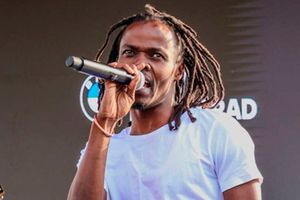
In 2020, rapper Julius Owino, popularly known as Juliani, sent a demand letter to the Jubilee Party for using his song ‘Utawala’ to promote the Building Bridges Initiative (BBI) agenda.
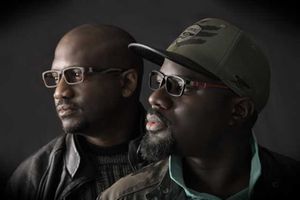
In 2022, boy band Sauti Sol threatened to sue the ODM party for unauthorized use of their music during the Azimio running mate unveiling event. The two parties, however, did resolve the matter out of court.
“Even if a politician or political party obtains a license to exploit a song of an artiste, the license only covers the economic rights. It does not cover the moral rights of the artistes. So if an artiste has reservations that his or her moral rights have been violated by a political party or a politician in the usage of their music, then they have a ground to seek legal redress, and that’s what happened in the case of Juliani and Sauti Sol.”
Under Copyright, Moral Rights are personal, non-transferable rights that protect a creator’s reputation and relationship with their work, distinct from economic rights. They allow creators to be credited and prevent damaging changes or derogatory treatment of their work. These rights remain with the creator.
As for the economic rights, they are transferable rights that allow creators to financially benefit from their works by allowing other entities, such as music societies, to collect royalties on their behalf nationally or globally.
Although music societies such as the MCSK, and Performing and Audio Visual Rights Society of Kenya (PAVRISK) that are regulated by the Kenya Copyright Board (KECOBO)and those with licenses from the regulator, are mandated to collect these money from politicians across the country on behalf of artists, there are instances where politicians or political parties enter into agreements with individual artists.
“Such scenarios could be when politicians commission a song or contract artists to perform during their rallies and events. But even then, they still require obtaining the music licenses,” noted former KECOBO Executive Director Edward Sigei.