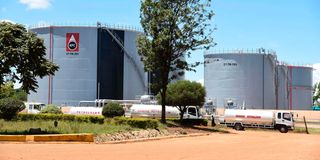
Yesterday marked the first day of trading in Kenya Pipeline Company shares on the Nairobi Securities Exchange.
The headlines have understandably focused on the Sh106 billion the government raised from the IPO. But that figure is not the real game-changer.
For the first time in its history, Kenya Pipeline Company is no longer a State corporation. Once the government’s shareholding in an enterprise falls below the 50 per cent threshold, the dense web of Harambee House–based bureaucracies that traditionally supervise parastatals must step aside.
This includes the State Corporations Advisory Committee, the Inspectorate of State Corporations and the Efficiency Monitoring Unit — agencies that have long exercised oversight over State corporations despite often having little understanding of the industries they regulate, while simultaneously serving as conduits for patronage appointments.
Equally important, the era in which principal secretaries and Cabinet secretaries from so-called “parent ministries” pack boards with ex-officio bureaucrats and then proceed to micromanage commercial enterprises should now be over.
The government will be forced to behave as any normal shareholder does: appoint directors at an annual general meeting, allow that board to set strategy, and let management run the company.
This may sound obvious. But it represents a profound break from the way many of Kenya’s parastatals have historically been run.
KPC’s own history illustrates the problem. Over the years the company has seen a revolving door of chief executives, fuel theft scandals involving billions of shillings, procurement irregularities and board appointments that were nakedly political rather than merit-based. Too often the pipeline company functioned less like a commercial enterprise and more like a patronage machine.
Just before the Kenyatta administration left office, the government attempted to pressure KPC into borrowing $400 million to acquire assets from Kenya Petroleum Refineries. The logic was difficult to fathom.
Why would a 100 per cent government-owned parastatal be forced to buy another 100 per cent government-owned enterprise at a cost of $400 million? Money for the boys?
The transaction raised serious questions. The stakes were so high that the then Finance Minister Ukur Yatani, personally attended KPC board meetings to shepherd the deal through.
Digging through my archives recently, I also came across correspondence showing that as the 2017 elections approached, the government had quietly attempted to commit KPC to an expensive $309 million loan from Israel’s Bank Hapoalim to finance an opaquely negotiated, single-sourced pipeline security and surveillance project.
The contractor was the Israeli defence company Rafael Advanced Defence Systems. The loan itself was poorly structured, loaded with commitment fees, upfront charges and hefty down-payment obligations.
A 2008 investigation by the Public Procurement Authority documented how political elites influenced KPC to alter the scope and specifications of the multi-billion-shilling Line Capacity Enhancement Project in order to favour politically connected contractors. The manoeuvres inflated the cost of the project by a staggering Sh1.09 billion.
Tribal patronage was also deeply entrenched. A 2012 probe into allegations of nepotism found that in a three-year period, 57 per cent of all staff hired at KPC came from the same tribe as the sitting managing director.
Then there was the infamous Triton scandal. In that case, 126 million litres of fuel were released from KPC storage facilities to a company owned by a politically connected operative — without the knowledge or authorisation of the international oil traders who had financed the imports under collateral agreements. Those traders were left staring at losses of nearly Sh7 billion.
Against that backdrop, the structural change brought about by the IPO matters enormously.
Admittedly, the offering did not attract strong participation from retail investors, meaning the democratic dimension of the privatisation fell somewhat short. But even with ownership concentrated among institutional investors, those institutions will demand performance, transparency and accountability in ways that government ministries rarely have.
KPC must now answer to the Capital Markets Authority. It must publish audited annual accounts, hold annual general meetings and subject itself to continuous scrutiny from shareholders and the market.
In the past, whenever government shareholding in a company slipped below the controlling 51 per cent threshold — as happened at one time with Kenya Power and East African Portland Cement — the State found an ingenious workaround.
It simply treated the shareholding of the National Social Security Fund as an extension of its own equity, thereby maintaining effective control.
With Uganda now a significant shareholder in Kenya Pipeline Company, that manoeuvre will be far more difficult to pull off.
For a company that for decades functioned as a patronage pipeline, that may prove to be the most important reform of all.