In Nairobi, garbage is not just waste—it is power, profit and politics. In its latest issue, The Weekly Review , a pullout in the Sunday Nation , carried a story quoting Nairobi Governor Johnson Sakaja revealing that the city had contracted the Ghanaian conglomerate Jospong Group to build and operate solid waste infrastructure in the capital.
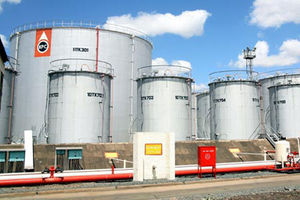
On the face of it, this is a welcome development. Nairobi desperately needs investment in modern waste systems—transfer stations, recycling plants, engineered landfills and waste-to-energy facilities.
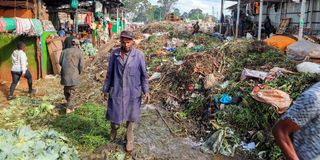
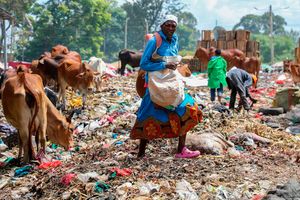
For decades, the city has lurched from crisis to crisis, defined by overflowing bins, illegal dump sites and that environmental catastrophe called Dandora.
But this is not merely a technical or environmental story. It is a political economy story. Nairobi stands on the cusp of witnessing the entry of deep-pocketed international players into its garbage economy. In September 2023, the county government reportedly signed a Sh50 billion Public-Private Partnership deal (PPP) with China National Electric Engineering Company (CNEEC) for an integrated electricity generation and solid waste management project. I gather that power purchasing agreements are under negotiation.
Kenya’s waste sector is clearly attracting global capital. Yet what is striking is how strategically these investors cultivate political goodwill.
In April 2024, during President William Ruto’s State Visit to Accra, a key highlight was a tour of Jospong waste management facilities. In June 2024, a high-level delegation of governors, deputies and technical staff visited Ghana. In November, Uasin Gishu officials travelled to Accra and signed an MoU. In May 2025, Nema, Ministry of Environment and Council of Governors officials undertook another benchmarking visit. Mombasa County followed in July with its own agreement.
At the 2025 Devolution Conference in Homa Bay, Jospong—through its subsidiary Zoomlion—was a Platinum Partner, reportedly paying Sh15 million in sponsorship fees. Not less than 15 counties have signed MoU’s and co-operation agreements with the Ghanaians.
This is sophisticated market entry: diplomacy, benchmarking visits, conference sponsorships and regulatory advisory roles. Jospong is not merely bidding for contracts; it is embedding itself in Kenya’s institutional architecture.
But here lies the hard question: can international capital dismantle Nairobi’s entrenched garbage cartels? Waste management in Nairobi is a multibillion-shilling industry dominated by politically connected networks. A 2020 investigation by the anti-money laundering agency, FRC, reported how one single contractor was paid Sh 982.5 million in one year. It is a textbook case of what economists call “profitable inefficiency”—a system where inefficiency is not accidental but deliberately structured to sustain rents.
At the apex of the pyramid are large truck owners contracted by the county government to ferry garbage to Dandora. Their incentive is volume. The more tonnage moved, the more they earn.
To maximise volumes, they depend on accumulation. Garbage must pile up. It must reach scale. This creates a perverse incentive: delays are profitable.
In the middle of the pyramid sit owners of illegal dump sites. These operators act as aggregators, charging collectors and controlling access to waste flows.
At the base are collectors and sorters—often youth groups and community-based organisations. They operate in precarious conditions, earning marginal incomes, yet they are indispensable to the system’s functioning.
The structure is tightly interdependent. Each layer benefits from delay. The result is visible across Nairobi: mounds of garbage left to fester for weeks or months, waiting to reach the volumes demanded by transporters.
Beating this system will not be easy. Political actors at the county level are deeply embedded in the waste economy. Many dump sites are owned or protected by individuals within the political elite.
For several years, the Japan International Cooperation Agency (JICA) has supported reform efforts in Nairobi’s waste sector. Technical studies have been done. Master plans drafted. Capacity-building programmes implemented. Yet entrenched interests have blunted their impact.
That is why the arrival of international investors, however well-capitalised, is no guarantee of transformation. If Jospong and other players are to succeed, the government must marshal extraordinary political will. Reform will require dismantling illegal dump networks, restructuring payment systems, enforcing transparent procurement, protecting whistleblowers and insulating regulators from political interference.
It will also require social transition planning. Thousands of informal collectors depend on the existing system for survival. A modern waste regime must integrate them rather than displace them, or resistance will intensify.
Ultimately, Nairobi’s garbage crisis is not about technology. The trucks can be bought. The plants can be built. The financing can be arranged. The real question is whether the political class is willing to disrupt a profitable status quo.
Because in Nairobi, garbage is not just refuse waiting to be cleared. It is an ecosystem of power and patronage. And unless that ecosystem is confronted head-on, even the most sophisticated international investor will discover that the hardest waste to dispose of is not plastic or organic matter.