Kenya’s destiny runs on a wheel, like a hamster in a cage that mistakes speed for distance, and every revolution of that wheel is paid for in Parliament, where power delegated by the people is auctioned to the highest bidder.
Budgets written with public interest, oversight with teeth and laws drafted for citizens instead of bidders all require a House willing to stand up to the Executive. As long as that willingness can be purchased or disciplined out of its members, our ambitions remain a non-starter, because the building through which they must pass has been rented out.
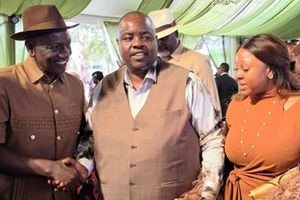
In July, at a UDA and ODM gathering in Kakamega, Minority Leader Junet Mohamed told the crowd that during Rigathi Gachagua’s impeachment in 2024, “kuna kitu ilitembea hapo” , and teased colleagues about how they had used what they received. By August, he was denying that he had received any money and recasting his remarks as a reference to lobbying.
His remarks join a run of allegations from inside the establishment. In August 2025, President William Ruto accused legislators of receiving Sh10 million in connection with anti-money laundering legislation and alleged a Sh150 million payment linked to a Senate impeachment process. In February, governors boycotted a Senate committee, alleging extortion and intimidation. In March, Kisii Senator Richard Onyonka described his own chamber as “a den of gamblers, street vendors, money dealers and gold proprietors”.
Importance of parliamentary independence
Ray Dalio’s account of Britain’s rise in Principles for Dealing with the Changing World Order (2021) shows where an alternative path leads. He recounts how the English Civil War and the Glorious Revolution weakened royal authority and strengthened Parliament, placing constraints on what the Crown could do with public money. Over time, attaining the confidence of Parliament came to matter more than attaining a favour at the royal court. Therefore, the British government had to negotiate with an institution it could not simply command. This demonstrates the significant power in revolutionising public institutions.
The importance of parliamentary independence is further illustrated by Douglass North and Barry in their 1989 influential paper Constitutions and Commitment. Using the Glorious Revolution as a historical case study, the paper argued that the settlement after 1688 allowed the government to make credible commitments to property rights and to its creditors. This shows that economic growth does indeed rely on incorruptible political institutions and offers a point of reflection for Kenya, which keeps demanding confidence from taxpayers while weakening the institution meant to scrutinise how public money is spent.
In the book Not Yet Uhuru , Jaramogi Oginga Odinga describes how settler politicians helped shape Kadu’s majimbo proposals to preserve their influence in the coming African state. Minority communities had genuine fears of domination, but Odinga’s account shows how those fears could also serve entrenched privilege. Where settlers once sought to bend representative institutions towards their interests, the Executive and private bidders now secure obedience through patronage, party discipline and inducements. Independence should have made Parliament answerable to Kenyans, and that liberation remains unfinished. If we want revolutionary leadership and national prosperity, we must overhaul the political system that rewards obedience to the Executive and punishes loyalty to the public.
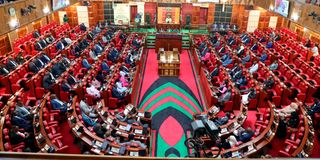
When Gen Z protesters breached Parliament and set fire to part of it on June 25, 2024, their anger was directed at the Finance Bill, but it carried them to the very place where Kenya’s governance failures are enabled, a House entrusted with restraining Executive power that had instead become its instrument.
Sovereign power with the people
The broad-based arrangement highlights the contradiction most vividly. Junet calls UDA and ODM equal partners in the administration while retaining the title of Minority Leader. Who supplies the scrutiny when those occupying the opposition benches describe themselves as partners in government?
For members of Parliament, independence should be a matter of self-respect as much as constitutional duty. A House that controls public spending, scrutinises appointments and demands answers from the Executive can shape the country’s future, while one that trades those powers for favours reduces itself to an errand service.
Article 1 of the Constitution places sovereign power with the people and delegates its exercise to institutions, including Parliament. Legislators who sell their votes are trading away our sovereignty to whoever can finance their mansions, choppers and first-class indulgences. Reclaiming that delegation must become a central task for all Kenyans.
If MPs insist on serving as errand boys and girls, Kenyans must start treating them as the criminal cartel that they are. In 2027, that betrayal should cost them their seats, however generous their handouts or familiar their surnames, and it must also cost them their illicit wealth and their freedom. Parliament belongs to the people, and an MP who sells its authority has no claim to another term nor to his freedom.