The Sh200 billion Rironi-Naivasha-Mau Summit highway under construction is one of the biggest infrastructure undertakings by President William Ruto’s administration, which is expected to ease transport and open up the Northern Corridor to investment.
The 233-kilometre road, the government’s flagship project, stands out as one that has been fast-tracked, apart from the 32 stadiums under construction, with an eye on the 2027 General Election.
Dr Ruto appears keen to have the project completed as it will be one of the major re-election agenda items for voters in the Western, Rift Valley and Nyanza regions, hence the resources deployed and timelines set for the contractors.
Contractors deployed on the road are racing against time, with tight delivery deadlines set by the government under the Kenya National Highways Authority (KeNHA).
Cabinet Secretary for Roads Davis Chirchir has stated in the latest update that the project will be completed by June 2027.
“By October 30, the Rironi-Naivasha highway will have been completed. We will have opened the dual highway for use by the public, including the interchange at Kamandura on the escarpment. We will then proceed to the Naivasha-Nakuru section of the road,” Mr Chirchir said.
Phase one of the project covers Rironi-Naivasha-Gilgil and Rironi-Naivasha, with the China Road and Bridge Corporation (CRBC) and the National Social Security Fund (NSSF) taking charge of the construction.
The second phase encompasses Gilgil-Nakuru-Mau Summit and is being constructed by Shandong Hi-Speed Road and Bridge International.
The Rironi-Naivasha section, which is being expanded to a six-lane dual carriageway under the ambitious programme, has been set for completion by December this year, with only three months to go.
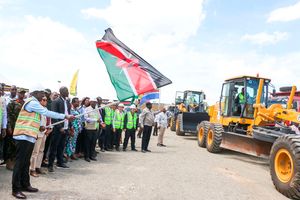
President William Ruto launches the dualling of 175km Rironi-Mau Summit road at Mau Summit in Nakuru County on November 28, 2025.
Photo credit: Boniface Mwangi | Nation Media Group
The Nakuru city section of the highway will have an elevated highway to decongest the city, which is undergoing rapid expansion and experiencing a sharp rise in traffic gridlock because of its key location as a link to Western Kenya, the North Rift, Nairobi and the Mount Kenya region.
It will open up the Rift Valley and Western Kenya to Nairobi, the country’s economic artery, in what is expected to create employment opportunities, solve transport challenges and enable farmers and traders to transport fresh farm produce and goods to markets on time.
The highway is expected to be expanded to Malaba through Eldoret and to Kisumu through Kericho in the planned second phase of the infrastructure upgrade, which is also expected to ease trade between Kenya and its East African Community (EAC) member states.
It cuts through Kiambu, Nakuru, Baringo, Kericho, Kisumu, Nandi, Kakamega, Bungoma and Busia counties.
The Mau Summit-Kericho-Kisumu section of the road was later added in an announcement made by President Ruto recently.
Construction of the Rironi-Nakuru-Mau Summit highway has reached a critical stage, with the tarmacking expected to be completed by December.
Project Manager for the Rironi-Naivasha-Gilgil section, Eric Yu, said the construction has reached a critical stage, with about 82 per cent of earthworks completed.
Mr Yu further said that the company is adopting modern technology along the major route, including the installation of solar panels.
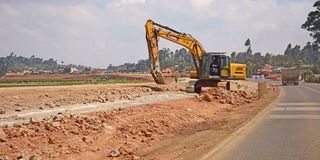
Ongoing dualing of the Rironi-Mau Summit highway at Elementaita in Gilgil on October 2, 2026. The contractor, China Road and Bridge Corporation (CRBC) says earth work stands at 82 percent.
Photo credit: Boniface Mwangi | Nation
He said the solar panel installation is part of the company's environmentally friendly initiatives with the installation of the solar panels aimed at aiding operation and maintenance centres and tolling stations.
He said that the installations will generate about three million watts of electricity, with some road slopes potentially being used for solar facilities.
The electricity will support facilities including street lighting and tolling infrastructure while reducing reliance on the national grid.
"We are on course to complete the Rironi-Naivasha section of the expanded highway, and we are planning to install solar panels that will power major operations to the tune of 3 million watts”, said Mr Yu.
KeNHA, the implementer of the project, has committed to planting 20,000 trees along the highway to compensate for environmental degradation during the upgrade of the road.
A plan to charge motorists Sh8-Sh8.50 per kilometre for using the road, which is being constructed under a Public-Private Partnership (PPP), has kicked up a storm, with residents demanding the setting up of toll-free lanes on the highway.
“Motorists have demanded that private vehicles be charged less than Sh4 per kilometre, as the Sh8 per kilometre that has been proposed would translate to Sh1,280 per kilometre to Nairobi,” Mr Paul Kariuki, a trader in Salgaa, Nakuru County, said.
But there are those who feel that only commercial vehicles should be charged for using the road to allow ordinary motorists to use the facility without paying.
Ongoing dualing of the Rironi-Mau Summit highway at Elementaita in Gilgil on October 2, 2026. The contractor, China Road and Bridge Corporation (CRBC) says earth work stands at 82 percent.
Photo credit: Boniface Mwangi | Nation
“Why should I be billed for using a road that has partly been built using NSSF funds? Why can we not be allowed to use the highway like all the others away from Nairobi?” Ms Gladys Tangus, a teacher in Rongai, said.
She said: “It makes sense to target trucks and public service vehicles for tolling on the road, but all private vehicles should use the facility for free.”
The Kenya Motorists Association also moved to court in a bid to challenge the concession and tolling of the A8 Rironi-Nakuru-Mau Summit Highway, as well as existing roads built and maintained through taxpayers’ funds.
In the petition filed alongside two other individuals, the association wants the court to issue orders compelling the government to use taxes, sovereign loans, the road maintenance levy and other levies collected by the government to fund the expansion of the Rironi-Mau Summit highway.
According to the petitioner, privatising and imposing a Sh8-per-kilometre toll on motorists amounts to double taxation.
The petitioners argue that the Rironi-Mau Summit road and other trunk roads are built on public land and upgraded using public funds through various taxation regimes.
They told the court that in 2024, the government, through the Energy and Petroleum Regulatory Authority, unlawfully increased the Road Maintenance Levy Fund (RMLF) from Sh18 per litre to Sh25 per litre, which pushed the cumulative tax on fuel to 90 per cent of its landed cost.
Through lawyer Jordan Kanga, the petitioners claim that applying a BOT model to the Rironi-Mau Summit highway, an already existing public asset, amounts to the privatisation of public infrastructure, thereby alienating citizens from property they already own and enjoy.
“Privatisation of national highways to foreign investors compromises national sovereignty and denies Kenyans the opportunity to build, learn, employ and accumulate domestic capital,” states Mr Kanga.
Under the PPP arrangement, the contractors are expected to manage the facility for more than 30 years to recoup their expenses before handing it over to the Kenyan Government.
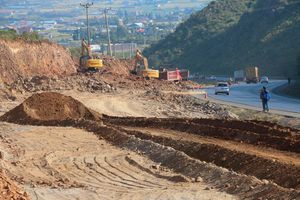
China Road and Bridge Corporation workers conduct geotechnical investigation for a flyover at Kolen in Nakuru along the Nakuru-Eldoret highway on January 19, 2026, as part of the Sh200 billion dualling of Rironi-Mau Summit highway.
Photo credit: Boniface Mwangi | Nation
KeNHA has stated that the road construction has been divided into three sections — Rironi-Naivasha-Gilgil (81km), Rironi-Mai Mahiu-Naivasha (58km), and Gilgil-Nakuru-Mau Summit (94km).
“Implemented through a Public-Private Partnership (PPP) model, the project leverages public and private sector investment and expertise to deliver a modern, high-capacity highway that will ease congestion, enhance road safety, and improve travel efficiency along one of Kenya’s busiest transport corridors,” KeNHA stated.
The authority stated in a recent update that “upon completion, the upgraded corridor will reduce travel time and vehicle operating costs while facilitating the efficient movement of passengers and freight between the Port of Mombasa and the hinterland.”
A new project feeding off the highway has been added from Salgaa through Molo and Kuresoi North in Nakuru County, Konoin, Sotik, Chepalungu in Bomet and Emurua Dikirr in Narok to Kisii and Migori. The project has been planned by the State Department for Roads.
“The new project will open up the South Rift region to investment, ease transport and enable farmers to deliver their fresh produce to markets in good time,” Dr Ruto said during a tour of Bomet two weeks ago.
Senate Majority Leader Aaron Cheruiyot has said the construction of the three key road projects were major infrastructure development milestones under the current administration.
“Regions that had been left behind in development for decades despite their contribution to national development through the agriculture sector are now being opened up, and the results are directly being felt by the people in rural areas,” Senator Cheruiyot said.
Dr Michael Bongei, a strategic management expert and Bomet gubernatorial candidate in the 2027 General Election, said the commitment by President Ruto to infrastructure upgrades in the Rift Valley, Western and Nyanza regions were steps that changed the narrative on economic development.
“The regions that have been targeted for infrastructure upgrades have been sidelined over the years, yet they produce the raw material for agriculture-based industries in cities including Nakuru, Nairobi, Mombasa and Kisumu,” Dr Bongei said.
Dr Bongei said the current administration had demonstrated to all Kenyans that every region matters in development, as opposed to the past when resources were concentrated in one particular zone and urban centres at the expense of the tax-paying rural population.
The Rift Valley, combined with the Western and Nyanza regions, is Kenya’s food basket and a major source of raw materials for industries in the country and the export market.