An election is a strange kind of job interview where candidates not only write the job description, they also choose the questions they want to answer and arrive with manifestos designed to conceal as much as they reveal. In Nairobi, we have often interviewed for aura and party affiliation, only to discover that we never asked the most important question: what does this person believe city government is actually for?
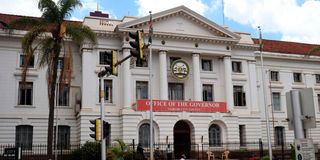
Nairobi has never lacked politicians with aura, and Johnson Sakaja was once one of them. What it has lacked are candidates who can say clearly what’s the purpose of City Hall, and a way for voters to test them.
So, I will propose three questions, borrowed from a management coach, a New York mayor and Singapore’s founding prime minister: Why do you want power (purpose of your leadership)? Whom will you use it to serve? What in your record suggests that you can be trusted with it?
Simon Sinek argues in his book “Start With Why” that most organisations can say what they do and how, but few can explain why they exist. We interview politicians in the same backwards order, testing the how through the manifesto and rarely asking the why. The answer should contain a theory of transformation. If Nairobi entrusted itself to you for 10 years, what would be different when you leave?
Lee Kuan Yew’s generation took over Singapore with purpose, or their why. They inherited a housing shortage, unemployment and a tiny state with few resources, and set out to transform their society. They started by solving the housing issue for their people to eradicate slums because it did not fit in the big picture of Singapore’s transformation.
Collecting garbage and fixing roads are basic duties, and a governor should also be able to tell us what kind of Nairobi those systems are meant to produce.
New York represents possibility, captured in the lyrics of Jay-Z and Alicia Keys’s song: “concrete jungle where dreams are made of”. Paris built its identity around the Seine and Eiffel Tower, London around the Thames, and so on.
Nairobi is already the Green City in the Sun, the only capital with a national park within its boundaries. Even its name comes from the Maasai phrase Enkare Nairobi, the place of cool waters. Yet the river that gave the city its name has been reduced to a polluted channel hidden behind buildings.
Nairobi's ambition could be to become Africa’s green capital of innovation, with the restored river as the spine of its parks, walkways and public spaces. It would be a place where entrepreneurs build global companies without sacrificing nature, and where talented people come to make money and stay because they live well. Voters can disagree about the destination, but anyone asking to govern Nairobi should be able to have a vision.
New York Mayor Zohran Mamdani adds another question, about whom the transformation will serve. “I was elected as a democratic socialist and I will govern as a democratic socialist,” he said at his inauguration, and his rent freeze and childcare plans followed. You can dislike the policies and still see who he thinks city government is for.
According to KIPPRA, 58.7 per cent of commuters use matatus, 17.1 per cent walk and only 9.7 per cent drive, yet the decade’s showpiece transport project, the Expressway, is tolled and closed to pedestrians and boda bodas while mass transit remains unfinished. A Nairobi built for its majority would start from the pavement and the matatu stage, with mass transit that begins where people live and pavements treated as infrastructure.
To judge whether someone can deliver, Lee looked for what he called helicopter quality – the ability to rise above a problem and see the landscape without losing the details. From high enough over Nairobi, congestion becomes a story about housing, zoning and where the jobs are, and on the ground it is a woman in Kayole leaving home before sunrise for a job two hours away. Lee insisted that intelligence was never enough, reasoning that a clever person without character can do more damage than most. I would look at how a candidate handled public money the last time they held power, how they treated critics, and who paid for their rise.
As 2027 approaches, every candidate should be made to answer those three questions, because between them they reveal purpose and political philosophy and show whether either should be believed. A manifesto can be copied, consultants can supply impressive language and campaign money can manufacture excitement, but a record is harder to invent.
Nairobi cannot afford another governor whose highest ambition is simply to become governor or use it as a stepping stone to running for another office.
It needs someone who sees City Hall as an instrument for changing how millions of people move, work, trade and live, and who has already shown the discipline and character that such a transformation demands. Ahead of the polls, we must ask who understands Nairobi deeply enough to change it, and whose life gives us reason to trust the answer.