Across Africa, the world’s youngest and fastest growing continent, millions of young people are standing at the edge of transformation, yet too often remain sidelined from the very systems that should shape their future.
The newly released Afrobarometer report reveals a sobering truth: Because of a growing trust deficit, African youth are significantly less engaged in formal political and civic processes than their elders, with an 18-point gap in voter turnout and even wider disparities in community participation and government engagement.
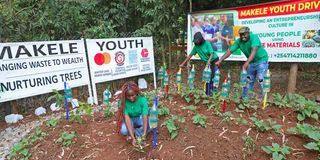
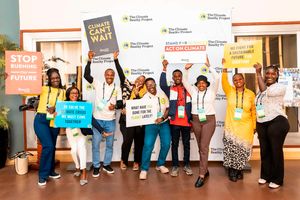
But where traditional channels fail, youth are rising through protest, innovation, and grassroots leadership. On Tuesday’s International Day of Youth, we celebrated their power.
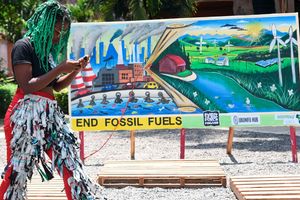
They are rewriting the rules, demanding accountability, and building movements that reflect their vision for justice, equity, and climate resilience.
As a mother to two fierce young daughters, I carry a burning question: what will it take for this generation to trust again?
To believe that governments exist not to extract, but to uplift, that the taxes they pay will be re-invested in schools that ignite their potential, clinics that protect their health, and systems that honor their dreams.
Our youth are navigating pressures that are social, economic, and deeply existential.
They are burdened by crises they did not create, yet expected to solve. And still, the gap between their lived reality and the assumptions of decision-makers remains vast.
It’s time to close that gap, not with promises, but with power, accountability, and radical inclusion.
The global picture is telling: half the world’s population is 30 or younger, a share expected to rise to 57 percent by 2030.
Reports show that ‘by 2050, the people who are under 25 today will compose more than 90 percent of the prime age workforce.’
In Africa alone, there are over 400 million young people, a generation whose aspirations and frustrations will define the future.
Today’s youth are navigating a world in relentless flux — shaped by dizzying digital revolutions, economic disruptions, and a dangerously warming planet.
In just the past three years, Artificial Intelligence has transformed industries, narrowed opportunities for entry-level jobs, and even reshaped higher education.
Last year was recorded to be the hottest year ever recorded, according to the European Copernicus climate service, a stark reminder that climate change is no longer a distant threat but a lived reality.
And with conflicts unfolding in real time on their screens, often livestreamed on social media, young people are absorbing a steady stream of distressing events.
For many, the world must feel like an uncertain, hollow place.
Here in Kenya, the discontent is visible. Youth-led protests last year and this year spoke volumes about the gap between government promises and lived realities.
An Afrobarometer survey reveals what young Kenyans say matters most: health, elevating the cost of living, eliminating unemployment, improving education, and eliminating corruption. These demands are grounded in daily struggles.
Post-pandemic, young people see healthcare as more than buildings and equipment, they want systems that deliver affordable, quality care, including mental health services that acknowledge the pressures of modern life: climate anxiety, economic uncertainty, and the unrelenting churn of the news cycle.
Yet even as official statistics point to economic growth, Kenya’s GDP grew by 4.7 percent in 2024 many young people ask: growth for whom? If the economy is thriving, why is the cost of living climbing?
Why do job losses dominate the headlines? The Kenya Institute of Public Policy Research and Analysis (KIPPRA) estimates that 500,000–800,000 young people enter the job market every year, yet the economy cannot absorb them.
This lack of opportunities has a cost far beyond frustration. What it is doing is driving Kenya’s strong, intelligent, and educated youth to seek work abroad, draining the very skills we need to build our nation.
Nurses are leaving our health system, teachers our classrooms, engineers our infrastructure projects. They are all echoing a broader African trend of exporting talent that should be shaping our future.
We must restore the social contract with our youth — a pact that says: we see you, we hear you, and we will act on what matters to you.
Because when young people thrive, nations thrive. And when Africa’s youth are empowered, the whole world stands to gain.
Ms Mathai is the MD for Africa & Global Partnerships at the World Resources Institute and Chair of the Wangari Maathai Foundation