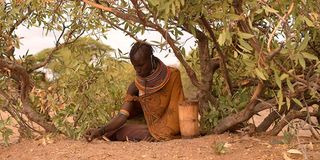
As politicians from North Eastern Kenya crowd press rooms in Nairobi to trade accusations and ethnic counter-attacks, Mandera is sinking deeper into hunger. The Kenya Red Cross has warned that more than 327,000 people are at a critical point, with entire communities on the brink of starvation.
Livestock have perished, water points are failing, and families are surviving on one meal a day, if they are lucky to get it. Yet the loudest political conversations from the region remain disconnected from this reality, fixated on national power struggles and manufactured ethnic narratives that do nothing for people whose most urgent concern is survival.
What is unfolding in Mandera is not sudden, and it is not inevitable. It is the predictable outcome of years of neglect, misplaced priorities, and leadership that speaks loudly in Nairobi while remaining silent at home. Drought is a recurring reality in arid and semi-arid lands (Asal), but hunger at this scale is the result of systems that fail repeatedly, despite warnings and available resources. Every dry season becomes an emergency, every emergency becomes a fundraising appeal, and every appeal exposes the same uncomfortable truth: planning has been replaced by performance.
Wajir offers a sobering example. Each constituency receives about Sh180 million annually through the National Government Constituency Development Fund, money intended to support education, security, and community development. Over 13 years since devolution, these funds should have strengthened schools, improved water access, supported drought resilience, and reduced insecurity. Instead, schools still lack basic infrastructure, children learn in crowded classrooms, and parents are regularly asked to fill gaps that public money was meant to cover. Security remains fragile, and when drought returns, communities are left exposed, waiting for relief food and sympathy.
Devolution was meant to bring leadership closer to the people, to ensure those in power understood the needs of locals because they live among them. In many Asal counties, that promise has faded. County governments function, budgets are passed, offices are staffed, and salaries are paid, yet the lived experience of ordinary people has barely shifted. Mothers still walk long distances for water. Young people remain unemployed. Pastoralists lose herds that represent generations of wealth. The revolution that was promised has stalled, weighed down by politics that prioritise comfort over consequence. The frustration simmering in the region has finally begun to surface.
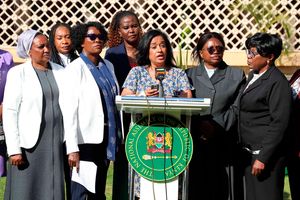
A recent video circulating online captured mothers from the North East speaking with a clarity that cut through years of political noise. They called out their leaders for living comfortably in Nairobi while their communities struggle through hunger and neglect. There was no theatrics, only exhaustion and honesty, the kind that comes from raising families under relentless hardship. Their words resonated because they reflected a shared reality, one that many have endured quietly for too long.
Religious leaders, often careful to avoid political confrontation, have also begun to speak more openly. They are challenging the grip of clan politics and the hollow idea of “negotiated democracy,” where leadership positions are shared among elites while ordinary people are asked to wait patiently for development that never arrives.
Their message is simple: power that does not translate into better lives has lost its moral grounding. A school principal’s testimony about crumbling infrastructure, overworked teachers, and children expected to compete nationally under deeply unequal conditions only reinforced what communities already know.
For years, accountability in Asal counties has been diluted by identity politics. Criticism is easily re-framed as an attack on the community, and legitimate questions about budgets or priorities are dismissed as divisive. This tactic shields leaders from scrutiny while allowing underdevelopment to persist. Hunger, however, does not respect political loyalty. When food runs out, and water dries up, narratives collapse under the weight of reality.
Mandera’s current crisis exposes how disconnected leadership has become from everyday life. Early warning systems flagged the worsening drought. Meteorological data, humanitarian reports, and local observations all pointed in the same direction. Preparedness should have followed. Instead, mitigation efforts were limited, and once again, emergency responses are being relied upon to manage what should have been anticipated. Humanitarian organisations step in, and politicians appear when cameras arrive, reinforcing a cycle that keeps communities permanently vulnerable. The anger from within Asal communities signals a shift.
The anger emerging from within Asal communities signals a shift. People are beginning to ask how funds are spent, why development remains uneven, and who truly benefits from the politics of representation. These questions are uncomfortable, but they are necessary. They mark the beginning of a more honest conversation about leadership, responsibility, and the gap between power and service.
These counties are rich in resilience, culture, and potential. What they lack is leadership that consistently places people at the centre of decision-making. Development cannot be reduced to press statements or ethnic positioning in national debates. It requires presence, planning, and the humility to listen to those living the consequences of policy failure.
The voices of mothers, religious leaders, and educators should not fade into the background once the moment passes. They represent a deeper reckoning, one that challenges leaders to move beyond symbolism and deliver tangible change. Kenya cannot continue normalising cycles of hunger and neglect in entire regions while celebrating political stability elsewhere.
This is a moment of choice for the leadership. They can continue performing politics from afar, or they can confront the hard work of rebuilding trust and delivering results. The hunger in Mandera, the frustration in Wajir, and the courage of those speaking out are reminders that dignity begins with accountability. And this time, the people are watching more closely than ever.