The drama being publicly played out over the post-Raila Odinga direction of the Orange Democratic Movement was to be expected.
It is a reflection of the fact that political parties in Kenya are largely built around one strong and dominant personality, whose exit from the scene will often lead to the disintegration of the movement.
ODM is not Kenya’s oldest party, but it certainly has grown to be about the largest and best-established political movement since its founding 20 years ago.
Of the political parties active today, the only one that can come close to matching it in terms of membership base, party structures, financial resources, and national networks is President William Ruto’ s United Democratic Alliance.
But even the ruling party, with its awesome muscle and reach, still has to stand the test of time. It is a fairly new movement formed ahead of the 2022 general elections that has to prove it can escape the fate of all predecessors who rode to power with the advent of multi-partyism, but were unable to thrive beyond one electoral cycle.
In Kenya, we don’t have political parties in the classical sense of the term. UDA — like the Uhuru Kenyatta-William Ruto Jubilee Party before it; the former’s TNA; and Mwai Kibaki’s PNU and NARC — at the moment can only be classed amongst a long list of special-purpose political vehicles cobbled together for the sole purpose of contesting elections.
Most of them have no founding ideology or principles, being off-the-shelf outfits purchased ready-made from some savvy political entrepreneurs.
In fact, a close look at the constitutions of most Kenyan political parties will reveal eerie similarities, exposing the copy-and-paste documentation used for the registration process.
UDA is strong only because it is the governing party and therefore a magnet for the Kenyan brand of unprincipled politicians.
The real test for its longevity will come when President Ruto exits the scene. If it loses ruling party status, access to public resources will dry up as will support of the administrative and security apparatus. That will occasion a mass stampede of those very same sycophants who today swear undying fealty to President Ruto, but are always on the lookout for the next paymaster.
These realities, seen in the decline and slow death of Kanu, Kenya’s version of the Grand Old Party, provide for some sobering reflections.
They also remind us of how remarkable it is that ODM, alone amongst so many other outfits, has grown and thrived despite repeated failures in the quest for the ultimate prize.
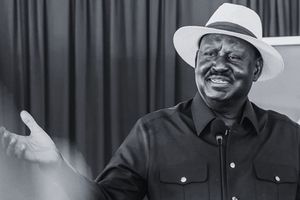
Most of that resilience can be attributed to the sheer force of personality exhibited by Mr Odinga. In many ways, he was ODM, and ODM was him. It might be easy to presume that his death just over a month ago will be followed swiftly by the decline and death of the movement he founded.
But unlike many other political outfits, ODM was left with strong foundations that could see it survive the passing of a founding father.
The shoving and pushing witnessed as ODM celebrated its 20th anniversary could break the party, but could also leave it stronger.
There have been very public differences aired between a contented and conservative lot happy to drive the existing broad-based government arrangement into backing for President Ruto’s 2027 re-election bid; against progressive figures who want an exit clause that will retain the party’s identity, ideology and principles, and crucially, mount a presidential bid at the next polls.
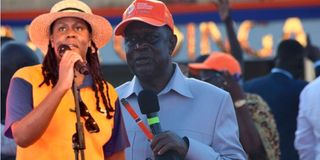
From the exchanges seen at the anniversary fete in Mombasa, the ODM divide might look like a family feud pitting Raila’s daughter, Winnie, against the old-guard fronted by her uncle and Raila’s successor as party leader, Siaya Senator Oburu Oginga.
Ms Odinga’s insistence on a Delegates Convention to elect a new leadership, and Dr Oginga’s response that the matter can be discussed by the family behind closed doors, was very telling.
For ODM to successfully transit to the post-Raila dispensation, it must grow beyond the family. Neither Oburu nor Winnie have the automatic right to inherit the party. One is an elderly transitional leader whose best bet would be to preside over the inevitable change of guard. The other may well represent the aspirations of an impatient younger generation more in touch with the clamour for change.
But ultimately, it is the ODM membership that will decide its fate. The best platform for that is already in place in the disrupted party elections, which should resume and result in fresh polls for the national leadership. That is not a matter to be settled at a family conclave.