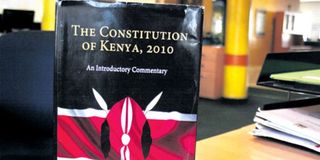
A copy of the 2010 Constitution of Kenya.

The constitution is the birth certificate of a country. It’s the most important document in any society. A constitution isn’t the grundnorm, the conceptual foundational principle on which everything is based, but it’s pretty close.
In terms of written law, there’s no law higher than the constitution, although some norms of international law are superior to a state’s constitution. Jus cogens norms, for instance, are so fundamental that no state, or its constitution, can override them. These peremptory norms of international law are non-derogable.
Genocide
They include prohibitions against genocide, enslavement, torture, or crimes against humanity. Every constitution must accept these prohibitions. Other than, the constitution is supreme. That’s why the constitution must become second nature to every citizen.
But the constitution won’t become second nature by osmosis. In legal philosophy, the constitution is viewed as a living document. It’s not static, or frozen in the museum of antiquities.
No – the constitution is translated every day in the lives of all natural and legal persons. Think of this – even a simple thing as taking a walk outside is a constitutional matter.
Why? Because it’s permitted by the freedom of movement in the constitution and regulated by the same constitution which allows ordinary laws to determine where and how you can walk.
For example, you cannot trespass on private property or streak in the streets naked. The constitution, statutes, and regulations are constantly being renegotiated and interpreted.
In a modern state, the constitution is the most important pillar of democracy. It provides for the doctrines and principles of the separation of powers, checks and balances, judicial independence, the Bill of Rights as the most superior section of the constitution, regular, periodic, and open elections to determine leadership through the popular sovereignty of the people, and a society of opportunity for all.
These processes and structures are only possible within liberal thought and philosophy wherein the cardinal tenets of equal protection and abstract autonomy are the basis of society. This may sound complicated, but it’s the only system of government that can guarantee the greatest happiness for most people. No other system has been as successful in human history.
Illiberal regimes
After years of living under dictatorial and normatively illiberal regimes, Kenyans chose the 2010 constitution. Conceptually, the constitution broke with the governance models of the past. It limited the reach of the state, especially the executive, and placed individual rights at the centre of its structure. It created an independent judiciary and independent commissions which were supposed to function without executive fiat. It devolved governance by establishing quasi-independent regional units called counties. But most fundamentally, it provided for both the modus vivendi and modus operandi of governance with this complex structure. Although tried successfully elsewhere, this system remains an experiment where each society must find the most optimally successful modes of co-existence and governance. There’s no magic bullet, or ready manual.
Each society and every individual in that society, whether private or official, and every institution whether state, or non-state, must learn and internalise the norms, mores, and traditions of the constitution and of democracy. One of the most basic requirements of knowing the constitution is to understand even though it has many dos and don’ts, its philosophy is underpinned by the imperative of compromise. The constitution must never be read like a newspaper article, or a rigid blueprint that’s inanimate.
No – the democratic constitution is always breathing and malleable, open to interpretation and re-interpretation by everyone in society, especially the judiciary which gets the final word. That’s because the constitution is the beating heart of the nation. There’s no nation without it.
Societies fail where both the elites and the hoi polloi don’t intellectually submit to liberalism and the ideals of the democratic constitution. Remember that democracy, as a package of ideas and concepts, isn’t native to many tongues. Not many cultures speak the language of democracy fluently, even in the West where its modern iteration is domiciled. We are now witnessing democratic spasms in the United States, arguably the most advanced and powerful democracy in human history.
Democracy is therefore a labour of the intellect. Every citizen must either, by intellect or instinct, understand democracy for the system to work. The nation must therefore become a classroom in democratic living. Every student must become a diligent subject in that classroom on democracy.
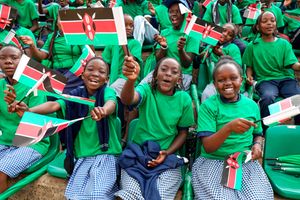
The surest way of inculcating the 2010 Katiba into the noggins of Kenyans is to teach it in all schools as a required subject. This must start at kindergarten through high school. Katiba must be a subject in the exams. We must capture them when they are young. We’ve faced difficulties in accepting the 2010 Constitution because it’s hard to teach old dogs new tricks. To become a Katiba rule of law society, we must start with toddlers.
Follow our WhatsApp channel for breaking news updates and more stories like this.
Makau Mutua is SUNY Distinguished Professor and Margaret W. Wong Professor at Buffalo Law School, The State University of New York. He’s Senior Advisor on Constitutional Affairs to President William Ruto. @makaumutua.