On October 14, 2002, Raila Odinga stood before a crowd at Uhuru Park and effectively settled a presidential contest in two words: “Kibaki tosha”. It would, as we all know with the benefit of hindsight, prove true. Ten weeks later, the National Rainbow Coalition took 62 per cent of the vote and ended 24 years of Moi and 39 years of Kanu rule.
Fewer people remember the memorandum. Behind the rainbow sat a private agreement between the coalition’s principals, promising a prime ministership and an even split of the Cabinet. It was never published, and the crowd at Uhuru Park never saw it.
It was never honoured. By November 2005, the partners stood on opposite sides of a referendum, campaigning under the symbols of fruit. And by December 2007, they stood on opposite sides of a hotly contested election that left more than 1,100 Kenyans dead. The coalition was killed by a document the public was never allowed to read.
DCP party Leader Rigathi Gachagua met with Linda Mwananchi Party leader Edwin Sifuna at his Wamunyoro residence.
Photo credit: Pool
For President William Ruto , this arrangement has to be bad news, and the data explains why. He won in 2022 by 233,211 votes, clearing the constitutional threshold by less than half a percentage point. A president elected on that margin cannot afford to lose a single ally. He has lost several, beginning with his own deputy, impeached two Octobers ago (October seems a rather significant month in our country’s political unfolding) in what was meant to be a political burial. The man who should have been buried is now the host.
While the President busies himself with containing a political breach, this month’s fuel review added KSh12.93 to a litre of petrol, exacerbating an already precarious economic situation. The young Kenyans who filled the streets in June 2024 have shown that they don’t exactly answer to any kingpin, his or anyone else’s. A slogan that began as a joke, “Wantam”, now reads very reliably like a forecast.
The opposition, however, is still divided. Gachagua insists on his right to run. Linda Mwananchi has already named Sifuna. Maraga has just returned from a trip abroad and, very much on brand, leads the People’s Coalition for Electoral Reforms. Other players are still out there fanning their bids. But fragmentation is the current phase, and phases end. The direction of travel is towards consolidation, and an incumbent with a thin margin rarely survives a consolidated opposition. The writing is on the wall.
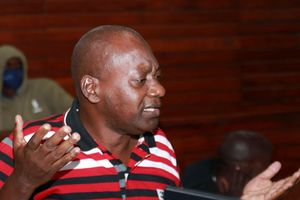
Former Chief Justice David Maraga addresses journalists at the United Green Movement (UGM) offices in Nairobi on August 18, 2026.
Photo credit: Evans Habil | Nation Media Group
Kenya has already watched one redemption coalition take power this decade. Kenya Kwanza promised to rescue the hustler from the dynasties. Before a ballot was cast, its principals had signed agreements apportioning shares of government among themselves.
Once in office, its deputy leader described the state as a company with shareholders. Two years later, the shareholders voted him out, and the Senate made it final. Season One ended in an impeachment. The cast of Season Two includes him, a shareholder in today’s regime, as a critical building block.
Nor is this a Kenyan peculiarity. In Malawi, nine parties formed the Tonse Alliance, won a court-ordered rerun in 2020 and promised a clean break. The alliance spent its term quarrelling over appointments, and in 2025 voters returned the president it had replaced. Coalitions built to remove a man tend to discover, once he is gone, that removing him was the only thing they agreed on.
So the question for every living room the opposition visits between now and August is which document will hold it together. If it is another private memorandum, a ledger of who takes the presidency, who takes the deputy presidency and how many ministries each faction receives, Kenyans have read that story twice. We know the ending.
The alternative is already written. Sixty-seven per cent of voters ratified it in 2010. Chapter Six sets the terms on which anyone may hold public office. Article 10 binds every state officer to national values and principles of governance. Article 1 states that all sovereign power belongs to the people, which means no coalition holds shares in the Republic. An opposition serious about service would publish its agreement, make compliance with these provisions a condition of membership, and commit in writing to obey court orders without commentary and to leave the independent offices independent.
That still leaves the hardest requirement, and no agreement can supply it. The next government has to be run by serial constitutionalists.
Kenya has never lacked converts. Every opposition discovers the Constitution in its season of grievance and mislays it in its season of power. Ruto quoted it fluently on his way to State House. In office, his administration lost in court on the housing levy, the Finance Act 2023 and the police deployment to Haiti, and answered each loss by accusing the judges. A serial constitutionalist is identified by record rather than rhetoric: someone who obeyed the law when it was inconvenient, who told the powerful no when yes was easier, and who did it more than once. That record can be checked. Voters should check it, urgently.
Ruto’s problem is that he is running against fatigue. The opposition’s problem is that fatigue is not a programme. It can carry a coalition to State House. It cannot tell that coalition what to do once it arrives, or stop its partners from turning on one another when the posts run out.
In October 2002, two words were enough to win an election. They were not enough to govern. The Constitution runs to 264 articles. The next government should be measured by whether it can be trusted with every one of them.