Whenever I am in any of our beautiful forests, be it Kakamega, Kĩreita, or Karura, I am reminded again and again of how deeply blessed and extraordinarily beautiful our country is. Consider Kakamega Forest. It is the easternmost remnant of the great Congo-Guinean rainforest that once covered the entire heart of Africa.
Inside its dense, layered canopy lives a world of abundance: Close to 500 species of butterflies, including Goliath beetles and the pink and green flower mantis, 36 species of snakes, many of them found nowhere else on Earth, among them the Gold’s Cobra and the Kaimosi Blind Snake, endemic to Kakamega alone. There are 380 recorded plant species, 60 varieties of orchids, and nine plant species found only in this forest. Kenya’s natural inheritance is amazing and precious and on Biodiversity Day last week, and every day, we stand as fierce and devoted guardians of these hubs of biodiversity called forests.
This year’s theme “Acting Locally for Global Impact” could not have arrived at a more important moment for Kenya. Even as we gathered to celebrate the magnificence of all life on earth, our Senate passed a bill that would make it easier for easements and public utilities to encroach upon our forests. We examined that clause in detail last week, but the deeper truth it forces us to consider is that the fate of our forests is not a distant conservation debate. It is happening today.
We also face the reality that the World Meteorological Organisation has raised the alarm that a significant El Niño event is likely to develop from mid-2026 and I have been alarmed at how many times this week I have been reminded that “this will be bad”. A strong El Niño brings with it a cascade of consequences which we must prepare for: erratic rainfall, prolonged droughts, disrupted harvests, and communities pushed to the edge.
For a country whose agriculture, water supply, and livelihoods are so deeply woven into the rhythms of nature, this is not a forecast we should ignore.
I fear that we are treating forests as land reserves waiting to be unlocked. What is true is that they are our first line of defence, regulating rainfall, preventing flooding, anchoring soils, cooling temperatures, and sustaining the rivers that feed our people. Kenya's recent history has shown us what climate extremes look like. It was only three months ago that we were dealing with the effects of catastrophic floods.
Livelihoods were deeply disrupted and people lost their lives. In our capital city where the drainage infrastructure exacerbated the problem, it felt as if we were truly powerless against the forces of nature. Scientists have continued to warn that climate change will make such extremes more frequent and severe. Yet as the warnings grow, we continue to weaken the very ecosystems which protect us from natural disasters. For us therefore, biodiversity protection ultimately becomes about protecting the systems that sustain life itself.
What we see however is that in the capital world that we live in, there is a lack of understanding of the value of natural capital. The Intergovernmental Science-Policy Platform on Biodiversity and Ecosystem Services (IPBES) estimates that 1 million species are threatened with extinction. Why is it then that market systems fail to place value on things which give us water, fresh air, food and pollinators?
Part of the answer lies in the way in which modern economic systems are structured. Markets are generally good at pricing things which can easily be bought and sold. For example: land has commercial value, minerals can be extracted, quantified and traded, and timber has a price. However, ecosystems rarely fit neatly into these calculations. A forest's ability to regulate rainfall, cool temperatures, protect water towers or sustain biodiversity does not appear cleanly on a balance sheet.
Food security and nutrition
The pollination work of bees, which helps in food production, often goes unnoticed until the decline in their populations threatens food security and nutrition. Wetlands which absorb excess floodwater are viewed as idle land waiting for development rather than natural infrastructure to protect entire communities. Unfortunately, what nature gives freely becomes undermined when we struggle to place a spreadsheet value on it.
When the undermining of nature meets greed, the result is catastrophic. Perhaps this is why it becomes so easy to see a road where a forest is, to see a railway line where a wetland is and to see hotels where water towers are. Kenya, alongside nations across the world, is updating its National Biodiversity Strategy and Action Plan (NBSAP) to align with the Kunming-Montreal Global Biodiversity Framework (GBF).
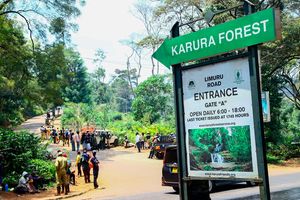
This must be an opportunity to look at our forests, wetlands, and parks in the eye and declare that we finally understand their worth. And that places like Karura, Kireita, and Kakamega will no longer be bargained away. My deepest hope is that when Kenya’s updated plan is complete, it will carry within it the full weight of urgency that our Forests demand. As we confront the possibility of another strong El Niño, perhaps the lesson before us is clear.
We cannot weaken the ecosystems that protect us while expecting to remain safe from environmental collapse. If we fail in conserving our biodiversity, we are failing the very foundations our lives rest in.
Ms Mathai is the MD for Africa & Global Partnerships at the World Resources Institute and Chair of Wangari Maathai Foundation