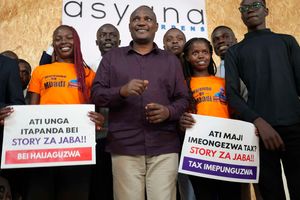
Ordinary citizenship in Kenya is exhausting, especially for people who have no control over government.
Notwithstanding the Constitution of Kenya 2010, the Executive and legislative arms of government have often treated its 264 articles as a public nuisance and a hindrance to progress. As a result, some of the most consequential political decisions since 2010 have not been made in Parliament, in State House, or at political rallies, but in constitutional courts. Ordinary citizens, civil society organisations, and public-interest litigants have been using the courts to force the State to explain itself, or even to behave better.
Last week, the High Court in Kisumu awarded victims and relatives of victims of the 2023 protests between Sh300,000 and Sh4.8 million — totalling Sh38 million — for police brutality around the Nyalenda, Obunga, and Manyatta areas of Kisumu.
This court decision is not just another successful petition. It goes a step further by issuing a structural interdict: an order giving the government 90 days to develop regulations governing demonstrations, picketing, and public assemblies.
For years, successive administrations have treated Article 37 of the Constitution like an uninvited guest. Citizens are tolerated, not welcomed. Their rights are grudgingly acknowledged, and demonstrations are viewed primarily as a security threat. The result has been confrontation, bloodshed and destruction.
The victims and survivors of police violence who filed the petition argued that the absence of clear regulations has enabled repeated violations of constitutional rights. While the government obsesses over how to tamp down on protests and even prevent them altogether, citizens need protection to express themselves peaceably.
So far, the exercise of black-and-white constitutional rights remains a bingo game that could land one in a hospital ward, a mortuary, or a courtroom.
If the Constitution guarantees the right to assemble, then the State has a primary responsibility to make that right meaningful. Yet, for years, the State has behaved as though its responsibility begins and ends with deploying police officers. Roads are blockaded, tear gas explodes and tyres burn. Loss, injury, and death follow. This improvisation is what creates space for police excesses.
Since 2023, the Independent Policing and Oversight Authority has investigated hundreds of deaths, injuries and complaints arising from police responses to protests. Yet every protest cycle appears to reproduce the same pattern of excessive force, deaths, investigations and delayed accountability.
The security narrative dominates the aftermath in reassurances that ‘order has been restored’. Yet, the Constitution does not merely protect rights from being interfered with; it mandates the government to actively create conditions in which those rights can be safely exercised.
Over the past three years, a culture of protest-shaming has steadily entered public discourse. Citizens complaining about the cost of living, high taxes, or corruption are dismissed as sufurias-wearers or labelled as criminals and anarchists. Recently, public officials have even suggested that the ongoing school unrest and the burning of dormitories may be linked to behaviour observed during public demonstrations.
Protest-shaming has political utility for the regime in power. It converts grievances into misconduct. Instead of asking why citizens are angry, leaders ask why citizens are expressing anger.
Fundamental democratic right
People do not occupy the streets because they hate the police. They do not get a high from inhaling tear gas, nor are arrest, injury or worse considered hobbies. People protest when they believe that those in authority are simply not listening.
The findings that informed this litigation are deeply disturbing. Accounts collected from the 2023 demonstrations describe citizens shot while walking home, students injured on their way from school, bystanders caught in police operations, homes invaded, social justice centres attacked, and families left dealing with grief, trauma and permanent disability.
This is not normal, yet it has become routine. The court’s directive rejects the notion that demonstrations are, by their very nature, suspect.
Until now, the government has deliberately misread the regulation of demonstrations as a licence to ban them, intimidate those who seek to join them, and erect arbitrary procedural hurdles. Many officials appear to be suffering from a hangover of the provincial administration logic inherited from colonial times.
The challenge over the next 90 days will be to write regulations that begin from the assumption that demonstrations are a fundamental democratic right to be facilitated rather than a security threat to be managed.
The writer is a board member of the Kenya Human Rights Commission and writes in his individual capacity. @kwamchetsi; [email protected]