In July 2023, Kenya’s then-Interior Cabinet Secretary Kithure Kindiki announced the suspension of the planned reopening of the Kenya-Somalia border. A fresh wave of Al-Shabaab attacks had swept through the frontier counties.
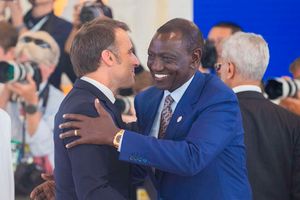
Security conditions did not support the move and the border would remain shut until they did. It was, by any measure, the responsible call. That man is now Kenya’s Deputy President. And last week, his boss stood in Mandera and announced that the very same border would reopen in April after nearly 15 years.
Pay close attention to the word April. A date two months away provides just enough space for the government to conduct consultations, commission further security assessments, and ultimately arrive at the quiet conclusion that conditions are unfortunately not yet favourable.
The border stays shut. But the declaration made in Mandera, to a crowd of people whose votes Ruto urgently needs, already did its job. The announcement is the prize while April is the escape hatch.
The humanitarian case for eventual reopening is real. Mandera families have had kinship ties severed by a hard border for fifteen years. The miraa trade has been haemorrhaging market share to Ethiopian competitors.
The UK-funded Deris Wanaag programme has spent years building the intelligence-sharing frameworks that a responsible reopening would require.
But all of that groundwork was already in place in May 2023 when a phased reopening was formally announced, and it was Kindiki himself who pulled the plug when Al-Shabaab reminded everyone why the border closed. The conditions have not materially changed.
Six police reservists were massacred in Garissa last March. A minibus of quarry workers was ambushed and five killed in Mandera in April. Two Border Patrol officers were killed by an IED on the Liboi-Kulan road in November.
The US Embassy still carries an active travel advisory warning against visiting Garissa, Wajir, Mandera and coastal border counties.
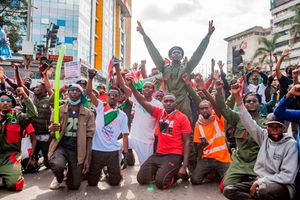
The political context explains this announcement better than any security assessment does. Ruto’s Mt Kenya base is fracturing. The opposition is consolidating. Against this backdrop, the President has been aggressively courting North Eastern Kenya — scrapping the 60-year vetting requirement for national ID cards and making repeated visits to the region.
The border announcement fits the same template exactly: a grand symbolic gesture targeted at a community whose loyalties are up for grabs, packaged as statesmanship. The most dangerous variable is one Nairobi appears to be deliberately ignoring: Jubaland. The semi-autonomous Somali state sharing Kenya’s entire northeastern border is in the middle of an acute constitutional crisis.
Jubaland President Ahmed Madobe re-elected himself for a controversial third term in late 2024. Mogadishu declared it unlawful. Reciprocal arrest warrants were issued.
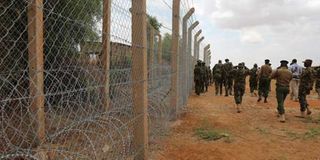
By July and August last year, federal and Jubaland forces were shooting at each other in the Gedo region, barely across Kenya’s fence. Somali parliamentarians described Mogadishu’s plan to build a rival administration in Gedo as a lifeline for Al-Shabaab, because it pulls security resources away from counterterrorism. They were not wrong.
Al-Shabaab has been visibly regrouping in Jubaland since the political row began, exactly as ACLED analysts warned would happen when Mogadishu and Kismayo turned their guns on each other instead of on the militants.
Jubaland under a stable Madobe has historically been Kenya’s first line of defence, where Al-Shabaab movements get intercepted before they reach Mandera, Garissa and Lamu. And Somalia is simultaneously heading into a turbulent election year, with presidential polls due in 2026, a contested electoral framework, and clan mobilisations already underway.
Opening a major border crossing into this environment is not regional integration. It is an open invitation to move fighters, weapons and money across a line drawn shut precisely because that movement was killing Kenyans.
Consider how Ethiopia handles the same threat. In July 2022, Al-Shabaab pushed 150 kilometres into Ethiopian territory before being repelled. Addis Ababa’s response was to create a security buffer zone inside Somalia.
Ethiopia shares 1,640 kilometres of Somali border and has its own large Somali-speaking communities with legitimate claims to cross-border connection. It still made a clear-eyed security calculation. Kenya, facing worse cross-border attack statistics, is moving in the opposite direction.
The right approach already exists on paper: a phased reopening anchored in verifiable conditions, not a calendar date. Has the Mogadishu-Jubaland standoff stabilised enough for coordinated border management? What surveillance infrastructure is operational at Mandera, Liboi and Kiunga? What became of the fence project that consumed Sh3.4 billion and delivered 10 kilometres before stalling?
Ruto told Mandera residents that adequate security personnel would be deployed. Adequate is doing enormous work in that sentence, and it is the exact assurance given before every previous attempt to reopen this border, each of which was subsequently aborted. The communities of Mandera, Garissa and Wajir need a border that opens when conditions genuinely support it, not one announced on a campaign timetable and paid for, once again, in blood.
Mr Amenya is a whistleblower, strategy consultant and startup mentor. www.nelsonamenya.com