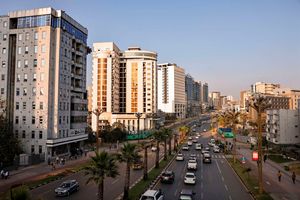
A fourteen-storey building in South C collapsed on January 2, burying workers under the rubble. The National Construction Authority later announced that the building was non-compliant, as if anyone needed telling. Enforcement notices had gone out in May, July and December, but construction never stopped. The developer ignored every warning. The right palms were greased, the right pockets lined, and the building kept rising.
Nairobi’s sewers were designed for half a million people, yet nearly five million now depend on them. In Lavington, residents are in court fighting for the right to see sunlight from their own windows. Governor Johnson Sakaja wants 75-floor towers while the drainage beneath them runs on a 1973 master plan, last reviewed in 1998. We call ourselves an aspiring global city, but what we are building is a graveyard.
Comte Claude-Philibert de Rambuteau became Prefect of Paris—essentially the city’s mayor—in 1833, inheriting narrow streets, open sewage and recurring cholera that had just killed tens of thousands. When he took office, he said something Nairobi’s leaders should tattoo on their foreheads: “My first duty is to offer the Parisians water, air and shade.”
Then he got to work, cutting the first wide avenue through medieval Paris, planting thousands of trees along the boulevards, and expanding gas lighting from 69 lamps to over 8,600. He built fountains, modernised the sewers, and created public amenities that Parisians still use today. He grasped what our own leaders refuse to accept: whoever runs a city owes its residents the basic conditions of life. A nineteenth-century Frenchman knew this instinctively. Our twenty-first-century leaders have yet to learn it.
Rambuteau’s budget was tight and his powers limited, so real transformation had to wait for Napoleon III, who brought political will, authority and serious money. When he became Emperor in 1852, he hung a huge map of Paris in his office, marked with coloured lines where he wanted boulevards, and hired Baron Haussmann to make it happen. They met almost daily, the Emperor personally reviewing progress and pushing through obstacles that would have buried lesser projects in bureaucracy. His instruction to Haussmann was simple: aérer, unifier et embellir. Air, unity, beauty. He brought in the Pereire brothers, whose Crédit Mobilier raised over a billion francs through bonds to fund the work. The state decided and managed; private enterprise executed; and structured financing made it possible.
Haussmann tore down 20,000 buildings and put up over 30,000 new ones, driving 137 kilometres of boulevards through the city over seventeen years. Every façade had to match: same height, same cream limestone, same 45-degree roof pitch so sunlight could reach the pavements. Sewers went in alongside every boulevard because Haussmann understood that if you stack people vertically, you must expand infrastructure horizontally. The regulations were enforced without exception. Sixty per cent of Parisian housing is still Haussmannian today. The system endures because someone built it properly and someone else made sure the rules were followed.
If nineteenth-century Paris feels remote, look at Shenzhen, a fishing village in 1980 that now holds seventeen million people and actually works. The metro covers 609 kilometres across seventeen lines, the fifth-longest system in the world. But Shenzhen also has 1,290 parks and 3,400 kilometres of greenways, with nearly half the city’s land protected as ecological space. Last year, China’s housing ministry ruled that every new apartment must have at least one room receiving an hour of direct sunlight on the winter solstice. They build metros, mandate parks and legislate sunshine, proving that density and liveability are not enemies—unless your leaders choose to make them so.
Back home, Sakaja admits our drainage is “overwhelmed”, with pipes engineered for 2,000 people now serving 10,000, and Moi Avenue flooding whenever it rains. More than 70 per cent of residential buildings violate zoning limits on floors, and in 2015 the National Construction Authority found 58 per cent of Nairobi’s buildings unfit for habitation. A decade later, the rubble in South C tells us nothing has changed. The Court of Appeal has ruled our 2004 zoning guidelines obsolete, and NIUPLAN 2016 was never gazetted. We have been flying blind for decades while permits get waved through and nobody asks questions.
Sakaja talks about “vertical expansion” as if height alone means progress, but in Lavington that sixteen-storey building residents are fighting would stuff 512 units onto one acre. If they want sunlight and air, they can take it to court. Meanwhile, China puts it in the building code.
One more thing: Nairobi hosts UN-Habitat, the global authority on sustainable cities and adequate housing, yet the agency that lectures the world on how to build properly sits in a city that ignores everything it teaches. We host the conferences and sign the declarations, then walk outside into collapsing buildings, flooded streets and a skyline shaped by whoever paid for the permit.
Rambuteau said his duty was water, air and shade. Napoleon III drew the map himself, raised the money, and met his prefect daily until the job was done. China mandates sunlight by law. Nairobi’s leaders stamp permits and count bodies.
Mr Amenya is a whistleblower, strategy consultant and start-up mentor. www.nelsonamenya.com