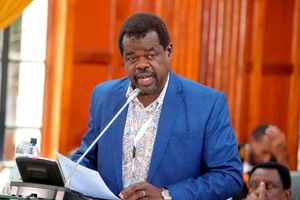
There is a question Edwin Sifuna has asked that has stayed with me: “Nikiangalia nyuma nitawapata kweli?” I think it is a fair question, especially at a time when so many young Kenyans seem to be finding their way towards him and Linda Mwananchi.
I say this as someone who genuinely looks up to Sifuna. I have watched the excitement around him with interest because, for once, it does not feel like a politician sitting somewhere deciding that he needs to become the face of young people. Sifuna has largely been doing his politics, and young Kenyans have gradually started moving towards him. There is something organic about that, and I think it is worth protecting.
But there is also something we need to be careful about, particularly because Kenyans have a tendency to turn political hope into one person.
We can get so excited about finding somebody who appears to understand our frustrations that we begin handing over all the work to them. We expect the politician to organise, mobilise, explain the politics, challenge the government, build the structures, find the candidates, raise the money and somehow carry our frustrations on their back. Our contribution becomes attending the occasional rally, posting on X, defending them online and then asking why they are not doing enough.
We put one person at the centre of everything, give them expectations no individual can possibly carry and then act surprised when they eventually fall short. After that comes disappointment, accusations of betrayal and the familiar Kenyan search for the next person who might finally get it right.
Sifuna’s “nikiangalia nyuma nitawapata kweli?” therefore deserves to be taken seriously. It is not just a question about whether people will remain loyal to him. It is a question about whether there will be an organised political base behind him when the excitement around him inevitably changes. Kenyans can change very quickly. We have seen politicians who seemed untouchable become yesterday’s conversation, and movements that appeared unstoppable lose their energy. Social media can make somebody enormously popular today and move on to something else tomorrow. A new political crisis comes, another personality emerges, and suddenly the person we were convinced would change everything is standing in the same place wondering where everyone went.
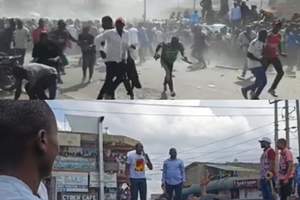
The Gen Z protests showed what young Kenyans could do when they stopped waiting for somebody to organise them. The movement’s decentralised nature was part of its strength, but the period after the protests exposed a difficult question: what happens when the streets have gone quiet? Organisers involved in the uprising have since written about the problems that emerged around coordination, accountability, funding, strategic disagreements and building durable institutions.
That is a lesson Linda Mwananchi can use rather than repeat. The movement is still taking shape. The Political Parties Disputes Tribunal overturned the earlier decision on its name, after which the Registrar of Political Parties reserved “Linda Mwananchi Movement” for 90 days. Full registration still has to be completed. But even once the paperwork is done, the more important question will be what exists beyond the name, the rallies and Sifuna himself.
Who is organising in the wards? Who is bringing people into the movement? Who is developing the policy ideas? Who is talking to the people who do not spend their days on X? Who is raising questions when the leadership gets something wrong? How are decisions made? How are candidates chosen? What happens when members disagree?
We cannot put all our hopes on him and then spend our time asking why he has not done enough. If we believe he represents something worth building, then we have to do some of the building. We have to organise our neighbourhoods, have difficult conversations. Otherwise, we are simply asking another politician to do the work we were excited to discover we could do ourselves in 2024.
There is also a certain cruelty in turning a politician into a political saviour. Once we put everything on one person, we give ourselves permission to expect perfection from them. Every mistake becomes a betrayal. Every compromise becomes evidence that they have changed.
I would rather see Sifuna surrounded by people who can support him, question him, organise with him and, when necessary, tell him he is wrong. That is a much stronger political base than thousands of people who simply believe in him. And maybe that is what his question should make us think about. “Nikiangalia nyuma nitawapata kweli?”
I hope he does. But I hope when he looks back, he finds more than people waiting for him to save them. I hope he finds people who have been doing the work too.
Because the danger is that we find another man we believe can save Kenya, place every hope we have on him, demand everything from him and then, when he inevitably cannot carry all of it, abandon him for the next messiah. We have done that before.