Mohamed al-Fayed was born in Alexandria, Egypt, in 1929 and died in London, England in 2023, a wealthy man worth all of $2 billion.
Father of Dodi al-Fayed, lover of Princess Diana with whom she died in a tunnel accident in Paris 1998, al-Fayed was famously the owner of Harrods department store (the crown jewel of British retail), the shop for people who speak as if they are scratching an apple with their lower teeth; owner (pronounced ewwna – scratch, scratch) of Fulham FC, The Ritz Paris (so prestigious that if you showed up at the front door, the doorman would faint from the shock of it) and his home, 7 Park Lane, well, that was the Sera Vidika (deliberate, not a spoonerism) backside of exclusive London homes: old, massive and wanted by many, many men. Mohamed al-Fayed was rich and so posh that it had taken a long pair of tongs to stick him inside the annals of the British aristocracy – he was a life-long, tenacious social climber.
Son of a primary school teacher, he started off by selling Coca-Cola and sewing machines, then he got a job working for Adnan Khashoggi, the Saudi arms dealer, and the filament of fortune opened like the iris of a weed smoker – wide and sustainably so. In the 1990s, he was at the height of his wealth and social power, but it was a hollow, Pyrrhic victory.
Mr Fayed was highly decorated – by the French. He never got what his soul really thirsted for. The authorities would not make him British; he could stay, he could play, but no passport. He applied for citizenship in 1993, rejected. He applied again in 1999, rejected. His brother Ali applied in 1999, granted. The Home (Hewme) Office attributed the denied applications to a “general defect in character”.
Switch gears. In 1985, a Tanzania-based Congolese musician, Kasaloo Kyanga, wrote and composed a hit song, Karubandika. The song established Kasaloo’s incredible songwriting gift and amazing vocal range and made his band, Orchestre Maquis Original, one of the most popular in East Africa. It is such as a beautiful song not just in wisdom but in the music. When I was in high school, it was permanently on KBC and it always felt as if Babu Seya, the solo guitarist, was playing not on his strings, but on my Vena Cava. I was crazy about that music. It is about a con man, a jaba guy, who wins the ladies by passing himself off as a bigshot, a little like the average social media personality. Now he has been found out that he is really a clever, sweet tongued, homeless hoax and the song is soaked in disappointment, disillusionment, regret, dismay, sorrow.
Kama wewe ungenipenda, kwanini kunidanganya bwana wee (If you had loved me truly, why would you lie to me)
Nimesikia tetesi kuwa huna lolote hata kazi huna wee (I heard talk that you have nothing, even no job)
Unazurura mchana kutwa ehh, ukita kurandaranda mitaani eeh (You wander around the whole day, up and down the streets)
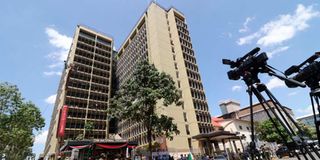
The National Assembly Debt and Privatisation Committee has asked the Auditor-General to audit a Sh9.9 billion loan guaranteed by the National Treasury for Kenya Power and Lighting to allegedly implement an underground cabling project. Trouble is, the power company is asking: which loan? Which project? The company had no clue.
The Controller of Budget has warned about the use of billions of shilling in commitment fees for loans that are not used. As of early 2026, Kenya is spending 80 per cent of revenue to pay debts. In the first half of 2025/26 financial year, the government spent Sh941.6 billion out of the Sh1.161 trillion we paid as taxes, that is 81.1 per cent, to service the debt. The debt-to-tax ratio has surged from 60.8 per cent the previous year to the current levels.
Either we are stark, raving mad or driving up the debt creates opportunities for the elite to make money for themselves. Maybe by creating the justification to raise taxes and “sell” public assets. Put this in the context of declining respect for human rights, the near collapse of the free school programme and other safety nets, the destruction of forests, the chaos in health insurance and so forth.
Interior Cabinet Secretary Kipchumba Murkomen recently announced that ‘eligible’ foreign women and youths will be made citizens and registered to vote. Why? Countries never ever dish out citizenships just like that. And why now
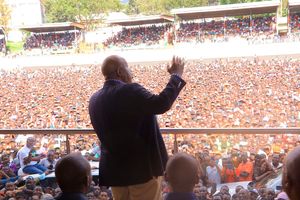
I was watching an interview of Tucker Carlson, former Fox News host, by Editor-in-Chief of the Economist, Zanny Minton Beddoes, and I was struck by something he said: that when the people lose faith in their ability to influence their government, they always resort to ugly ways of retaking control.
Do we have a smooth-talking Karubandika regime which sold us the snake oil of Singapore and is busy delivering Zaire? And can we go back to reason?