In Kenya, the phrase “the coffers are empty” has become almost a ritual explanation for everything that does not work. It is the reason taxes keep rising, the justification for austerity, the excuse for struggling hospitals, overcrowded classrooms, and stalled development projects.
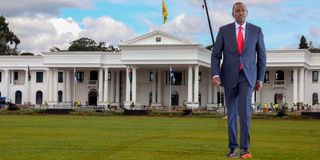
Yet, buried in the country’s latest budget is a number that makes that familiar claim sound almost ironic. In the 2025/2026 fiscal year, Kenya has allocated about Sh17 billion to State House —an amount that places the presidency among the most expensive executive establishments in the world.
To grasp the scale of that figure, one must look beyond Kenya’s borders. The office of the president of the world’s largest economy, the White House, operates on less. That means a country whose economy dwarfs Kenya’s many times over spends less on its presidency than Kenya does.
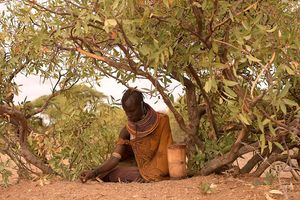
It is a comparison that almost reads like satire: a developing nation still battling food insecurity and struggling public services, maintaining a presidential establishment that rivals those of far wealthier states. The issue, however, is not merely the number itself. It is what that number represents about Kenya’s priorities.
Buy essential medical supplies
Across the country, public hospitals continue to operate under enormous strain. Patients are frequently asked to purchase essential medical supplies from private pharmacies because hospitals do not have them.
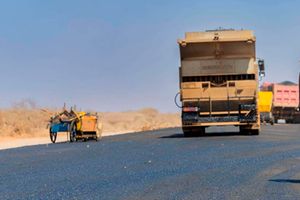
Rural health facilities remain understaffed. Schools regularly depend on parents to contribute money for materials that should be covered by public funding. Infrastructure gaps continue to isolate entire communities from markets and services. These are not minor administrative problems; they are structural challenges that define the everyday experience of millions of Kenyans. Yet in the middle of these realities, the presidency commands billions.
Leaders often invoke the ambition of turning Kenya into another Singapore. The comparison is repeated so frequently that it has become almost political folklore. But the irony is impossible to ignore.
Singapore’s founding Prime Minister, Lee Kuan Yew, built the city-state’s success around strict discipline in governance and spending. Government extravagance was discouraged, and public money was treated with careful restraint.
That culture of fiscal discipline allowed Singapore to direct enormous investment into education, housing, and economic growth. Notably, Singapore does not appear among the world’s biggest spenders on executive offices. Kenya does.
The contradiction becomes even more striking when viewed in the context of economic scale. The economy of the US is roughly two hundred times larger than Kenya’s. Yet, Kenya’s State House spending surpasses that of the American presidency. Numbers like these raise uncomfortable questions about the relationship between national capacity and political priorities. Budgets, more than speeches, reveal what governments truly value. They are the quiet documents that expose the difference between political rhetoric and political reality.
The economist Thomas Sowell once argued that every public policy decision ultimately comes down to trade-offs. Resources spent in one place are resources unavailable somewhere else. In Kenya’s case, the trade-offs are not abstract—they are visible across the country. Every additional billion directed toward the presidency is a billion that could have strengthened public healthcare, improved struggling schools, or addressed the persistent cycles of hunger that continue to affect parts of the country.
These decisions are taking place in a nation that continues to rely on external financial support. Kenya’s fiscal challenges have pushed the government to seek help from institutions such as the IMF and the World Bank, which often encourage austerity policies that directly affect citizens through higher taxes and reduced subsidies.
The contradiction is hard to ignore. Citizens are repeatedly told sacrifices are necessary to stabilise the economy, yet the presidency’s budget continues to expand.
From the famous declaration that the government “found the coffers empty,” Kenya has arrived at a moment where its State House ranks among the most generously funded presidential establishments in the world.