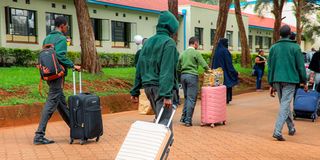
Last week, we finally transferred my younger brother from a boarding school in Nairobi to a day school. Looking back, it is difficult not to wonder why it took us so long. For three years, he complained about school. For three years, we received calls from teachers telling us he was getting into trouble, struggling to adapt, and failing to fit into the school's expectations.
Like many families, we assumed the problem was him. We told him boarding school was difficult for everyone, that he needed to toughen up, that he would eventually settle in. We believed the adults because that is what we are conditioned to do. We believed the institution. We believed the system. What we did not do enough was believe the child.
The complaints never stopped. Every term seemed to bring a new issue, another disciplinary problem, another conversation about behavior and adjustment. Yet beneath all of it was a child who simply seemed unhappy in an environment that demanded conformity and obedience above all else.
Eventually, after years of trying to force him into a situation that clearly was not working, we made the decision to remove him. A week later, his school was closed after students went on strike over food and water shortages. The students were sent home for two weeks, parents were later asked to contribute money for repairs, and everyone was expected to move on as though the problem had been solved. Within days of reopening, however, another message was sent to parents asking them to collect their children because there had been fresh unrest.
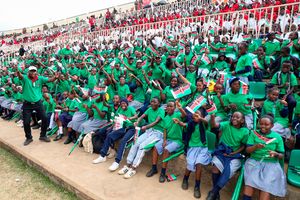
At almost the same time, another one of my brothers, who studies outside Nairobi, was sent home after his school reported similar disturbances. Across the country, more than a dozen boarding schools have either suspended learning or closed indefinitely because of what administrators continue to describe as "unrest." It is a convenient word because it says everything and nothing at the same time. It tells parents that something has gone wrong without ever requiring anyone to explain what exactly went wrong in the first place.
Whenever these incidents occur, the conversation quickly shifts toward discipline. Students are accused of being unruly, entitled or violent. School property becomes the focus of public outrage. Investigations are announced. Parents are told their children need to calm down. Yet very little attention is given to the conditions that led hundreds of students to collectively risk punishment, suspension or expulsion. Nobody seems interested in asking the most obvious question of all: why are so many children angry?
When I asked one of the teachers what measures had been put in place to prevent another strike after the first closure, his answer was revealing. Sometimes, he said, students simply need to go home and cool off. It was the kind of response that perfectly captures how we have chosen to deal with this crisis. The students are sent home, tempers settle, classes resume and everyone hopes for the best. What happens when they return to the same overcrowded dormitories, the same water shortages, the same frustrations and the same feeling that nobody is listening to them is rarely discussed.
The truth is that school strikes have become so common in Kenya that we have almost stopped questioning them. We treat them as isolated incidents rather than symptoms of a deeper problem within the education system.
Yet anyone who has spent time in many public boarding schools knows that conditions in some institutions have deteriorated significantly over the years. Schools are admitting more students than their facilities were designed to accommodate, while resources struggle to keep pace with growing enrolment. Dormitories are packed beyond capacity, dining halls are stretched to their limits, water shortages are common and basic services often come under immense strain.
Many students spend most of the year living under conditions that adults themselves would find difficult to tolerate. They wake up before dawn, follow rigid schedules, share overcrowded facilities and endure systems that often prioritize obedience over wellbeing. In some schools, corporal punishment may officially be banned, but cultures of humiliation and fear continue to thrive under the banner of discipline. Students who complain are frequently dismissed as difficult. Those who resist are labelled troublesome. Those who fail to cope are told they simply need to adjust.
Perhaps that is why my brother's experience has stayed with me. For years, we thought he was failing to adjust to boarding school. It never occurred to us that perhaps boarding school was failing to adjust to him. It never occurred to us that the problem might not be an individual child but an environment that expects every child, regardless of personality, temperament or circumstance, to fit neatly into a system that often leaves little room for humanity.
What is happening in our schools mirrors a larger problem in society. We have become remarkably comfortable ignoring young people until they force us to pay attention. We encourage children to speak up, to be confident, to raise concerns when something is wrong, but when they do exactly that, we often dismiss their voices. When complaints are ignored long enough, frustration eventually finds another outlet. Sometimes that outlet comes in the form of a strike and arson.
None of this is to excuse violence or the destruction of property. Schools must remain safe places for learning, and students must be held accountable for their actions. Yet accountability cannot begin and end with children. If schools are repeatedly experiencing unrest over food, water, overcrowding and living conditions, then administrators, policymakers and education officials must also answer difficult questions. Sending students home for two weeks may restore order temporarily, but it does not address the conditions that produced the unrest in the first place.
The growing wave of school strikes should concern all of us because it reveals a system under strain. Parents with financial means are increasingly transferring their children to private schools or day schools, quietly searching for alternatives rather than demanding solutions. Those without such options remain dependent on institutions that are struggling to cope. Instead of confronting the crisis, we are adapting to it, normalizing conditions that should alarm us.
Perhaps the most uncomfortable possibility is that these students are fighting battles that adults have refused to fight. They are reacting to overcrowded schools, inadequate resources and an education system stretched beyond its limits. Their methods may be disruptive, but the message itself is impossible to ignore. The real question is not why so many students are striking. The real question is why so many adults continue pretending not to understand what they are protesting against.