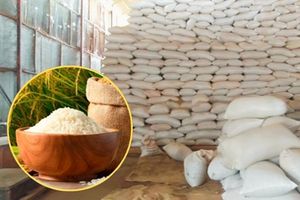
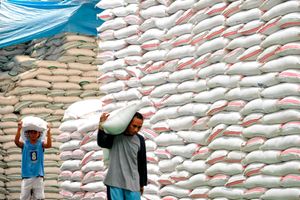
A casual visit to any marketplace in Kenya—be it supermarkets in high-end shopping malls or the various retail and wholesale markets in all towns dealing in agricultural produce—will reveal huge stocks of imported rice.
The commodity, from places as far as Pakistan and Thailand, is often much cheaper than the local rice. The rice imports are massively undercutting our own aromatic Mwea pishori-basmati, which I believe is the best rice in the world.
Rice farmers and traders will tell you that stocks of local produce are in abundance, with stores overflowing as penny-pinching consumers in these hard times turn to imported brands.
In the midst of this obvious market disruption, the Cabinet Secretary for Agriculture Mutahi Kagwe and his National Treasury counterpart John Mbadi found it necessary towards the end of last month to open a window for tax-free rice imports.
The move was officially aimed at “alleviating pressure on the local rice market”, jargon for rice shortages. Indeed the ministry trotted out figures showing that local rice production falls short of market demand. However, statistics are useless where on the ground it is apparent that the problem seems to be over-supply rather than shortages.
Supermarket shelves are well-stocked with rice, both imported and local. So are fresh-produce markets in virtually every town in Kenya. Roadside markets and warehouses in the major rice-growing areas are overflowing with produce.
Clearly, things on the ground are different from the phantom figures thrown around by Agriculture and Treasury mandarins to justify duty-free imports.
One can bet that as the Gazette notice authorising the imports was being printed, consignments owned by well-connected buccaneers given advance notice were already on the high seas.
From the early years of independence, importation of controlled agricultural produce and inputs has made the relevant ministry a crime scene. The permits required to import fertiliser, maize, wheat, sugar and other commodities have given rise to organised crime networks with tentacles reaching deep inside State House, that determine which windows will be opened for imports and which traders will have first options on the permits.
That seems to be the case with the current window for rice imports whose only effect will be to undermine and undercut local farmers.
Now, I am all for trade liberalisation. The protectionist regime that claims to support local farmers against unfair competition from imports may be well-meaning, but ultimately supports inefficient and uncompetitive production that works against the industry and hurts consumers.
Yes, by all means let’s give our consumers freedom of choice on imported rice, maize, wheat, onions, tomatoes, oranges and anything else, but we must draw a line at the corruption that allows selective tax-free windows for favoured cartels.
There is already plenty of imported rice, presumably fully taxed, already retailing at cheaper prices than local produce, rendering null and void the fake rationale provided by the Treasury and Agriculture ministries for duty-free imports.
Indeed, if President William Ruto is interested in fighting corruption beyond PR exercises intended for the eyes and ears of the International Monetary Fund and World Bank, he should direct a closer look at that tax-free rice imports scam.
But this might be hoping against hope, for there is little evidence that the Presidential Proclamation a week ago establishing a multi-agency team to drive the war against corruption is actually intended to achieve anything.
It is not surprising that appointment of the anti-corruption team, and the earlier establishment of a mechanism to look into compensation for victims of political protests, elicited only collective yawns.
Nobody took the President seriously on what would otherwise be considered tectonic shifts, mainly because there is not the slightest bit of evidence that he actually acknowledges there are serious issues that need fixing.
As long as the official narrative from State House and the Ministry of Interior is that protesters against government excesses are terrorists who must be terminated with extreme prejudice, we can expect nothing of substance from the Makau Mutua task force. As for the nebulous multi-agency team on corruption, the very fact that it is led by the Office of the President should be a red flag. One cannot expect the nerve centre of corruption to investigate itself.
Questions also abound as to whether institutions granted independence by the Constitution now come under State House control by virtue of being on the multi-agency team. There is more than enough likelihood that the team will be more focused on fingering and neutralising President Ruto’s foes rather than on going to the root of corruption.