Max Weber, the German thinker, coined the term patrimonialism to describe a typology of rulership characterised by personal loyalty, kinship servility, patronage, and lack of meritocracy.
A system rife with corruption, opportunism, and underdevelopment of materialism and intellect. The legitimacy of the ruler in such a system comes, not from democratic norms and structures but from personal fealty of the followers. This practice is often found in authoritarian states, although illiberal and formalistic democracies also exhibit it.
Kenya’s 2010 constitution was an attempt to end patrimonialism. I am sad to report we are far from that elusive destination. The kingpin in our politics is part of the problem. Question – is the end of the kingpin nigh in Kenya?
I’ve written before that democracy isn’t a destination but an experiment. You never really get there. Along the way, you will know by the behaviour of rulers, the State, and citizens, whether you can call your society a democracy.
Some of the key predicates of democracy include rote adherence to the rule of law by elites and citizens, decision-making through rationale-legal bureaucracies and State organs, efficiency, inclusion and meritocracy in public service and life, opportunity for everyone without regard to identity or political belief, an equitable economy, public shame and ethical conduct by officials, and predictable, credible periodic elections. These indices are inconsistent with a society that lives under the thumb of a kingpin, whether ethnic, cultural, or regional.
Patrimonialism is far-removed from democracy. It thrives on arbitrariness, favouritism — and silence, whether imposed, or of self-censorship. Patrimonialism is what has retarded many an African post-colony. Elites have mastered the art of manipulating pre-colonial ethnic identities to bargain for power in order to loot the state and impose patrimonial rule.
That is why in Kenya, it is near impossible to be elected to a national office if you don’t identify as the defender and son, or daughter, of an ethnic nation, or community. It doesn’t matter how brilliant or great of a candidate you may be. Unless you spring from the well of the ethnic petri-dish, you are dead on arrival. You must first pretend to be a champion of tribal interests.
In this sense, our politicians aren’t Kenyans, but tribalists. It is the call of ethnic blood that counts, not the size of your democratic brain. That is why disgraced ex-Deputy President Rigathi Gachagua always talks about “my people,” by which he means members of the GEMA cousinage (Agikuyu, Ameru, and Aembu communities).
Lately, I’ve heard him say that the Akamba are also his cousins. Mr Gachagua’s attempted power grab among the GEMA is the most vicious display of the fight for power through patrimonialism. He believes he can edge out Jubilee’s Uhuru Kenyatta as the GEMA kingpin. But both of them may be in for a rude shock. That’s because I believe the end of the era of the kingpin is fast approaching.
In my view, Mr Kenyatta is the last GEMA kingpin. Mr Gachagua will try to surmount him, but he will miserably fall short. Simply put, even among GEMA, the kingpin politics has lost its flavour. I am not saying this is the end 9of tribalism and its accoutrements.
No – I am saying that politics is too diffuse and the population too wise to be persuaded to live under the boot of an ethnic overlord. Interests are too diverse to be bottled in the mind of one ethnic bigot. The fear is gone. Even the State itself isn’t omnipotent anymore. The days of Mulu Mutisya and even Kalonzo Musyoka belong to a bygone era.
After Mr Musyoka, no one will ever hold the Akamba in a tribal fiefdom. Those who are aspiring to replace him should forget it.
Kenya’s ethnic groups may not become fully individualised and freed of the ethnic and tribal cultural germ, but the spectre of a king is over. When former Kisii supremo Simeon Nyachae passed, the era of the Kisii kingdom died with him. My friend Dr Fred Matiang’i has tried in vain to revive it, even with the support of Kisii public figures, some of whom had eschewed tribalism before. The Coast has been unique in that its kingpins weren’t always strictly tribal.
That’s why Shariff Nasir and Ronald Ngala, and Hassan Ali Joho, have risen to the top but from different nationalities. You might wonder about President William Ruto. He had to transcend his Kalenjin backyard.
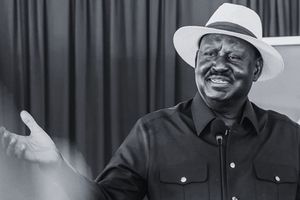
I’ve saved Baba for last. His father Jaramogi was the unquestioned king of the Luo, a mantle that Raila diligently fought for and assumed. But he quickly pivoted after his days in the National Development Party to become a Kenyan national leader and a Pan-Africanist. He became larger than the Luo. There’s nary the remotest possibility that there will be another Luo kingpin. Just like no Luhya kingpin arose after Moses Mudamba Mudavadi. The kingpin era is dying.
Makau Mutua is SUNY Distinguished Professor and Margaret W. Wong Professor at Buffalo Law School, The State University of New York. He’s Senior Advisor on Constitutional Affairs to President William Ruto. @makaumutua.