I still remember the towering billboard on Museum Hill, bold and unapologetic, its message impossible to ignore: “Handle Without Care!” A call to abandon caution, to embrace plastic without a second thought. Even as a child, that slogan unsettled me. And today, its implications haunt me still.
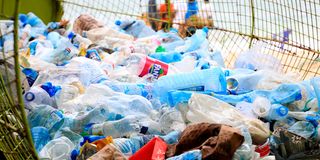
Because “carelessness” comes at a cost. Plastic doesn’t disappear. In fact, it invades. It chokes our rivers, carpets our landscapes, suffocating the earth beneath it, and along our shores, waves no longer bring only shells but an endless tide of discarded plastic, a toxic legacy of careless convenience.
In dumpsites we see (and smell) plastic waste smouldering under the sun, releasing invisible toxins into the air we breathe. It clogs our drainage, drowning communities in floodwaters laced with pollution. Wildlife mistakes it for food, and now, plastic has infiltrated our most sacred of spaces: our food, our water, and even our bodies.
That’s why this week’s World Environment Day, a tradition since 1973 led by the United Nations Environment Programme (UNEP) and celebrated in over 150 countries was themed #BeatPlasticPollution: an urgent call to address one of Africa's most pressing and solvable environmental challenges.
And it feels especially urgent across Kenya and the African continent, where we live with the daily consequences of plastic waste.
The evidence is everywhere. But all too often, we do not pause to connect the dots between what we consume and what we discard, between policy and practice, between profit and pollution. And sometimes our very laws incentivise the proliferation of plastics. We rarely consider how deeply woven plastic is into the fabric of our lives, and how little of it is designed to last in any responsible or regenerative way.
Plastic, like so many innovations, began with promise. In 1907, Belgian-American chemist Leo Baekeland developed Bakelite, the world’s first fully synthetic plastic.
It was hailed as a miracle material—malleable, durable, and cheap. Over time, plastic became ubiquitous in everything from food packaging and textiles to electronics and medical equipment.
But what once seemed convenient has become a global crisis. Today, the world produces over 460 million metric tons of plastic each year and that plastic production is set to double by 2040. Most of it is used once, then discarded. Less than 10 per cent is ever recycled.
And worse, many plastics contain toxic additives that make them harder to break down, with some persisting for up to 400 years.
This is not a failure of individual effort but rather a systemic design flaw—one that puts the burden on consumers and municipalities while manufacturers face few consequences. Research also highlights current approaches to recycling are simply not enough. Most plastics are not designed to be recycled, and in many cases, it remains cheaper to produce new plastic than to reuse the old.
“If plastic were a country, it would be the fifth-largest greenhouse gas emitter in the world,” according to WWF’s Plastic Policy Lead, Eirik Lindebjerg. From oil extraction to production and incineration, plastics are deeply entwined with the fossil fuel economy.
Kenya has taken commendable steps, such as the 2017 ban on single-use plastic bags and the 2020 prohibition of plastics in protected areas.
Following in the Republic of Rwanda’s footsteps which had banned plastics close to a decade before in 2008, these measures have inspired over 30 African countries to implement similar bans.
However, enforcement challenges persist, particularly at border points where illegal plastic products often enter the country.
Globally, efforts are underway to establish a legally binding international treaty to end plastic pollution. Negotiations, initiated by UNEP in 2022, and sponsored by Rwanda and Norway, aim to address the entire lifecycle of plastics, from production to disposal.
The treaty seeks to align with broader environmental goals and sustainable development objectives, ensuring that solutions are equitable and inclusive.
A coalition of over 100 countries, including many from Africa, is pushing for ambitious goals: capping virgin plastic production, phasing out hazardous additives, and requiring global reporting on plastic output. But oil-producing nations are resisting, calling for a weaker treaty that focuses only on recycling and clean-up.
Technological advancements also offer hope. Innovations such as biodegradable plastics, plastic-munching enzymes, and AI-powered waste sorting systems are emerging as viable solutions and opportunities for green entrepreneurship.
For example, Japanese scientists have developed a plastic that dissolves in seawater within hours, providing a promising alternative to traditional plastics.
As we confront the plastic pollution crisis, it’s imperative to recognise that solutions exist and are within reach.
Collective action, informed policy, and sustained innovation are key to forging a future where ecosystems thrive, and communities flourish free from the burdens of plastic waste. We were told not to care. But we must. Because to care is to fight for Africa and the planet we share, for a future we deserve.
Ms Mathai is the MD for Africa & Global Partnerships at the World Resources Institute and Chair of the Wangari Maathai Foundation