Nearly two billion people draw their drinking water directly from rivers while hydropower generates about 17 percent of global electricity. With this in mind, rivers reveal themselves as the earth’s arteries — winding veins that nourish our lands, carrying water, life, and abundance.
They irrigate our farms, power our homes, and have shaped civilisations from the Nile in Egypt to the Tigris and Euphrates in Mesopotamia.
Across Africa, rivers are woven into our songs, stories, and spirituality. In many of our communities, rivers are remembered in proverbs, invoked in rituals of healing, and revered as mysterious and sacred.
September 28 is World Rivers Day. But it will not be celebrated with the colour and joy it deserves. Instead, it should serve as a solemn reminder that many of the world’s rivers are under siege, poisoned by pollution, drained by unchecked extraction, and destabilised by climate change.
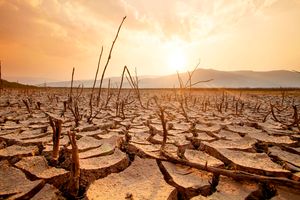
The World Meteorological Organisation recently reported that 2023 was the driest year for global rivers in three decades.
Here in Africa, even as new projects emerge along rivers we are left with the urgent question: who truly has the right to a river, and how much?
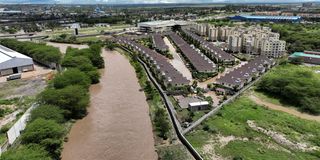
We do not have to look far to see the tragedy unfolding. The rivers of Nairobi, once clear and flowing, now carry garbage, industrial effluents, and even raw sewage. It is a cruel irony for a city whose name, Enkare Nyirobi, means “the place of cool waters.” But there is an even starker injustice hidden in this story.
Not all stretches of the rivers of Nairobi are polluted. In marginalised communities, the water is most toxic, thick with plastics, chemicals, and untreated waste.
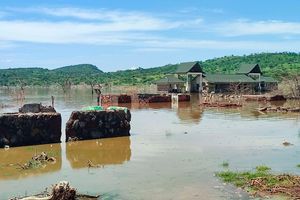
The consequences are devastating: spreading disease, erasing livelihoods, and trapping families in cycles of poverty. Climate shocks like last year’s floods hit these same communities hardest, sweeping away homes and lives.
Our Constitution is clear. Article 42 guarantees every Kenyan “the right to a clean and healthy environment.” Rivers, forests, and clean air are not privileges for a few, they are rights for all. Yet the uneven state of Nairobi’s rivers forces us to confront a painful truth: some lives are treated as less deserving of this right.
This is climate injustice in its rawest form. If we fail to safeguard the most vulnerable, how can we ever expect the world to take us seriously when we demand climate finance and global accountability? This is not only a Kenyan problem.
Across the continent, the uneven distribution of water, and the uneven protection of rivers, often mirrors social inequality. In Lagos, residents of informal settlements are forced to drink from polluted lagoons, while wealthier neighbourhoods buy imported bottled water.
In South Africa, acid mine drainage (AMD) has poisoned streams relied on by rural communities. In the Sahel, shrinking rivers and lakes drive competition over scarce resources, fuelling conflict and displacement. Everywhere, it is the poor who pay the highest price for polluted or disappearing rivers.
Rivers can only be as healthy as their sources. Our forests, wetlands, and mountain ranges, Kenya’s water towers, are the guardians of these waters. When they are destroyed by deforestation, encroachment, or poor land use, our rivers pay the price. Protecting these catchments must be non-negotiable.
Imagine Nairobi if the Aberdares and Mau Forest were stripped bare! The city’s taps would run dry, its rivers nothing more than seasonal trickles. Protecting standing forests is the first step toward protecting rivers.
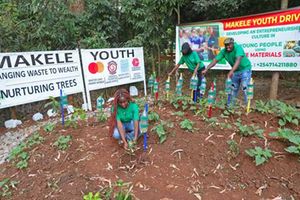
Within the city, we must also act decisively. Volunteer clean-ups are commendable but cannot solve systemic neglect. Nairobi needs robust waste management, strict enforcement against polluting industries, and urban planning that restores riparian reserves and green spaces.
The Nairobi Rivers Commission was created to coordinate this work. It’s true measure of success will be simple: will Nairobians one day drink from, walk along, and celebrate clean, flowing rivers again?
However, there are inspiring precedents. In Seoul, South Korea, the Cheonggyecheon Stream was once buried beneath highways. City leaders chose to restore it, creating a ribbon of nature in the heart of the city.
Today it cools the city, reduces pollution, and offers a place of peace for millions. In Kigali, Rwanda, wetlands that feed the Nyabarongo River have been restored and integrated into the city’s planning, providing flood control and clean water while serving as green lungs. These examples show what happens when leadership places people and nature at the centre.
In short, rivers are not drains to be hidden or forgotten. They are living arteries of our world, lifeblood of our future, and a constitutional right of every person.
Protecting them is justice. If we can restore our rivers, we restore dignity to the most vulnerable, honour our traditions, and safeguard our future. Nairobi, the city of cool waters, deserves nothing less.
When our rivers are restored, so are we. Here’s to protecting them today and always.
Ms Mathai is the MD for Africa & Global Partnerships at the World Resources Institute and Chair of the Wangari Maathai Foundation