Every Kenyan election to date has had its own smell: 1992 had the crisp, inky smell of cash, 2007 smelt of burning tyres and, afterwards, the foul odour of grief and trauma we haven’t recovered from; 2017 smelt of courtrooms.
With fewer than 10 months to August 10, 2027, the whiff wafting off this one – this is one for the ages – is a malodorous witch’s brew of danger, desperation, a cold detachment from the suffering mass, greed, fear, and an irrationally clingy determination.
“Dirtiest” is a rather high bar for a country in which a thousand people were slaughtered after a disputed election result. But dirt comes in different shades; 2007 was dirty at the end, in the vote tallying. There was incitement and the recruitment and radicalisation of warriors in the run-up, but no violence.
What worries me sick about 2027 is that the dirt was laid early and quietly, in the voter register supposedly packed with foreigners, in the street where protest meets death, and in the statute book where Parliament is gerrymandering the law to introduce ambiguity, so that by the time we reach the polling station the thing is half decided. And a squabbling opposition which can’t seem to find the confidence to unite and fight as one.
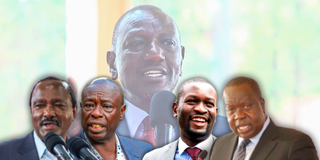
Let me take them in turn, separating what is established from what is merely alleged, because it is not right to pretend every claim carries the same weight. The opposition, led by Kalonzo Musyoka, Rigathi Gachagua and Justin Muturi, among others, says foreigners from Somalia, Ethiopia, Uganda and Tanzania are being issued IDs and added to the voter register. Leaders from some of those areas have publicly sworn to rig the election by importing voters.
Attacking opposition gatherings
The IEBC says nobody has submitted credible evidence and calls the claims unverified. I have no proof either way, and neither, as far as I can see, does anyone who has shouted about it. What I do know is that Bungoma added 73,599 voters in the recent drive and that the other border counties with Uganda each added more than 39,000. That may be perfectly innocent: young people turning 18, getting IDs and then registering. Or it may not.
The solution is simple and inexpensive: publish the register of the newly enrolled, let parties and citizens inspect it and compare it against the census. A commission with nothing to hide would be begging for that audit, not threatening legal action against people who ask questions.
In fairness, the registration numbers do not yet tell a tidy story, either. The theory goes that the Rift Valley and Nyanza are swelling because all the ID issuance and voter registration resources are focused there while opposition zones are starved. Yet President William Ruto himself has been pleading in Bomet, Narok and Moiben for Rift Valley residents to get IDs and register, with 1.8 million eligible people still missing.
Nyanza reached about 77 per cent of its registration target, with Kisumu lagging behind. Anyone selling the grand theory as proven should show their working. The ID is the real choke point, and that monkey lives on the shoulders of the State, not the IEBC, though you couldn’t rig an election without the two dancing cheek to jowl.
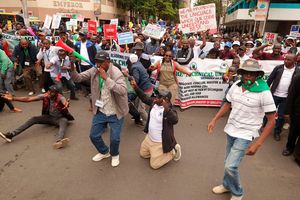
As for the street, this is not a claim; it is fact. Human Rights Watch reports armed groups attacking opposition gatherings and a civil society event, with at least six people killed and dozens injured. On August 16, hundreds armed with pangas, guns and sticks hit a convoy of opposition supporters heading to a rally in Homa Bay; at least three died. Media reported that the youths were paid up to Sh4,000 each.
Livestream results from polling stations
Senator Godfrey Osotsi was airlifted to Nairobi after an attack in Kisumu in April. Again and again, witnesses say the police just watched and played bodyguard for the attackers. Goonism is a bipartisan sin, and the Interior Cabinet Secretary accuses the opposition of assembling the very goons his officers arrested. But only one side of the aisle commands the police, and when the police stand and watch as innocent people are brutalised or killed, they have picked a side by default.
As for the rules, on October 22 the National Assembly passed the Elections (Amendment) (No. 2) Bill, which critics alleged would remove the legal duty to livestream results from polling stations. Without an explicit legal requirement for livestreaming and transparency, the fear is that the IEBC will cook the results in darkness and spring a surprise on the country.
The default position is that the results the IEBC announces are the true picture: if you have a different story, go to court. Now, court is an uncertain, expensive process fraught with risk because court people also have children in school and are not totally immune to suggestion – or pressure.
The government says the results declared at the polling station stay final, and presidential results must still be transmitted electronically within two hours. The Bill included other sensible provisions, such as the IEBC owning the technology’s intellectual property and barring tainted suppliers. But we learned in 2007 why Kenyans wanted to watch the counting with their own eyes, and the Kriegler reforms say election law should be settled well over a year before the vote. The election is less than 10 months away. Even if every clause is innocent, the timing is not.
As for the money, the feeding season is upon us. Cash is being thrown around at rallies.
So, will 2027 be the dirtiest? I hope and pray it will not be the bloodiest. But I fear it will be the most engineered and interfered with election we have ever seen.