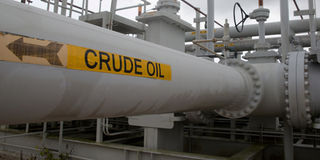
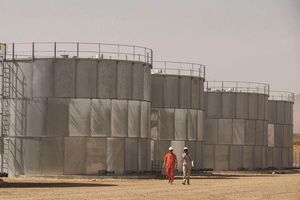
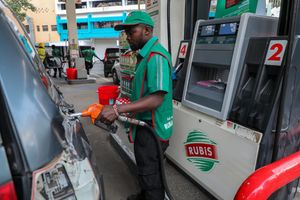
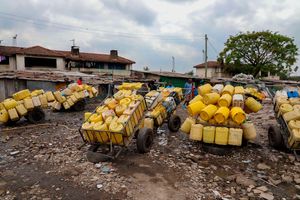
The price of Brent crude oil has climbed to levels last seen in April on escalating attacks in the oil-rich Middle East, setting up Kenyans for pain over the festive Christmas period.
A barrel of the commodity has soared to $115.91 (Sh15,054.39), the highest level in more than five months, since the end of April, when prices were at $118.03 (Sh15,326.20).
The rising prices look set to hit consumers in the coming months unless the State reinstates the fuel subsidy that was removed in the current monthly pricing cycle, which runs to November 14.
The energy regulator recently warned that Kenya, like other fuel-importing countries, faces steep prices because of the escalating Middle East conflict and an anticipated surge in demand for diesel and kerosene in Europe.
With the removal of the subsidy, the price of a litre of petrol rose by Sh12.93, diesel by Sh9.90 and kerosene by Sh28.49, taking prices in Nairobi to Sh226.96, Sh227.76 and Sh219.87 respectively.
"The decision we have taken today (removing subsidy on October 15) is meant to ensure that we save enough money for the future. Europe is going into winter and this will trigger a surge in demand for diesel and kerosene, and thus lead to a sharp rise in global prices of the two products," Mr Kinyua said recently.
The subsidy is funded by the Petroleum Development Levy (PDL), which is charged at Sh5.40 per litre of petrol and diesel and Sh0.40 per litre of kerosene.
Kenya has heavily subsidised fuel prices since April, as the country raced to cushion consumers at the pump from the disruption and global price rally caused by the Middle East conflict. Global crude prices stayed below $100 a barrel between May and August as the conflict eased, but the resumption of attacks last month pushed them back above that mark.
Houthi attacks and Hormuz disruption
A map showing the Strait of Hormuz and a 3D printed oil pipeline are seen in this illustration taken March 23, 2026.
Photo credit: Reuters
The latest rally is attributed to Houthi attacks in Saudi Arabia, which have fuelled fears of further disruption to energy supplies from the Middle East. Saudi Arabia is one of the world's leading oil producers.
The war has also led to a near paralysis of the Strait of Hormuz, as ships keep off the waterway because of attacks from Iran and allied rebels. A quarter of the world's fuel passes through the strait, which explains why its closure has disrupted supplies and sent prices skyrocketing.
Saudi Arabia was also forced to temporarily shut down operations along the East-West pipeline, which it has been using to export fuel since the closure of the Strait of Hormuz.
The crisis has since forced US President Donald Trump to allow diesel imports from Russia, in a bid to bring down soaring fuel prices ahead of the US midterm elections next month. The US banned Russian fuel imports in 2022 in response to Russia's attacks on Ukraine, in a move meant to cut off fuel revenue to Moscow.