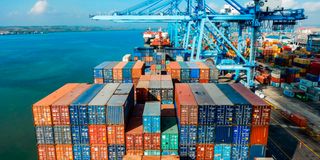
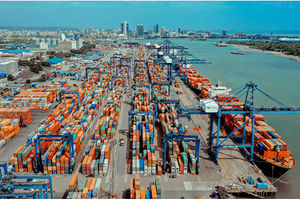
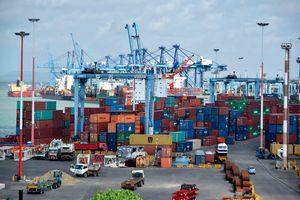
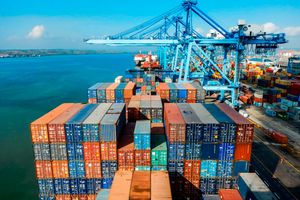
A blame game between stakeholders at the Mombasa port threatens to reverse hard-earned efficiency at the key gateway amid a fresh surge in congestion due to increasing number of uncollected empty cargo containers.
The Kenya Ports Authority (KPA), Kenya Ship Agents Association (KSAA), Kenya Transporters Association (KTA) and other key port stakeholders continue to trade accusations as traders’ experience delays in importing and exporting their goods through the port.
The number of containers at different berths at the port continue to increase as several liners in the past few days opted to implement ‘cut and sail’ where they leave the berth upon stipulated time without loading all stipulated boxes.
“This week alone, two vessels have left behind more than 300 containers at the port, this will lead to increased container pile up as they cannot be returned back to the container freight stations (CFSs),” said one clearing and forwarding agent at the port.
But as the situation continues, this isn’t just a short-term inconvenience; it’s a sign of a deeper, systemic failure that requires immediate, collective, and sustained intervention as KPA prioritise exports than empty containers.
According to KPA Managing Director William Ruto, the situation is as a result of lack of adequate spaces outside the port to handle containers.
“Mismatch between port expansion and lack of adequate spaces at the container freight stations (CFS's) and other port supporting infrastructure is blamed for the main causes of congestion and lack of uncoordinated return of empties,” Mr Ruto said.
With the Mombasa port handling over two million containers in 2024, cargo handlers have been blamed for failing to expand container storage facilities to match the rising throughput. According to KPA, exports are usually prioritised over empty returns.
KSAA chairman Roger Dainty said current congestion is caused by a number of issues among them lack of effective coordination among different stakeholders and the recent policies by the government.
"CFSs are stalking containers as the new inspection and cleaning order by Kephis takes effect. We are not opposing what the agency is doing but their capacity is questionable," said Mr Dainty.
The KTA has already sounded the alarm over a growing crisis at the Port of Mombasa, where delays in the return and evacuation of empty shipping containers have brought cargo movement to a near-halt.
KTA Chairperson Newton Wang’oo said the root of the crisis lies in the failure of shipping lines to repatriate empty containers on time and has resulted in serious backlogs at private depots, with trucks spending hours, and in many cases, days, waiting to offload empty units.
"Transporters are facing mounting losses due to long queues at container depots, some of which are operating far beyond their designed capacity," said Mr Wang'oo.
The association criticised the ongoing imposition of demurrage charges on transporters, even though the delays are largely beyond their control.
KTA proposed several short-term and long-term solutions, including allowing direct return of empty containers to the port, decentralising return locations, suspending demurrage charges, relocating depots to less congested areas, and improving depot infrastructure.
The association called on the Kenya Maritime Authority to urgently convene a high-level stakeholder meeting that includes representatives from shipping lines, KPA, depot operators, freight forwarders, and government agencies.