The Central Bank of Kenya (CBK) is forecasting inflation to hit the 6.2 percent mark in July in the wake of costly fuel, further worsening workers' purchasing power.
The banking regulator reckons that a prolonged conflict in the Middle East will push the cost-of-living measure to its highest level since February 2024.
The blockade of fuel in the Gulf following the war in Iran has seen pump prices hit record levels across the globe, with a litre of diesel jumping from Sh166.54 to Sh206.97 in Kenya for the month to May 14.
This will put pressure on inflation and hurt workers' purchasing power in an economy that has delivered negative real wages for five years in a row.
“With the oil price shock and assuming that the conflict lasts for the next three months, the forecast overall inflation does go above the five percent mid-point, peaking in July 2026 after which it progressively declines,” CBK Governor Kamau Thugge said last week ahead of Tuesday’s fuel price review.
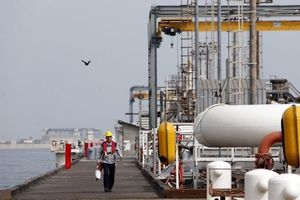
The closure of the Strait of Hormuz, a narrow ocean passage in the Middle East that allows up to one-fifth of global fuel supplies, has disrupted oil supply chains, resulting in higher prices at the pump.
The aftermath of the record jump in fuel prices is set to push inflation from 4.4 percent in March 2026.
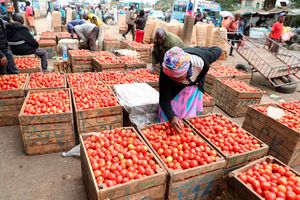
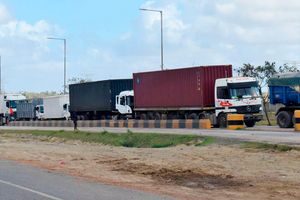
Fuel prices make a big contribution in Kenya as it relies heavily on diesel for transport, power generation and agriculture, while kerosene is used in many households for cooking and lighting.
CBK expects inflation to rise above the targeted midpoint of five percent in the coming months, peaking at 6.2 percent in July 2026 if the US-Iran war, which has been attributed to the fuel price shock, lasts until at least June of this year.
“Most matatus use diesel. We've consulted widely with our members and agreed on increasing fares by 25 percent,” said Albert Karakacha, chair of the Matatu Owners Association.
The country targets an inflation rate of between 2.5 percent and 7.5 percent, which the government assesses as the most appropriate rate of change in prices to deliver both economic growth and also contain a rise in consumer prices.
“Overall inflation is expected to remain within the target range in the near term, and this would be supported by appropriate monetary policy actions, expected stability in food prices owing to favourable weather conditions and the continued stability of the exchange rate,” Dr Thugge added.
Salary rises in 2024 lagged inflation or cost-of-living measures for the fifth year in a row, weakening workers' purchasing power and their standards of living.
Inflation-adjusted real wages in Kenya continued to drop after recording a decline of 0.3 percent last year as employers remain reluctant to offer bigger pay rises to cover the rising cost of commodities.
This is the fifth year in a row that workers have endured falling real wages, including a negative 4.1 percent in 2023.
CBK’s March 2026 market perceptions survey and agriculture sector survey showed that inflation expectations will hold in the target range in the coming months, but noted upward pressure due to higher energy prices.
The apex bank paused its rate easing cycle for the first time in nearly two years, adopting a wait-and-see approach on where consumer prices move next.
Kenya’s benchmark interest rate fell from 13 percent in August 2024 to 8.75 percent at present, supported largely by a slowdown in the change of consumer prices and a stable exchange rate.
The Kenyan shilling has continued to trade in a narrow range against the US dollar, changing hands at between Sh129 and Sh130 even after the onset of the US-Iran war at the start of March.