A fresh clash is looming in the sharing of revenue between the national and county governments for the coming financial year with the two levels of government more than Sh114 billion apart in their proposals.
The development comes after the Council of Governors (CoG) said they will not settle for anything less than Sh534.96 billion as counties’ equitable share of revenue for the financial year ending June 30, 2027.
On the other hand, the national government is proposing that the 47 counties only get Sh420 billion during the fiscal year beginning July this year.
The proposed amount is a paltry Sh5 billion more than what the county governments received for the current fiscal year after months of stalemate.
The Treasury’s proposal is contained in the draft Division of Revenue Bill to be submitted to Parliament.
Last financial year, counties received Sh415 billion as equitable share after protracted back and forth between senators (proposing Sh465 billion) and MPs (sticking with Treasury’s Sh405.1 billion proposal) with the impasse taking the intervention of President William Ruto to be unlocked.
Complicating matters further, the Commission on Revenue Allocation (CRA) – in its latest proposal to the National Treasury – is of the opinion that counties should get at least Sh458.94 billion.
The Council of Governors (CoG) now proposes that counties be allocated Sh534.96 billion as equitable share in the financial year ending June 30, 2027.
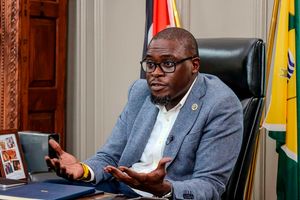
Council of Governors Chairperson Ahmed Abdullahi.
Photo credit: Boniface Mwangi | Nation Media Group
The proposal represents a Sh106.97 billion increment comprising Sh35 billion being an adjustment for revenue growth, and Sh8.94 billion budget requirement to transition universal health care workers.
Some Sh10.06 billion will go towards the implementation of the outstanding third and fourth remuneration and benefits review cycles and Sh65.97 billion for the first phase of identified delineated and gazetted devolved functions.
CoG Chairperson Ahmed Abdullahi argued that with Kenya projected to experience a revenue growth of Sh342.6 billion, counties should be allocated a pie of the increment, that is, Sh35 billion as recommended by the CRA.
Defending their proposal, he said the devolved units should be due another Sh8.94 billion to transition UHC workers, contracts will lapse between April 2026 and September 2026, to counties on permanent and pensionable terms as had been agreed upon between the Ministry of Health and the Council.
“The ministry confirmed availability of the attendant cost of the Sh8.94 billion to be transferred to county governments through the division of revenue,” said Governor Abdullahi.
“This is therefore a non-discretionary expenditure item and should be provided in the Division of Revenue Bill as a matter of priority.”
Nationally raised revenue
The Wajir governor added that counties need another Sh4.77 billion to implement the final phase of the third cycle of remuneration and benefits for public officers in county governments and Sh5.28 billion for the first phase of the fourth cycle.
“The national government has already implemented all cycles leaving behind the Counties. This is discriminatory and has already triggered industrial action from various County Public Officers and is expected to escalate if not implemented,” he said.
The governors are also looking at receiving Sh65.97 billion in resources related to unbundled and delineated functions still being performed by ministries, departments and agencies.
Article 202(1) stipulates that the nationally raised revenue shall be shared equitably between the national and county governments.
Any hardline stance has the potential of derailing budget approvals as it could scuttle the smooth passage of the Division of Revenue Bill, 2026.
The Bill is a key piece of legislation that, upon enactment, provides for the equitable division of revenue raised nationally between the national and county governments every financial year.
It is supposed to be published in March in line with Article 216 of the Constitution and Section 42 of the Public Finance Management Act.
The law stipulates that, at least two months before the end of the financial year, the bill determining how nationally raised revenue will be divided between the two levels of government must be enacted.
In the last financial year, a stalemate between the National Assembly and the Senate ended in the setting up of a mediation committee to try hammer a compromise in order to forestall a major cash crunch in counties.
This is after the National Assembly had in April passed the Bill allocating counties Sh405.1 billion as shareable revenue.
However, the Senate passed the Bill with amendments in May, raising the proposed shareable revenue to Sh465 billion.
Nonetheless, on June 3, 2025, the National Assembly rejected the Senate's amendments, prompting the Speakers of both Houses to set up the mediation team.
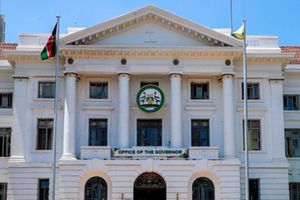
The National Treasury Building in Nairobi.
Photo credit: Pool
The mediation team began on a wrong foot with each camp holding out for adoption of its figure with subsequent meetings following a similar pattern.
At the second meeting, the Senate reduced its proposal to Sh425 billion but the National Assembly team offered Sh410 billion.
Senators had maintained that counties are burdened with non-discretionary expenditures triggered by national policies, such as the affordable housing levy, enhanced contributions to the National Social Security Fund, contributions to the Social Health Authority, and stipends for community health promoters while accusing the national government of holding onto funds meant for devolved functions.
But the MPs countered, saying the country’s constrained fiscal space amid poor ordinary revenue collection cannot support such a demand.
With the end of the financial year approaching and counties risking a financial crisis, President Ruto was forced to intervene with the teams finally agreeing on Sh415 billion as the shareable revenue to counties.