The government’s plan to partially divest its remaining stake in Safaricom PLC and list the Kenya Pipeline Company (KPC) on the Nairobi Securities Exchange is aimed at unlocking billions of shillings for development while improving governance at State-owned firms.
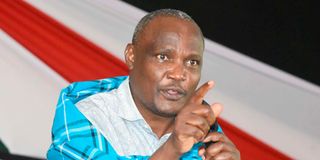
Cabinet Secretary for National Treasury and Economic Planning John Mbadi said the proposed transactions were part of a broader strategy to mobilise domestic resources, reduce reliance on borrowing and strengthen transparency in public enterprises.
Mr Mbadi said the government expects to raise up to Sh204 billion from the Safaricom transaction alone, dismissing claims that the State is undervaluing one of its most profitable assets.
He spoke in Uasin Gishu County on Sunday during a public participation forum on the Budget and the ongoing nationwide privatisation dialogue.
“The debate on Safaricom must be grounded in facts, not emotion. President Moi sold 40 per cent, and in 2008 President Kibaki released 25 per cent to the public. Both Kenyans and foreign investors took away 65 per cent from the government. Safaricom became the giant it is today after moving away from total government control. That was not a loss; it was smart asset management,” he stated.
Safaricom has become the most contentious element of the government’s privatisation agenda, with critics warning that further dilution of State ownership could reduce public benefit from the telecommunications firm’s steady dividend payouts.
Mr Mbadi argued, however, that continued majority involvement also imposes heavy financial obligations on the Exchequer.
“When Safaricom invests, the government is required to inject billions of shillings as its 35 per cent share,” he said, adding that freeing up capital would allow the State to fund infrastructure, social services and debt reduction at a time of tight fiscal conditions.
Safaricom PLC headquarters in Westlands, Nairobi.
Photo credit: File | Nation Media Group
“From Safaricom, we project about Sh204 billion, which will directly support development priorities and ease pressure on taxpayers. The government cannot sit on mature assets while borrowing expensively elsewhere,” he said, noting that the State would retain a strategic stake and continue to regulate the sector to protect consumers and competition.
Alongside Safaricom, the Treasury CS also strongly defended the planned initial public offering of Kenya Pipeline Company, saying a stock market listing would improve accountability and operational efficiency.
Under the proposal, the government would retain a 35 per cent stake in KPC, mirroring the Safaricom model, he said.
“Listing KPC will subject it to market discipline, improve governance, reduce political interference and allow the company to raise its own capital instead of depending on the Exchequer,” Mr Mbadi said.
The CS added that the move would help mobilise part of the more than Sh600 billion required to fund the country’s development agenda.
Addressing concerns that the listing could lead to higher fuel prices, Mr Mbadi said KPC does not sell fuel.
“Kenya Pipeline does not sell fuel; it is a transport system used by oil marketers,” he said.
The CS framed privatisation as a path towards economic self-reliance, arguing that optimising State assets would reduce Kenya’s dependence on external lenders.
“Privatisation, if done transparently, allows us to fund our own development,” he said, while warning that corruption posed the greatest threat to public value even after privatisation.
The Treasury CS also defended his political stance and that of the Orange Democratic Movement (ODM), describing the party as national in character and cautioning against what he termed ‘tribal cocoons’ that threaten unity.
“ODM is everywhere. It does not belong to one community. Luhyas, Maasai and even Kalenjins are in ODM,” he said, adding that cooperation with President William Ruto’s administration was strategic and long-term.
Mr Mbadi said the partnership within the broad-based government reflected the late former prime minister Raila Odinga’s vision of prioritising national interest over partisan politics, and reiterated his support for President Ruto’s re-election.
He said views collected during forums such as the Uasin Gishu dialogue would inform final decisions as the government prepares to roll out its 2025-26 privatisation programme.